

Why is Francis of Assisi the patron saint of ecology?
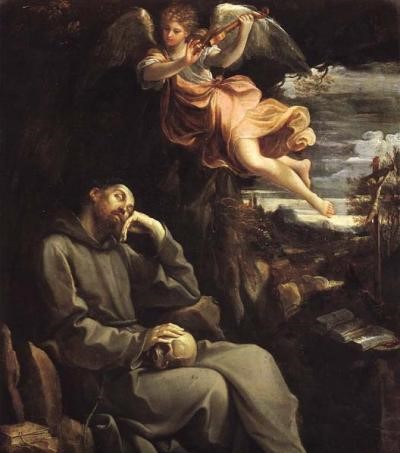
Among the most well-known and venerated saints, Francis of Assisi has become synonymous in religious pop culture with brown habits, bird baths, and blessing animals on his feast day.
But beyond pets, Francis of Assisi is also known as the patron saint of ecology.
Who was Francis of Assisi?
There's a lot to say, so we'll stick to the highlights.
Francis was born in the Italian city of Assisi between 1181 and 1182.
He was the son of a rich cloth merchant and since he was little he dreamed of becoming a knight.
After being taken prisoner during a battle with a nearby city in 1201, Francis became seriously ill.
It was during that period that his conversion began.
A few years later, while he was beginning a new military expedition, he had a dream in which God spoke to him and he returned to Assisi to heal the sick.
A year later, in 1206, he had another vision, in which Jesus directed him to rebuild his church. At first Francis understood this message as the repair of the church of San Damiano, outside Assisi, but later he understood it to mean the Church in general and, according to some, even creation itself.
From that time, Francis committed himself completely to the Church, abandoning his possessions and inheritance for a life of poverty and simplicity. He founded the Order of Friars Minor (now commonly known as Franciscans), as well as co-founding the Order of Saint Clare, the Third Order Secular, and the Third Order Regular.
He was known for his love for all creation (more on that later), but also for his dedication to the poor, peace, and interreligious dialogue, such as his meeting with the Sultan of Egypt during the Fifth Crusade.
Francis died in October 1226. Less than two years later he was canonized as a saint.
When was Francis of Assisi named patron saint of ecology?
Not long ago, apparently.
On November 29, 1979, Pope John Paul II issued a papal bull declaring St. Francis of Assisi the patron saint of ecology and those who promote ecology.
In the bull, John Paul II wrote: “Among the holy and admirable men who have venerated nature as a marvelous gift of God to the human race, Saint Francis of Assisi deserves special consideration.”
The Pope continued to note the profound sense of the Creator at work in the world and, through it, the presence of the divine spirit.
John Paul II also cited the “Canticle of the Creatures,” Francis’ famous prayer poem that is one of the cornerstones of Franciscan spirituality.
The recurring refrain of the song “Laudato si’, mi Signore” or, in the Umbrian dialect, “Laudato Si’, mi signore” inspired the name of Pope Francis’ 2015 encyclical on the environment and human ecology, “Laudato Si’: On Care for Our Common Home.”
And it was Pope Francis who was the first to choose the saint of Assisi as his papal namesake.
The appointment of Francis of Assisi as patron saint of ecology occurred in the late 70s, a decade that saw the birth of the modern environmental movement and began with the celebration of the first Earth Day, held in the United States.
The confluence of these two events may be more of a coincidence than anything else, given that Earth Day only became a global event in 1990.
Let's back up for a second: what does it mean to be the patron of something?
In Catholic tradition, a patron saint is a person who is believed to have the ability to intercede with God on behalf of someone's prayers.
They are also titles that honor the life a saint lived.
The practice of naming patron saints dates back centuries, to the early days of the Catholic Church.
Today it seems there are patron saints for everything. Yes, there are patron saints for churches.
There are patron saints for cities and countries (Francis of Assisi and Clare of Assisi, for example, are co-patrons of Italy).
And there are patron saints for almost every profession and circumstance.
Saint Isidore, patron saint of farmers.
Saint Elizabeth of Hungary, patron saint of bakers.
Saint Teresa of Avila, patron saint of headaches.
St. Francis de Sales, patron saint of journalists.
And some are patrons of more than one thing.
Among them is Clare of Assisi, a contemporary of Francis, who is the patron saint of eye problems and good weather, but also of television.
Why was Francis of Assisi named patron saint of ecology?
Let us return to the “Canticle of the Creatures”, which the saint composed towards the end of his life.
In it, Francis not only offers praise to God for all of creation – naming the “Lord Brother Sun,” “Sister Moon and the Stars,” “Brother Wind,” and “Sister Water” – but invites everyone to join him in praising God.
Praise be to you, my Lord,
through our sister, Mother Earth,
that supports and guides us
giving birth to all kinds of fruits
and colorful flowers and herbs.
The song is not just a hymn of praise, but a reflection on how he encountered God in all things.
“For Francis all creation became a theophany, a manifestation of God’s goodness,” writes Franciscan Sr. Ilia Delio.
Francis praises God 'through' (for) the elements of creation, because the Canticle reveals Francis' vision of nature as a sacramental expression of God's generous love.
This love unites us in a family of relationships, 'brother' and 'sister'.”
In his biography of Francis, St. Bonaventure, one of his first followers and a Doctor of the Church, wrote of the saint: “He rejoiced in all the works of the hands of the Lord and through their delightful exposition was elevated into their reason and life-giving cause.”
Bonaventura continued:
“With an unheard-of intensity of devotion
he savored
in every creature
– as in many streams
that spring Goodness,
and discerned
an almost celestial choir
in the strings of power and activity
of power and activity that God has given them,
and, like the prophet David
He gently encouraged them to praise the Lord.”
Delio, a theologian at Villanova University, writes that Francis’s understanding of God’s presence “was not an immediate experience,” but developed over time, as he grew in his relationship with Christ and came to see the Incarnation as sanctifying for all creation.
“It took Francis his entire life to realize that he was truly a brother to the entire cosmos.”
He adds that for Francis, respect for creation did not come from obligation, but from love, because he saw it “intimately united” with God.
“Everything spoke to Francis of the infinite love of God.”
And Francis of Assisi had a special relationship with animals too, right?
Indeed, there are many stories from Francis’ life that involve animals. In one, Francis, with the sign of the cross as his only armor, tamed a wolf that was terrorizing the town of Gubbio and convinced the creature to commit to living in peace with the locals.
In another, he made nests for doves put up for sale.
He also instructed his companions not to cut down the entire tree when gathering firewood and to set aside a portion of the garden for wildflowers to bloom.
One of the most popular ways people get closer to Francis of Assisi is the blessing of pets and domestic animals in parish churches on his feast day.
But some argue that seeing the saint only as “Francis, friend of animals” risks diluting his ministry and his message.
Franciscan Fr. Daniel Horan criticized what he calls a “birdbath industrial complex” around Francis, those that “reduce the saint to a medieval zoo mascot or simply claim that he ‘loved animals’ without taking into account the radical truth about God and creation that he intended.”
“St. Francis called all creatures—and not just the nonhuman animals that we classify as sentient, but also rocks and trees—his sisters and brothers because, in a very real sense, they are,” Horan said, adding that the consequences of humanity’s hubris, which places us above creation, are visible in the pollution of the Earth, the extinction of species and climate change.
In Laudato Si', Pope Francis also underlined the radical nature of the saint's approach to creation: “The poverty and austerity of Saint Francis were not a simple facade of asceticism, but something much more radical: the refusal to transform reality into an object to be used and controlled”.
“He shows us how inseparable the link is between concern for nature, justice for the poor, commitment to society and interior peace,” wrote Pope Francis.
All these elements are present in the way men deal with the world they live in.”
What is the legacy of St. Francis' teachings on creation today?
There is no denying that Francis of Assisi left the world a Franciscan vision of creation.
To explain this perspective, theologian Delio in her 2003 book on the subject, A Franciscan View of Creation: Learning to Live in a Sacramental World, asks this question: What is our fundamental relationship with nature?
“We live in solidarity with every aspect of creation, realizing that creation is incomplete and longs for its completion in God,” he wrote in a guide to the Franciscan view of creation.
It is a vision that sees creation as dynamic and each creature as an aspect of God's self-expression in the world, Delio says.
“The fundamental relationship between the Incarnation and creation leads to the central idea that every aspect of creation has absolute dignity because everything was created specifically and uniquely through the Word of God.”
The Franciscan tradition sees all creation as “a free gift from God, given equally to all.”
He believes in an attitude of reverence towards nature and roots ecological commitment in respect for all that comes from God.
This Franciscan view of creation, Delio adds, requires people to recognize their interconnectedness with the natural world, as well as how sinful actions have contributed to current ecological crises and how future actions may help fulfill God's vision or undermine it.
It is a message that Franciscan communities have shared for decades and that inspired them to place care for the environment at the center of their ministries well before Laudato Si'.
In fact, three years after Francis of Assisi was named patron of ecology, Franciscans and Italian environmental groups met at the Terra Mater International Seminar.
There they published the Gubbio Charter, a declaration that synthesized Franciscan spirituality and modern science, calling on the global community to replace humanity’s exploitation of nature and the endangered planet with “an attitude of sharing, protection, respect and brotherhood among all creatures.”
Today, groups like the Franciscan Action Network have made care for creation, including climate change, a focus of their advocacy and public policy.
As you may have gathered, there is much more to explore about Francis of Assisi and his teachings on creation and spirituality.
It is possible to study the writings of Francis and Clare of Assisi, as well as the first biographies, on Franciscantradition.org.
In 2016, following the publication of Laudato Si', the Franciscans published a study guide on the care of creation.
In 2014, the worldwide Franciscan family created a website, Francis35.org, to celebrate the 35th anniversary of Francis of Assisi's appointment as patron of ecology.
The resources, available in several languages, illustrate the Franciscan commitment to working for the integrity of creation.
To learn more
Earthquake In Syria And Türkiye, Pope Francis Prays For The Intercession Of The Virgin Mary
Saint of the Day October 4: Saint Francis of Assisi
Assisi, The Complete Speech Of Pope Francis To The Youth Of The Economy Of Francis
Economy and Finance, Father Alex Zanotelli at the Festival of Missionand: Rebel Through Boycott
World Day of Prayer for the Care of Creation, Pope Francis' Appeal for the Earth
The Courage of Francis?: “He is meeting the Sultan to tell him: We don’t need you”
Assisi, Youth “Pact for the Economy” with Pope Francis
Earthquake in Syria and Türkiye, the Prayer and Commitment of the Church for 23 Million Human Beings
Pope Francis In Africa, The Holy Mass In Congo And The Proposal Of Christians: “Boboto”, Peace
Saint Of The Day For February 15: Saint Claude De La Colombière
Source of the article
Among the most well-known and venerated saints, Francis of Assisi has become synonymous in religious pop culture with brown habits, bird baths, and blessing animals on his feast day.
But beyond pets, Francis of Assisi is also known as the patron saint of ecology.
Who was Francis of Assisi?
There's a lot to say, so we'll stick to the highlights.
Francis was born in the Italian city of Assisi between 1181 and 1182.
He was the son of a rich cloth merchant and since he was little he dreamed of becoming a knight.
After being taken prisoner during a battle with a nearby city in 1201, Francis became seriously ill.
It was during that period that his conversion began.
A few years later, while he was beginning a new military expedition, he had a dream in which God spoke to him and he returned to Assisi to heal the sick.
A year later, in 1206, he had another vision, in which Jesus directed him to rebuild his church. At first Francis understood this message as the repair of the church of San Damiano, outside Assisi, but later he understood it to mean the Church in general and, according to some, even creation itself.
From that time, Francis committed himself completely to the Church, abandoning his possessions and inheritance for a life of poverty and simplicity. He founded the Order of Friars Minor (now commonly known as Franciscans), as well as co-founding the Order of Saint Clare, the Third Order Secular, and the Third Order Regular.
He was known for his love for all creation (more on that later), but also for his dedication to the poor, peace, and interreligious dialogue, such as his meeting with the Sultan of Egypt during the Fifth Crusade.
Francis died in October 1226. Less than two years later he was canonized as a saint.
When was Francis of Assisi named patron saint of ecology?
Not long ago, apparently.
On November 29, 1979, Pope John Paul II issued a papal bull declaring St. Francis of Assisi the patron saint of ecology and those who promote ecology.
In the bull, John Paul II wrote: “Among the holy and admirable men who have venerated nature as a marvelous gift of God to the human race, Saint Francis of Assisi deserves special consideration.”
The Pope continued to note the profound sense of the Creator at work in the world and, through it, the presence of the divine spirit.
John Paul II also cited the “Canticle of the Creatures,” Francis’ famous prayer poem that is one of the cornerstones of Franciscan spirituality.
The recurring refrain of the song “Laudato si’, mi Signore” or, in the Umbrian dialect, “Laudato Si’, mi signore” inspired the name of Pope Francis’ 2015 encyclical on the environment and human ecology, “Laudato Si’: On Care for Our Common Home.”
And it was Pope Francis who was the first to choose the saint of Assisi as his papal namesake.
The appointment of Francis of Assisi as patron saint of ecology occurred in the late 70s, a decade that saw the birth of the modern environmental movement and began with the celebration of the first Earth Day, held in the United States.
The confluence of these two events may be more of a coincidence than anything else, given that Earth Day only became a global event in 1990.
Let's back up for a second: what does it mean to be the patron of something?
In Catholic tradition, a patron saint is a person who is believed to have the ability to intercede with God on behalf of someone's prayers.
They are also titles that honor the life a saint lived.
The practice of naming patron saints dates back centuries, to the early days of the Catholic Church.
Today it seems there are patron saints for everything. Yes, there are patron saints for churches.
There are patron saints for cities and countries (Francis of Assisi and Clare of Assisi, for example, are co-patrons of Italy).
And there are patron saints for almost every profession and circumstance.
Saint Isidore, patron saint of farmers.
Saint Elizabeth of Hungary, patron saint of bakers.
Saint Teresa of Avila, patron saint of headaches.
St. Francis de Sales, patron saint of journalists.
And some are patrons of more than one thing.
Among them is Clare of Assisi, a contemporary of Francis, who is the patron saint of eye problems and good weather, but also of television.
Why was Francis of Assisi named patron saint of ecology?
Let us return to the “Canticle of the Creatures”, which the saint composed towards the end of his life.
In it, Francis not only offers praise to God for all of creation – naming the “Lord Brother Sun,” “Sister Moon and the Stars,” “Brother Wind,” and “Sister Water” – but invites everyone to join him in praising God.
Praise be to you, my Lord,
through our sister, Mother Earth,
that supports and guides us
giving birth to all kinds of fruits
and colorful flowers and herbs.
The song is not just a hymn of praise, but a reflection on how he encountered God in all things.
“For Francis all creation became a theophany, a manifestation of God’s goodness,” writes Franciscan Sr. Ilia Delio.
Francis praises God 'through' (for) the elements of creation, because the Canticle reveals Francis' vision of nature as a sacramental expression of God's generous love.
This love unites us in a family of relationships, 'brother' and 'sister'.”
In his biography of Francis, St. Bonaventure, one of his first followers and a Doctor of the Church, wrote of the saint: “He rejoiced in all the works of the hands of the Lord and through their delightful exposition was elevated into their reason and life-giving cause.”
Bonaventura continued:
“With an unheard-of intensity of devotion
he savored
in every creature
– as in many streams
that spring Goodness,
and discerned
an almost celestial choir
in the strings of power and activity
of power and activity that God has given them,
and, like the prophet David
He gently encouraged them to praise the Lord.”
Delio, a theologian at Villanova University, writes that Francis’s understanding of God’s presence “was not an immediate experience,” but developed over time, as he grew in his relationship with Christ and came to see the Incarnation as sanctifying for all creation.
“It took Francis his entire life to realize that he was truly a brother to the entire cosmos.”
He adds that for Francis, respect for creation did not come from obligation, but from love, because he saw it “intimately united” with God.
“Everything spoke to Francis of the infinite love of God.”
And Francis of Assisi had a special relationship with animals too, right?
Indeed, there are many stories from Francis’ life that involve animals. In one, Francis, with the sign of the cross as his only armor, tamed a wolf that was terrorizing the town of Gubbio and convinced the creature to commit to living in peace with the locals.
In another, he made nests for doves put up for sale.
He also instructed his companions not to cut down the entire tree when gathering firewood and to set aside a portion of the garden for wildflowers to bloom.
One of the most popular ways people get closer to Francis of Assisi is the blessing of pets and domestic animals in parish churches on his feast day.
But some argue that seeing the saint only as “Francis, friend of animals” risks diluting his ministry and his message.
Franciscan Fr. Daniel Horan criticized what he calls a “birdbath industrial complex” around Francis, those that “reduce the saint to a medieval zoo mascot or simply claim that he ‘loved animals’ without taking into account the radical truth about God and creation that he intended.”
“St. Francis called all creatures—and not just the nonhuman animals that we classify as sentient, but also rocks and trees—his sisters and brothers because, in a very real sense, they are,” Horan said, adding that the consequences of humanity’s hubris, which places us above creation, are visible in the pollution of the Earth, the extinction of species and climate change.
In Laudato Si', Pope Francis also underlined the radical nature of the saint's approach to creation: “The poverty and austerity of Saint Francis were not a simple facade of asceticism, but something much more radical: the refusal to transform reality into an object to be used and controlled”.
“He shows us how inseparable the link is between concern for nature, justice for the poor, commitment to society and interior peace,” wrote Pope Francis.
All these elements are present in the way men deal with the world they live in.”
What is the legacy of St. Francis' teachings on creation today?
There is no denying that Francis of Assisi left the world a Franciscan vision of creation.
To explain this perspective, theologian Delio in her 2003 book on the subject, A Franciscan View of Creation: Learning to Live in a Sacramental World, asks this question: What is our fundamental relationship with nature?
“We live in solidarity with every aspect of creation, realizing that creation is incomplete and longs for its completion in God,” he wrote in a guide to the Franciscan view of creation.
It is a vision that sees creation as dynamic and each creature as an aspect of God's self-expression in the world, Delio says.
“The fundamental relationship between the Incarnation and creation leads to the central idea that every aspect of creation has absolute dignity because everything was created specifically and uniquely through the Word of God.”
The Franciscan tradition sees all creation as “a free gift from God, given equally to all.”
He believes in an attitude of reverence towards nature and roots ecological commitment in respect for all that comes from God.
This Franciscan view of creation, Delio adds, requires people to recognize their interconnectedness with the natural world, as well as how sinful actions have contributed to current ecological crises and how future actions may help fulfill God's vision or undermine it.
It is a message that Franciscan communities have shared for decades and that inspired them to place care for the environment at the center of their ministries well before Laudato Si'.
In fact, three years after Francis of Assisi was named patron of ecology, Franciscans and Italian environmental groups met at the Terra Mater International Seminar.
There they published the Gubbio Charter, a declaration that synthesized Franciscan spirituality and modern science, calling on the global community to replace humanity’s exploitation of nature and the endangered planet with “an attitude of sharing, protection, respect and brotherhood among all creatures.”
Today, groups like the Franciscan Action Network have made care for creation, including climate change, a focus of their advocacy and public policy.
As you may have gathered, there is much more to explore about Francis of Assisi and his teachings on creation and spirituality.
It is possible to study the writings of Francis and Clare of Assisi, as well as the first biographies, on Franciscantradition.org.
In 2016, following the publication of Laudato Si', the Franciscans published a study guide on the care of creation.
In 2014, the worldwide Franciscan family created a website, Francis35.org, to celebrate the 35th anniversary of Francis of Assisi's appointment as patron of ecology.
The resources, available in several languages, illustrate the Franciscan commitment to working for the integrity of creation.
To learn more
Earthquake In Syria And Türkiye, Pope Francis Prays For The Intercession Of The Virgin Mary
Saint of the Day October 4: Saint Francis of Assisi
Assisi, The Complete Speech Of Pope Francis To The Youth Of The Economy Of Francis
Economy and Finance, Father Alex Zanotelli at the Festival of Missionand: Rebel Through Boycott
World Day of Prayer for the Care of Creation, Pope Francis' Appeal for the Earth
The Courage of Francis?: “He is meeting the Sultan to tell him: We don’t need you”
Assisi, Youth “Pact for the Economy” with Pope Francis
Earthquake in Syria and Türkiye, the Prayer and Commitment of the Church for 23 Million Human Beings
Pope Francis In Africa, The Holy Mass In Congo And The Proposal Of Christians: “Boboto”, Peace
Saint Of The Day For February 15: Saint Claude De La Colombière
Source of the article