


Who we are – Our values
spazio + spadoni was founded in Lucca, Italy, from an intuition of Luigi Spadoni, immediately shared with friends and professionals and enriched over time through encounters with experiences of volunteering, mission and consecrated life, until it became a shared journey for the dissemination and reEvolution of the Works of Mercy.
Our motto, «God’s mercy is at work. Always.», expresses the conviction that guides every step we take. We believe that God’s mercy always precedes our actions: it is already present in history, in people, in communities and in territories. For this reason, our first commitment is to recognise, preserve and foster the mercy that God is already generating.
To give continuity to this vision, OPERA M, the permanent instrument through which spazio + spadoni promotes the reEvolution of the Works of Mercy, arose from the urgent need to rediscover each Work of Mercy as a journey that is always both human and divine, spiritual as well as practical. We believe that every concrete gesture finds its deepest meaning when it is permeated by the spirit that inspires it. For this reason, OPERA M fosters the development of strong and renewed thinking about the Works of Mercy, capable of engaging with today’s world without losing the richness of the Gospel.
Mercy is also called to become mission. This led to the creation of HIC SUM. We primarily support local women’s religious communities that live out mercy every day in mission territories. Fostering their economic self-reliance means enabling them to continue living their vocation and generating mercy with greater freedom and continuity. Economic self-reliance is not an end in itself, but a means at the service of mission.
Today, spazio + spadoni is present in dozens of countries across four continents and continues to open new paths of mercy. The reference to the seventy-two disciples sent out in the Gospel also inspires our journey: reaching the first 72 projects will not be a destination, but the beginning of a mission that will continue to grow.
We like to imagine this journey as a flock. Each person retains their own identity, vocation and charism, but together we discover that each person’s flight also strengthens that of the others. In this way, we connect volunteers, professionals, benefactors, religious communities and Churches, so that every encounter may generate new mercy and new mission.
God’s mercy is at work. Always.
Who we are NOT
To better understand spazio + spadoni, it may be helpful to know what you will not find when you enter this space.
- Money coming first. Encounter, listening and relationship come first.
- Projects without community. We primarily accompany women’s religious communities so that they can continue to live their mission with economic self-reliance, generating mercy.
- Assistance without spirit. Every Work of Mercy always unites concrete action with spiritual life.
- New Works of Mercy. Through OPERA M we promote their reEvolution, so that they may continue to speak to people today.
- A destination to reach. Every journey opens a new journey.
- Ourselves at the centre. The protagonist is God’s mercy, already at work in the world.
If this is also your way of looking at mercy and mission, you have found the right space.
The founder – Luigi Spadoni
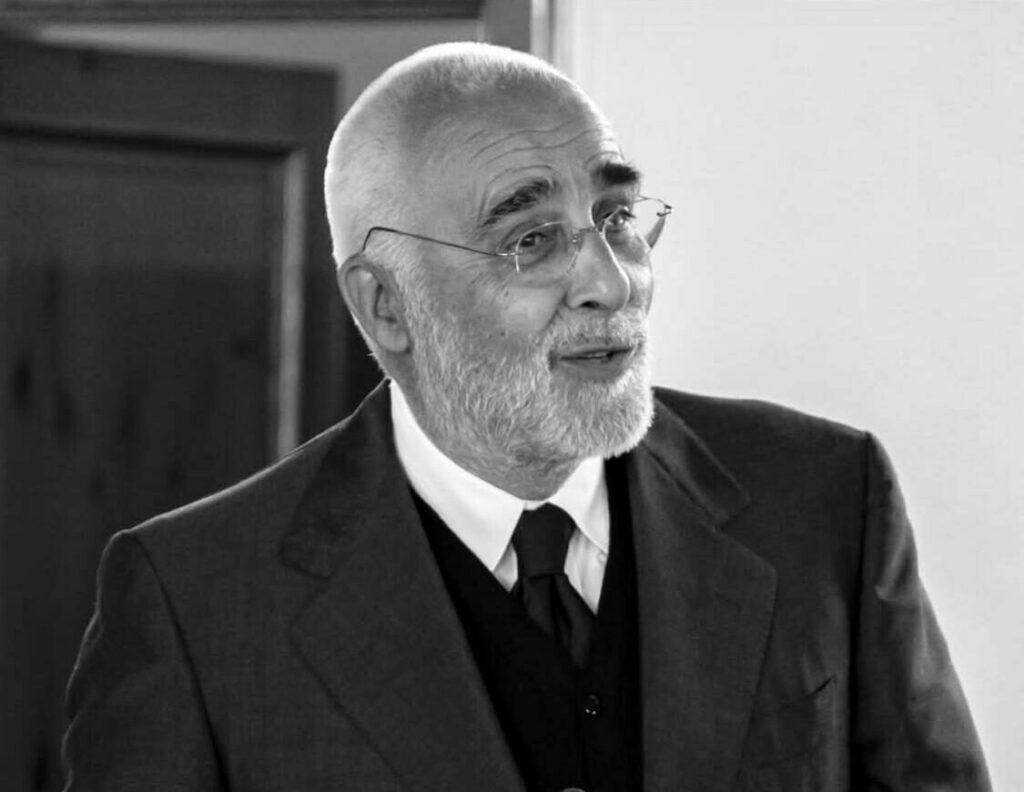
Luigi Cesare Pizzi Spadoni was born in Versilia (LU).
His education was profoundly shaped by his experience at a Salesian boarding school, where there was a strong missionary spirit.
For more than fifty years, he has been a Brother of the Confraternity of Mercy of Camaiore and Lido, and was among the founders of the Confraternity of Mercy of Lido di Camaiore.

As a young man, he worked at the historic Hotel Souvenir in Lido di Camaiore, owned by his father Giuseppe and his mother Bianca Maria. His parents taught him the importance of responsibility, because “every action carries weight” and “freedom is not a right, but a conscious choice to do good”. It was through their example that he grew up with an inclination towards faith and hope, living in the present and looking to the future with confidence, even in difficult times.
He left university to work with a leading ambulance manufacturer as a sales agent and product developer.
In 1988, he founded Spencer Italia, a company that manufactures medical devices for emergency care and rescue. His insights, ideas and entrepreneurial spirit created an organisation that became a world leader in the EMS sector, capable of responding to the demands of a constantly growing and continuously changing market.
For more than thirty years, Luigi invented and patented life-saving equipment, developed markets in countries around the world, cultivated personal relationships with the thousands of people he encountered and created hundreds of jobs.
In 2020, he sold the company bearing the star to devote himself to a new phase of his life, leaving behind a dynamic, healthy organisation respected everywhere for its solidity.
It was then that he began to give shape to his dream, spazio + spadoni, a Catholic-inspired movement that brings together mercy and missionary commitment through its relationship with congregations of missionary women religious and volunteer associations around the world.
His private collection of historic ambulances from around the world became a museum open to visitors in 2010 and is located in the province of Parma.
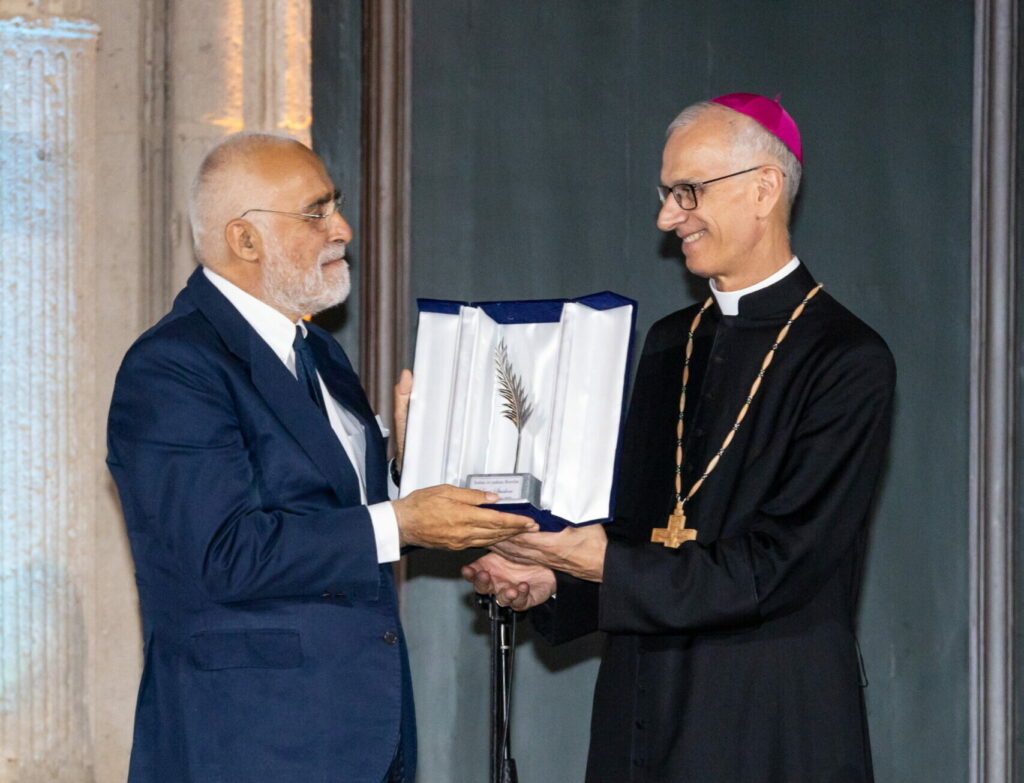
In 2023, he received honorary citizenship from the city of Rosolini (SR) and the Silver Palm – Iustus ut palma florebit award, established by the Diocese of Acireale together with Rosario Valastro, President of the Italian Red Cross.
Where We Are
The home of spazio + spadoni: the Convent of Saint Cerbonius
The Convent of Saint Cerbonius, a historic building of great importance, is a truly mystical place, imbued with a spirituality that has endured through the centuries. Its location, secluded among the woods and situated approximately one hundred metres above sea level, naturally makes it a place of contemplation and reflection, qualities that have always made it a point of reference for the religious and faithful who have lived in or visited it. This atmosphere of peace and introspection, immersed in the beauty of nature, creates an ideal setting for initiatives such as those of spazio + spadoni, which chose Saint Cerbonius as its headquarters in 2021.
Since its foundation, this place has been a spiritual centre: built on the ruins of an ancient pagan temple, the convent witnessed the transition from paganism to Christianity, symbolising the ability to regenerate and adapt to the changes of history. The Benedictine sisters who inhabited it in the ninth century and the Franciscans who settled there in the fifteenth century made it a house of prayer, dedication and service to others, values that perfectly reflect the mission that spazio + spadoni carries forward today.
The spiritual history of the convent is intrinsically linked to the veneration of Saint Cerbonius, Bishop of Populonia, whose relics were brought to Lucca in 786. The fact that the church and convent were dedicated to Saint Cerbonius gives this place a profound meaning: it becomes not only a physical space, but also a place of veneration, a point of connection between heaven and earth. The mystical aura surrounding Saint Cerbonius is palpable within the convent walls, a reflection of the spirituality that still permeates the building today.
It is this context that makes the Convent of Saint Cerbonius the ideal place for spazio + spadoni, an organisation committed to rediscovering and promoting the works of mercy. The connection between past and present is tangible: just as the convent was once a centre of welcome and charity, today spazio + spadoni has given this place new life, turning it into a centre for reflection, research and action on the works of mercy. The convent’s isolation from urban centres also brings this place closer to the spiritual and human needs of contemporary society.
In this mystical place, spazio + spadoni has found the perfect setting in which to develop its initiatives. The peace and sacred character of the Convent of Saint Cerbonius make it possible to develop projects deeply rooted in a tradition of charity and service. The contrast between the antiquity of its stones and the modernity of the activities carried out there testifies to how the works of mercy can be renewed and adapted to current challenges, while preserving the fundamental values of compassion and solidarity.
The convent, a symbol of Lucca’s Christian history, thus becomes a beacon of hope and action for the future, an example of how a mystical place can nurture new forms of mission and service. Through its mission, spazio + spadoni has found at Saint Cerbonius a place where spirituality intertwines with modernity, creating a unique union that looks to the past with respect and to the future with innovation.
FAQ
spazio + spadoni is a Catholic-inspired movement created to inhabit the present through mercy, making it visible, concrete and shared. It is not a single project, but a community journey involving people, congregations, dioceses and territories across five continents.
At the heart of spazio + padoni is OPERA M, the central path through which the movement promotes the reEvolution of the works of mercy. OPERA M does not simply multiply initiatives: it reinterprets the works of mercy as spiritual, relational and transformative acts, capable of generating dignity, closeness and hope in the concrete contexts of life.
The name embodies a symbolic and spiritual vision. spazio indicates a place that opens up, welcomes and allows the other person to enter. spadoni is not an abstract concept, but a proper name, connected to the founder’s story, and evokes action that makes an impact on reality with responsibility and courage. Between the two words stands the crucifix, the central sign: it shows that Christ is at the centre of the movement, the origin and measure of every choice, project and relationship.
The inspiration of spazio + spadoni is explicitly Catholic. The movement recognises in the Face of Christ the source of mercy and in the Spirit the strength that makes encounter and faithfulness over time possible. Every journey, project or gesture arises from a shared Christian vision.
The handprint is a defining sign of the movement. It evokes a mercy that invokes, listens, encounters, acts and overflows. It is not an operating model, but a spiritual form of action, uniting interior life and concrete responsibility.
The flock is a living metaphor for spazio + spadoni. It describes a movement made up of different people who do not journey alone, but support one another and find their direction together. In the flock, no one leads alone, no one is left behind, and the movement grows through relationship, not imposition.
spazio†spadoni presents itself as a movement to be inhabited, not a traditional association. People enter through a journey, not through formal membership, and grow through progressively greater responsibilities.
Anyone who feels the desire to inhabit their time responsibly, to be formed by mercy and to journey with others in a community spirit. Participation takes different forms according to each person’s time and vocation.
No. spazio†spadoni involves laypeople, consecrated people, priests, young people and adults, local communities and ecclesial organisations, each according to their own place and time.
A sober and essential style, profoundly human, spiritually grounded, community-oriented and never individualistic. A style that generates processes, not isolated events.
Symbols are visible signs of a lived journey. They express a belonging that matures over time and accompany the formation and responsibility of the different roles.
It begins by meeting, listening and participating. There is no single door, but a threshold, which each person crosses in their own time.