


The Works of Mercy are examples of how to put the commandment of brotherly love into practice: “You shall love your neighbour as yourself” (Mt 22:39), as expressed in various Gospel teachings (Mt 25:31-46). They comprise 14 actions – 7 corporal and 7 spiritual – through which the faithful care for their neighbours in their physical and non-material needs.
The Works of Mercy should be understood not as mere dogmatic precepts, but as a true practical guide that shows how to turn the words of Jesus into deeds, practising love, listening and social justice in everyday life.
INONDIAMO

Corporal Works of Mercy and Spiritual Works of Mercy
In the Christian tradition, the 14 Works of Mercy are divided into two groups of 7:
- Corporal Works of Mercy: directed towards people’s physical and basic needs.
- Spiritual Works of Mercy: concern a person’s inner needs, calling us to offer moral support and guidance.
Corporal
| N. | Work of Mercy |
|---|---|
| 1 | Feed the hungry |
| 2 | Give drink to the thirsty |
| 3 | Clothe the naked |
| 4 | Host pilgrims |
| 5 | Visiting the sick |
| 6 | Visit the prisoners |
| 7 | Bury the dead |
Spiritual
| N. | Work of Mercy |
|---|---|
| 1 | Counsel the doubters |
| 2 | Teach the ignorant |
| 3 | Admonish sinners |
| 4 | Console the afflicted |
| 5 | Forgive offenses |
| 6 | Put up with troublesome people |
| 7 | Pray to God for the living and the dead |
The 7 Corporal Works of Mercy
The Corporal Works of Mercy show those who practise them how to care for their neighbours in practical ways, safeguarding their bodily dignity and basic needs, such as food, hospitality and care. These deeds call the faithful to recognise the sacred value of the human body, with particular attention to those most in need, including the sick, the hungry and the marginalised.
The 7 Corporal Works of Mercy are:
- Feed the hungry
- Give drink to the thirsty
- Clothe the naked
- Host pilgrims
- Visiting the sick
- Visit the prisoners
- Bury the dead
Feed the hungry
Feeding the hungry means recognising that nourishment is a fundamental right of every person, through an act that meets a basic need essential to survival.
This work of mercy calls us to see our neighbour’s hunger as a deprivation that concerns the whole community, rather than the individual alone. From this perspective, feeding those in need does more than satisfy a physiological necessity: it is an act of dignity and care that, through sharing, helps build a fairer society founded on love and respect for life.
Gospel examples: the multiplication of the loaves and fishes (Mt 14:13-21)
After the death of John the Baptist, Jesus withdraws to a deserted, isolated place. A crowd comes there on foot from the towns to listen to him. As evening approaches, the disciples go to their Teacher and suggest that he send the people away, so that they can go to the nearby villages to buy food.
Jesus, however, asks his disciples to feed the crowd themselves. They react with dismay: they have only five loaves and two fish, too little food to satisfy everyone present.
Jesus invites the people to sit on the grass and, before them, looks up to heaven and gives the blessing. He then takes the bread, breaks it and hands it to the disciples to distribute to everyone. There is enough food to feed them all, with twelve full baskets left over.
In this way, the Son of God performs a tangible miracle that meets a bodily need. The truest response to hunger lies in a willingness to share: this is how scarcity becomes abundance.

“The Works of the Heart” – The First Corporal Work of Mercy
 Italy
ItalyA brief meditation by Archbishop Paolo Giulietti, Archbishop of Lucca, on the first corporal work of mercy, to live it concretely in everyday life. «The works of the heart» is a booklet written by Monsignor Paolo Giulietti on the occasion of the Extraordinary Jubilee of Mercy convoked in 2015, when he was still auxiliary bishop…
Give drink to the thirsty
Giving drink to the thirsty means protecting one of humanity’s most precious resources and making it accessible to everyone. Water meets the human body’s most immediate need, but also becomes a symbol of life and renewal. Our neighbour’s thirst is not only material, but also inward and spiritual: it is the thirst of those who find no meaning in their existence, who seek in others the comfort they have lost.
In his 2015 Encyclical “Laudato si’”, Pope Francis devoted considerable attention to what he calls “The issue of water”. On this subject he writes: “Access to safe drinking water is an essential, fundamental and universal right, because it determines people’s survival and is therefore a condition for the exercise of other human rights” (no. 30).
Gospel examples: Jesus is given a drink on the Cross (Jn 19:28)
Jesus is dying on the Cross. Exhausted by his ordeal, dehydrated and suffering, he says: “I am thirsty“.
In this simple phrase, the Son of God reveals his human nature. One of those present hears his request, soaks a sponge in a sour drink used by soldiers to quench their thirst, places it on a hyssop stalk and brings it to his lips.
Here, Jesus is the recipient of the act of mercy, rather than the one performing it: in the sincerity of that gesture, he rediscovers human compassion, a glimmer of light in such a dramatic and brutal scene. At that moment, before giving up his spirit, Jesus speaks his final words: “It is finished“.
Being Witnesses of Mercy – OFFER
One chapter at a time from the book by Nino Savarino, Governor of the Misericordia of Rosolini, friend of spazio + spadoni, and collaborator on various projects and the blog. From Psalm 63 (62): O God, you are my God; early will I seek you; my soul thirsts for you Offering, a moment of encounter…
“The Works of the Heart” – The Second Corporal Work of Mercy
A brief meditation by Archbishop Paolo Giulietti, Archbishop of Lucca, on the second corporal Opera of mercy, to live it concretely in daily life. «The works of the heart» is a booklet written by Archbishop Paolo Giulietti on the occasion of the Extraordinary Jubilee of Mercy called in 2015, when he was still auxiliary bishop…
Clothe the naked
Clothing the naked means restoring protection, dignity and a sense of belonging. A garment can cover the body, but can also help a person feel welcomed and recognised once more. This work calls us to restore value to those who have been deprived of it, who have been stripped of everything. It addresses marginalisation, illness and discrimination through care, protection of the vulnerable and acceptance of human frailty.
Gospel examples: the father clothes the repentant Prodigal Son (Lk 15:11-32)
A young man asks his father for his share of the inheritance, leaves the family home and moves far away, squandering his wealth in a life of excess. A famine strikes the country where he lives, reducing him to complete poverty: he ends up tending pigs, dressed in rags and stripped of his status.
Repentant, the young man decides to return to his father, hoping to be welcomed back as a hired servant. His father sees him coming, runs to meet him, embraces him and kisses him. The son begins to express his remorse, but his father immediately interrupts him, turns to his servants and orders: “Quickly, bring the finest robe and put it on him; put a ring on his finger and sandals on his feet“.
Through this gesture of deep humanity and compassion, the father does more than clothe his son: he restores his lost dignity, welcomes him back into the family and grants him complete forgiveness.
Being Witnesses of Mercy – DEPART
One chapter at a time from the book by Nino Savarino, Governor of the Misericordia di Rosolini, friend of spazio + spadoni and collaborator in various projects and the blog. From Psalm 121 (120) song of ascents I lift up my eyes to the mountains: where will my help come from? My help comes from…
“The Works of the Heart” – The Third Corporal Work of Mercy
A brief meditation by Msgr. Paolo Giulietti, Archbishop of Lucca, on the third corporal work of mercy, to live it concretely in everyday life. “The works of the heart” is a booklet written by Msgr. Paolo Giulietti on the occasion of the Extraordinary Jubilee of Mercy held in 2015, when he was still auxiliary bishop…
Host pilgrims
Hosting pilgrims means creating spaces for encounter and overcoming fear of others. Every person who arrives brings suffering, dreams and riches to share. A stranger far from home seeks more than shelter: they want to feel welcomed, respected in their identity and recognised in their humanity.
Welcoming strangers is therefore an invitation to be deeply open to different stories, cultures and customs. It means rethinking all our migration policies, knowing that “the Lord… loves the stranger” (Dt 10:18). And God asks us to love strangers as he does: “Love the stranger, then!” (Dt 10:19).
We are all strangers: “You shall not mistreat or oppress a stranger, for you were strangers in the land of Egypt” (Ex 22:20). And we are all God’s guests: “for the land is mine, and you are strangers and tenants with me” (Lv 25:23).
Those who have received mercy know that the great new revelation is that Jesus himself identifies with anyone who needs hospitality: “Whoever welcomes you welcomes me, and whoever welcomes me welcomes the one who sent me” (Mt 10:40). “I was a stranger and you welcomed me” (Mt 25:35).
Gospel examples: two disciples welcome a stranger on the road to Emmaus (Lk 24:13-34)
It is the day of Jesus’ resurrection: two disciples walk towards the village of Emmaus, near Jerusalem, sad and distraught at the death of their Teacher. Along the way, a stranger joins them and begins to converse with them about the meaning of the Holy Scriptures.
When they reach their destination, the stranger takes his leave, appearing ready to continue alone, but the two disciples stop him and invite him to stay with them. The traveller accepts.
During supper, the guest takes the bread, says the blessing and breaks it, handing it to the two disciples. In this gesture, so familiar to them, they recognise the risen Jesus in the stranger.
The episode thus takes on a deeply symbolic meaning: by welcoming a stranger, the two disciples have unknowingly let God into their home.
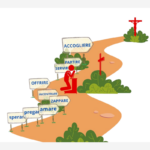
Being Witnesses of Mercy – WELCOME
One chapter at a time from the book by Nino Savarino, Governor of the Misericordia of Rosolini, friend of spazio + spadoni and collaborator on various projects and the blog. From Psalm 15 (14) Lord, who shall abide in your tent? Who shall dwell on your holy hill? He who walks blamelessly, does what is…

“The Works of the Heart” – The Fourth Corporal Work of Mercy
A brief meditation by Msgr. Paolo Giulietti, Archbishop of Lucca, on the fourth corporal Work of mercy, to live it concretely in daily life. «The works of the heart» is a booklet written by Msgr. Paolo Giulietti on the occasion of the Extraordinary Jubilee of Mercy called in 2015, when he was still auxiliary bishop…
Visiting the sick
Visiting the sick means affirming that no illness can erase a person’s worth. Listening and being close become medicine for the soul. Illness weakens more than the body: it also brings isolation and fear. This work reminds us that the loneliness of suffering must be met with constant presence, sharing and care. In the face of bodily frailty, comfort helps preserve our neighbour’s dignity and restore their immeasurable human value.
Gospel examples: the healing of the paralysed man in Capernaum (Mk 2:1-12)
Jesus is in Capernaum, a fishing village in Galilee. When news of his presence spreads, all the residents rush to the house where he is staying, making it impossible even to reach the doorway.
Among those present is a paralysed man, brought there by four merciful people who have carried him on his bed. The crowd, however, prevents them from bringing the sick man before Jesus. They do not give up: they climb onto the roof and, taking advantage of an opening, manage to lower him from above.
Jesus is deeply moved by the determination and commitment of the four men and rewards them by forgiving all their sins. He then turns to the sick man, forgives his sins too and heals him: the man stands on his own legs and returns home, healed in body and spirit.
Jesus’ miracle comes only at the end of the episode: before it, the deepest and most selfless act of care is performed by the four men, who choose not to abandon the unfortunate man, but lead him towards healing.
Visit the prisoners
Visiting the prisoners is an act of profound humanity by those who recognise that every person is greater than their mistakes and retains their dignity even when deprived of freedom. Imprisonment brings isolation and social prejudice: this work of mercy calls us to offer a listening ear and hope to those who have done wrong, affirming that every life deserves a chance of redemption and reminding us that true justice goes beyond punishment and is fulfilled in rehabilitation.
Everyone must consider how to obey the command of God’s Word: “You shared in the sufferings of prisoners and joyfully accepted the loss of your possessions, knowing that you possessed better and more lasting goods” (Heb 10:34); “Remember prisoners as though you were imprisoned with them, and those who suffer, since you too are in a mortal body” (Heb 13:3).
Pope Francis said: “Let us not forget that Jesus and the apostles also experienced prison. In the Passion narratives we learn of the sufferings inflicted on the Lord: arrested, dragged away like a criminal, mocked, scourged, crowned with thorns… He, the only Innocent One! Saint Peter and Saint Paul were also imprisoned (cf. Acts 12:5; Phil 1:12-17)… The passage in the Acts of the Apostles recounting Paul’s imprisonment is moving: he felt alone and wanted some of his friends to visit him (cf. 2 Tim 4:9-15). He felt alone because the vast majority had left him alone… the great Paul”.
Gospel examples: Jesus speaks of the End Times
“I was in prison and you visited me” (Mt 25:31-46)
Jesus speaks these words while describing the moment of the Last Judgement. His statement confuses his disciples, who wonder when their Teacher was imprisoned.
“Truly I tell you: whatever you did for one of the least of these brothers of mine, you did for me”, Jesus explains. This revelation concerns anyone deprived of freedom and makes no distinction between the guilty and the innocent. These words remind us that visiting the prisoners does not mean approving their choices, but recognising God even in frailty and wrongdoing.
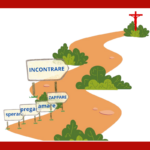
Being Witnesses of Mercy – MEET
One chapter at a time from the book by Nino Savarino, Governor of the Misericordia di Rosolini, friend of spazio + spadoni, and collaborator on various projects and the blog. From Psalm 133 (132) How good and pleasant it is when brothers live together! There the Lord bestows the blessing and life forevermore. Encountering brothers…
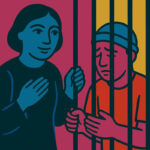
“The Works of the Heart” – The Sixth Corporal Work of Mercy
A brief meditation by msgr. Paolo Giulietti, Archbishop of Lucca, on the sixth corporal Work of mercy, to live it concretely in everyday life. «The works of the heart» is a booklet written by msgr. Paolo Giulietti on the occasion of the extraordinary Jubilee of Mercy convoked in 2015, when he was still auxiliary bishop…
Bury the dead
Burying the dead means cherishing the unique value of every life to its final moment. It is a gesture of respect, remembrance and hope through which the community affirms that no one should be forgotten. Burying the dead also means accompanying the suffering of those left behind and remembering that death does not erase the worth of those who have lived: care for our neighbour continues beyond their earthly existence and becomes remembrance, prayer and hope for eternity.
Every community needs to strengthen its “pastoral care of the bereaved”. A funeral should not be a celebration of the deceased person’s life, but a solemn proclamation of the Paschal Mystery of Jesus who, through his Resurrection, raises us with him.
The Church does not affirm the immortality of the soul, but proclaims in its “Creed”: “I believe in the resurrection of the body and life everlasting” (Apostles’ Creed); “I look forward to the resurrection of the dead and the life of the world to come” (Nicene-Constantinopolitan Creed).
Paul proclaims the resurrection as something required not by a supposed immortality of the soul, but by God’s love for humanity: “The body is for the Lord, and the Lord is for the body” (1 Cor 6:13). This thought sends a shiver through us: God himself loves and sanctifies our body, called to immortality, a member of Christ’s own body, a “temple of the Holy Spirit” (1 Cor 6:13-19).
Gospel examples: the dignified burial of Jesus Christ (Mt 27:57-60)
After Jesus’ death, Joseph of Arimathea, a respected member of the Sanhedrin who has secretly become his disciple, courageously goes before Pontius Pilate and asks for his Teacher’s lifeless body. The Prefect of Judea agrees.
Together with Nicodemus, he goes to Golgotha to offer a dignified burial: Jesus’ body is wrapped in linen cloths and perfumed with a mixture of myrrh and aloes, according to the burial custom of the time.
Nearby is a new tomb cut into the rock, which has never been used. There Joseph and Nicodemus lay Jesus, sealing the entrance with a large stone. Even in the face of death, the two disciples show deep veneration and boundless respect for their Teacher.
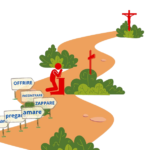
Being witnesses of mercy – PAUSING
Before the cross of Christ: the work of mercy of burying the dead Now, before continuing our journey, let us pause before the cross. Face to face with Jesus: us and Him / me and Him. “Before Jesus there are no secrets: He reads within the heart, in the heart of each one of us”.…
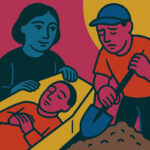
“The Works of the Heart” – The Seventh Corporal Work of Mercy
A short meditation by Msgr. Paolo Giulietti, Archbishop of Lucca, on the seventh corporal work of mercy, to live it concretely in everyday life. «The Works of the Heart» is a booklet written by Msgr. Paolo Giulietti on the occasion of the Extraordinary Jubilee of Mercy convoked in 2015, when he was still auxiliary bishop…
The 7 Spiritual Works of Mercy
The Spiritual Works of Mercy are acts of compassion directed towards the well-being of the soul, addressing emotional, psychological and relational needs. They call the faithful to show empathy towards other human beings, offering moral and spiritual support through understanding, listening, counsel and forgiveness.
The 7 Spiritual Works of Mercy are:
- Counsel the doubters
- Teach the ignorant
- Admonish sinners
- Console the afflicted
- Forgive offenses
- Patiently put up with troublesome people
- Pray to God for the living and the dead
Counsel the doubters
Everyone faces moments of uncertainty in their life. Counselling the doubters means, above all, listening to those in need and offering understanding and closeness. Only in this way can we give advice that truly helps our neighbour, supporting their search for clarity with respect and discretion, without overriding their perspective to impose our own.
Gospel examples: the scepticism of the disciple Thomas (Jn 20:25-29)
Thomas, one of the twelve apostles, was a pragmatic and passionate man. When Jesus rises from the dead and appears to his disciples, Thomas is absent. He chooses not to believe their account, uttering the famous words: “Unless I see the marks of the nails in his hands and put my finger into the nail marks and my hand into his side, I will not believe”.
Jesus appears to Thomas eight days later. The Son of God does not immediately appear to his sceptical follower, but gives him time to work through his troubled thoughts. When he chooses to reveal himself, Jesus neither judges nor rebukes him for his doubts, but welcomes him. Moreover, he does not demand blind faith: he understands his scepticism and allows him to touch the wounds of his suffering.
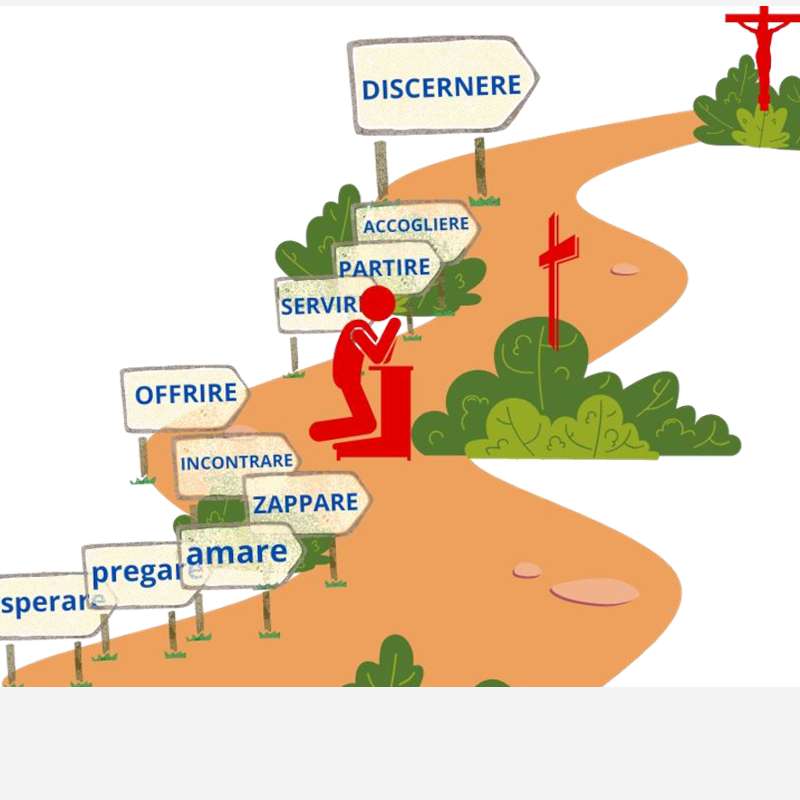
Being Witnesses of Mercy: Discerning

“The Works of the Heart” – The First Spiritual Work of Mercy
Teach the ignorant
Jesus’ teachings show that teaching the ignorant does not mean establishing a relationship of superiority, in which those who know instruct those who do not from above. On the contrary, passing on knowledge is an act of profound sharing.
Teaching the ignorant means giving everyone the tools to become independent, understand the world and elevate their minds. It is not about the accumulation of facts, but about creating awareness, discovering and valuing each person’s talents so that no one is denied the opportunity to grow.
Jesus urges us: “Go, therefore, and make disciples of all nations, baptising them in the name of the Father and of the Son and of the Holy Spirit, teaching them to observe everything I have commanded you” (Mt 28:18-20).
Those who have received mercy discover talents, abilities and responsibilities they may never have recognised, becoming bearers of light for others in turn: “As the Father has sent me, so I send you” (Jn 20:21). “You will be my witnesses in Jerusalem, throughout Judea and Samaria, and to the ends of the earth” (Acts 1:8).
Gospel examples: the Samaritan woman at the well of Sychar (Jn 4:1-39)
Jesus, tired after a long journey from Judea to Galilee, stops to rest beside Jacob’s well in Sychar, Samaria. It is noon, the hottest hour, when a woman arrives carrying a water jar. She has chosen the hottest time to visit the well to avoid people’s judgemental looks: she is vulnerable, has had five husbands and lives with a man she has not married. She is also a Samaritan, a people considered heretical by the Jews.
Jesus, crossing every convention and taboo, speaks to her and asks for water. Surprised by his request, she wonders why a Jewish man would choose to address a Samaritan woman. Jesus explains that, if she knew who she was speaking to, she would ask him for “living water”, so that her thirst might be quenched for ever.
An intense exchange follows: the woman focuses on practical matters, pointing out that Jesus does not even have a bucket with which to draw water. She then asks him where the proper place to pray is.
Jesus surprises her: he explains that a time is coming when people will no longer be separated by ethnicity or place, but will “worship the Father in spirit and truth“. He then shows that he knows her deeply, speaking of her five husbands and her circumstances. Finally, he openly reveals that he is the Messiah.
The Samaritan woman leaves the well transformed: she abandons her jar and runs into town to share the message she has received. The people follow her to the well to listen to the Word. The woman has been instructed and now becomes a witness herself.
Admonish sinners
Admonishing sinners is an act of love and courage: it means using truth and mercy to help those who do wrong find the right path again. This work embodies the outlook of those who take another person’s fate to heart, supporting them rather than abandoning them to error, so that they do not harm themselves or the community. Admonishing does not mean judging or assuming moral superiority, but offering oneself as a guide, a thoughtful counsellor and a sincere friend.
Gospel examples: Jesus and the woman caught in adultery (Jn 8:1-11)
Early one morning, Jesus is in the Temple in Jerusalem, surrounded by the faithful. His teaching is interrupted by a group of scribes and Pharisees who burst in with a woman. She is pushed into the middle of the crowd to expose her to public humiliation: she has been caught committing adultery.
The accusers ask Jesus for his opinion, secretly intending to trap him: if he asks them to let her go, the Son of God would violate the sacred Law of Moses, which prescribes stoning for her offence; if he favours stoning, he would contradict his own teachings of peace and mercy.
Here Jesus utters the proverbial words: “Let anyone among you who is without sin be the first to throw a stone at her”. No one present throws a stone; the Temple empties, leaving Jesus and the woman alone. He speaks and asks whether any of her accusers has condemned her: “No one, Lord”, she replies.
“Neither do I condemn you; go, and from now on sin no more”, Jesus answers, rejecting the logic of punishment without minimising her wrongdoing. In this way, he restores the sinful woman’s dignity.
Being Witnesses of Mercy – ILLUMINATE
One chapter at a time from the book by Nino Savarino, Governor of the Misericordia of Rosolini, friend of spazio + spadoni and collaborator on various projects and the blog From Psalm 42-43 (41-42) Send your truth and your light; let them guide me, bring me to your holy mountain and to your dwellings. Pope…

“The works of the heart” – The third spiritual work of mercy
A brief meditation by Msgr. Paolo Giulietti, Archbishop of Lucca, on the third spiritual work of mercy, to live it concretely in everyday life. “The works of the heart” is a booklet written by Msgr. Paolo Giulietti on the occasion of the Extraordinary Jubilee of Mercy convoked in 2015, when he was still auxiliary bishop…
Console the afflicted
The essential meaning of Consoling the afflicted lies in being empathetically, sincerely and authentically present to the pain of those who suffer. Consolation cannot eliminate suffering, but finds its fullest expression in listening to and understanding those facing illness, bereavement, discouragement or loneliness. Consoling is an act of closeness that calls us not to look away, but to recognise and respond to our neighbour’s anguish.
Those who have received mercy are not defined by their wounds: through a merciful encounter, they can rediscover inner resources, new merciful relationships and the certainty that they are not alone on life’s journey.
The Hebrew term for comforting and consolation comes from the root ‘nhm’, which means, above all, to breathe deeply or groan and, in its causative sense, “to make someone breathe”, to help them catch their breath in a situation of pain or fear (Gn 50:21). Comforting means helping someone so oppressed and crushed that they can no longer catch their breath to breathe again.
Gospel examples: Jesus at the tomb of Lazarus (Jn 11:1-45)
Lazarus dies in his village of Bethany. When Jesus, who loved him deeply, reaches his tomb, he meets his sisters Martha and Mary, grieving the loss of their brother.
Both women seek comfort in Jesus, expressing their deep sorrow that, had the Son of God been present, Lazarus would have been saved. Jesus does not rebuke them, justify himself or offer abstract explanations: he shares the two sisters’ grief and joins them in tears.
Before performing the famous miracle of raising Lazarus, Jesus chooses to share the two sisters’ suffering, showing human sorrow, a true connection and a closeness capable of bringing hope even in the face of the worst tragedy.
Being Witnesses of Mercy – HOPING
One chapter at a time from the book by Nino Savarino, Governor of the Misericordia of Rosolini, great friend of spazio + spadoni and collaborator of several projects and the blog. From Psalm 37 (36) 3 Trust in the Lord and do good; dwell in the land and live with faith 4. Take delight in…

“The works of the heart” – The fourth spiritual work of mercy
A brief meditation by Msgr. Paolo Giulietti, Archbishop of Lucca, on the fourth spiritual work of mercy, to live it concretely in daily life. “The works of the heart” is a booklet written by Msgr. Paolo Giulietti on the occasion of the Extraordinary Jubilee of Mercy announced in 2015, when he was still auxiliary bishop…
Forgive offenses
Forgiving offenses is one of the highest forms of freedom. It means breaking the chain of hatred and revenge, rather than justifying evil. It is a radical, demanding act that calls for a conscious choice: a liberation that uproots resentment and plants the seed of rebuilding on the values of peace and harmony.
The Hebrew verb ’slh’, the most common term for forgiveness, means erasing the memory of the wrong suffered. Elsewhere the Bible uses ‘nasa’, which means lifting to remove, but also taking away or eliminating. Forgiveness is therefore the annihilation of the evil committed, release from a burden that weighs us down and complete freedom from the negativity in our lives.
Gospel examples: Jesus forgives his executioners on the Cross (Lk 23:33-47)
The most powerful image handed down to us from Jesus’ life: he is on the cross, mocked, insulted and humiliated in body and mind. Yet the Son of God does not yield to brutal violence, give way to anger or curse his tormentors: he recognises their spiritual blindness and asks for their forgiveness: “Father, forgive them, for they do not know what they are doing”.
On the cross, Jesus not only forgives but excuses, “even managing, in the face of hell, to find the technical grounds for acquittal: the accused – all human beings – must be acquitted for lacking the capacity to understand and to act of their own free will” (A. D’Ascanio).
Jesus chooses the path of forgiveness despite his executioners showing no sign of repentance, allowing the power of love to prevail over hatred. This gesture transforms those beside him: one of the two thieves crucified alongside him recognises him as Saviour, and Jesus promises to take him into the Kingdom of Heaven; even a centurion recognises his greatness and feels remorse.
Thus, through this act of boundless mercy, the most beastly ferocity becomes the fullest and most sublime form of love.
Being Witnesses of Mercy – LOVING
One chapter at a time from the book by Nino Savarino, Governor of the Misericordia di Rosolini, friend of spazio + spadoni and collaborator of various projects and of the blog. From Psalm 118 (117) Praise the Lord, for he is good; his mercy endures forever. Let Israel say that he is good: his mercy…

Forgiving offences: the Work of mercy to teach children
In a world increasingly dominated by pride, families have the task of teaching children to forgive and apologise. (edited by Father Bruno Ferrero) Today there is a widespread and evident difficulty in apologising. The concept of forgiveness is largely ignored. One reason why many adults find it difficult to express themselves through the language of…
Patiently put up with troublesome people
Patiently putting up with troublesome people means choosing understanding over intolerance and relationship over exclusion. It means constantly practising self-control and reflection, refusing to give in to impulses. It is not passive acceptance of abuse and bullying, but recognition that other people’s aggression often conceals emotional vulnerability or unresolved pain. Resisting an instinctive reaction brings believers closer to inner peace by choosing understanding over anger.
This work teaches us to recognise that every person has worth. Those who have received mercy patiently spread mercy around them, remembering the Lord’s Word: “Be merciful, just as your Father is merciful” (Lk 6:36).
Gospel examples: Jesus heals Malchus, the high priest’s servant (Jn 18:1-11)
On the night before his Passion, Jesus is in Gethsemane. There Judas Iscariot hands him over to the chief priests and the elders of the people, kissing him and using a gesture of affection to carry out his betrayal. The guards arrest Jesus, provoking Peter’s anger: he draws his sword and wounds Malchus, the high priest’s servant, in the ear. Jesus disapproves of Peter’s action, orders him to put his sword away and end the violence, then touches Malchus’ ear and heals him.
The Son of God acts in full control of his emotions and chooses the path of mercy as he meets his destiny: the fullest demonstration that true strength belongs to those who can govern their instinctive impulses.
Being Witnesses of Mercy – OBEY
One chapter at a time from the book by Nino Savarino, Governor of the Misericordia of Rosolini, friend of spazio + spadoni, and collaborator on several projects and the blog. From Psalm 86 (85): Teach me your way, Lord, that I may walk in your truth; give me an undivided heart to revere your name.…

“The works of the heart” – The sixth spiritual work of mercy
A short meditation by Msgr. Paolo Giulietti, Archbishop of Lucca, on the sixth spiritual work of mercy, to live it concretely in everyday life. “The works of the heart” is a booklet written by Msgr. Paolo Giulietti on the occasion of the Extraordinary Jubilee of Mercy called in 2015, when he was still auxiliary bishop…
Pray to God for the living and the dead
Praying for the living and the dead means recognising that no one is alone and that every life is held within a greater communion. Prayer becomes a bridge joining generations, peoples and stories, transcending time and space.
Praying for the living means protecting and supporting our neighbours, sharing their joys and sorrows. Praying for the dead means cherishing their memory and our affection for them beyond the boundaries of earthly life.
Gospel examples: Jesus’ intercession during the Last Supper (Jn 17:1-26)
During the Last Supper, in a moment of profound recollection, Jesus raises his eyes to heaven and prays to the Father. His first thoughts are for his disciples, those physically and spiritually closest to him. He intercedes so that they may continue to follow the right path, finding in truth comfort for the pain that is about to come. The prayer then takes on a wider dimension: the Teacher turns his thoughts to all those who, over the centuries, will choose to believe in his word. His final hope is that all humanity may one day be reunited in the Father’s eternal glory.
In this episode of intense connection, prayer becomes the highest and truest form of care for our neighbour, in an act of mercy embracing everyone: the living, the dead and those yet to come.
Being Witnesses of Mercy – PRAY
One chapter at a time from the book by Nino Savarino, Governor of the Misericordia of Rosolini, friend of spazio + spadoni and collaborator on various projects and the blog. From Psalm 143 (142) Lord, hear my prayer, listen to my cry for mercy; in your faithfulness and righteousness come to my relief. It is…

“The works of the heart” – The seventh spiritual work of mercy
A brief meditation by Msgr. Paolo Giulietti, Archbishop of Lucca, on the seventh spiritual work of mercy, to live it concretely in daily life. “Le opere del cuore” is a booklet written by Msgr. Paolo Giulietti on the occasion of the Extraordinary Jubilee of Mercy convoked in 2015, when he was still auxiliary bishop of…

Content conceived and created by Luigi Spadoni, founder of spazio + spadoni.
Timeline of the works of mercy
- 1ST CENTURY – GOSPEL
In Matthew 25:31-46, Jesus himself, in the discourse known as the “Last Judgement”, points to what are unanimously considered the original references to the Works of Mercy. - 2ND CENTURY – HERMAS
Proposes 20 good works and virtuous attitudes, not only as actions but as dispositions of the heart and ways of living out relationships. - 150-200 – ST IRENAEUS OF LYONS
Comments on Mt 25, arguing that giving to those in need is equivalent to giving to God. - 200-250 – ORIGEN
Offers an allegorical interpretation of Matthew 25, emphasising the importance of nourishing both body and soul. - 250-300 – LACTANTIUS
Presents a list similar to the one that will become traditional for the “works of mercy”. Calls for the development of the idea and practice of inductive Works of Mercy. - 3RD CENTURY – CYPRIAN OF CARTHAGE
In his treatise, stresses that prayer must be accompanied by good works. - 347-407 – ST JOHN CHRYSOSTOM
Introduces the concept of the “Sacrament of the brother”. - 354-430 – ST AUGUSTINE OF HIPPO
Establishes the two forms of works of mercy, corporal and spiritual, through the concept of “giving and forgiving”, and groups them into three categories: reconciliation, the call to attend to our neighbour’s spiritual needs, and prayer. - 470-542 – CAESARIUS OF ARLES
Reflects on charity, emphasising the importance of giving despite personal limitations. - 604 – POPE GREGORY THE GREAT
Attests to the spiritual and material interpretation of the works of mercy, with reference to Job 29:12-13. - 1050-1107 – THEOPHYLACT OF OHRID
Commenting on Mt 25, stresses the dual nature of humanity (soul and body) and the need for charity in both forms. - 1179 – COMESTOR
Adds the seventh corporal work of mercy, “bury the dead”, drawn from Tobit 1:17. - 1244 – SAINT PETER MARTYR
Amid the flourishing of confraternities and Marian associations, Friar Peter of Verona founds the first Misericordia in Florence, called to “honour God through works of mercy towards one’s neighbour” - 1274 – THOMAS AQUINAS
Confirms the list of works of mercy, including the seven corporal works (with the seventh from Tobit) and the seven spiritual works. - 1549-1563 – COUNCIL OF TRENT
Emphasises that the works of mercy are a natural and necessary expression of faith in God and love of one’s neighbour. - 1908 – POPE PIUS X
In the Catechism of Catholic Doctrine, summarises the 14 works of mercy discussed at the National Catechetical Congress of 1889. - 1992 – CATECHISM OF THE CATHOLIC CHURCH
States that the works of mercy are charitable actions that help our neighbours in their needs, both corporal and spiritual. - 1992 – POPE JOHN PAUL II
Approved the Catechism of the Catholic Church, and its definitive form in 1995; the 14 works of mercy appear in the section on Formulas of Catholic Doctrine. - 2005 – POPE BENEDICT XVI
Motu Proprio for the approval and publication of the Compendium of the Catholic Church. - 2015 – POPE FRANCIS
On 13 March, proclaims the Extraordinary Jubilee of Mercy through the papal bull Misericodiae Vultus. - 2023 – SPAZIO + SPADONI
In September, promotes OPERAM through Forums on the riEvolution of the works of mercy in Italy – Noto/Sicily and in Africa – Benin/Cotonou, Burkina Faso/Bobo-Dioulasso.
Frequently asked questions about the Works of Mercy
The historical and theological roots of the Works of Mercy can be traced to:
The Old Testament: the texts of the Old Covenant teach care for the poorest, strangers and orphans, central themes in the prophets’ teachings.
The New Testament: Jesus’ message is rooted in chapter 25 of the Gospel according to Matthew, where the Teacher identifies care for the hungry, the thirsty, the sick, strangers, the naked and prisoners as the measure of authentic love.
These teachings were codified by the Catholic Church over the centuries. During the Middle Ages, inspired by the book of Tobit, the act of burying the dead was added. Later, material needs were complemented by spiritual ones, defining the framework of the fourteen works of mercy as we know them today.
The numerology of fourteen comes from the perfect symmetry between the seven Corporal Works and the seven Spiritual Works. The number 7 has a strong symbolic significance in Christianity, representing completeness and perfection.
The seven works of bodily care and seven acts of spiritual comfort embody the acceptance of responsibility for caring for the person in all their needs, addressing every human necessity comprehensively, in both the physical and inner spheres.
The difference between corporal and spiritual works of mercy lies in the different areas of suffering each group addresses, although the two categories remain deeply interconnected.
The Corporal Works concern people’s physical and material needs, relieving bodily pain and frailty.
The Spiritual Works care for the wounds of the soul through acts such as teaching, counsel, forgiveness and prayer.
Taken together, the fourteen works show that authentic care for our neighbour is only truly such when it can offer support to the whole human person.
Today’s society is marked by individualism, unstable relationships and an inability to engage in dialogue. In such a world, the Works of Mercy have a deeply relevant significance and guiding role. They show that human behaviour must reclaim empathy and concern for our neighbours as moral compasses against indifference and selfishness.
The Works of Mercy enable us to address the ills and vulnerabilities of modern humanity through care for others and renewed authentic connection. They represent a path to salvation from social marginalisation, digital isolation and all modern forms of social insecurity, whether material or emotional. Ultimately, they remind us that the strength of a community is measured by its ability to protect and value its weakest members.
The great lesson of the fourteen Works lies in the invitation to practise mercy in our daily lives, not as isolated, occasional heroic deeds, but as a constant disposition to care about our neighbour’s well-being.
Today, as Jesus showed through example and not only through words, the Works of Mercy must take the form of simple gestures capable of enriching others’ lives: helping those in difficulty, attending to others’ needs, caring for our neighbours without waiting to be asked, listening to the marginalised and treating every person with profound dignity.
Every daily interaction thus becomes an opportunity to do good, understood as the highest form of community connection and the true path to drawing closer to God.
Effectively teaching the Works of Mercy to younger people means translating theological concepts into concrete images, using stories, parables and examples drawn from daily life.
Children and young people do not enjoy lists of abstract rules, but deeply understand stories in which they can recognise themselves, finding positive role models to follow. In this sense, the countless episodes of mercy that characterise the life of Jesus show immediately and clearly what it means to care for others, free from judgement, prejudice and social distance.
Young people must be guided to understand that mercy is not the prerogative of adults, but a disposition that can and should guide everyone’s actions, as both respect for God and a constant effort by those who wish to help make the world a better place.

 Timor-Leste
 Democratic Republic of the Congo
Being Witnesses of Mercy – HOE
The column “Testimoni di misericordia” with Nino Savarino’s (e-book) book. This Monday, the verb “to hoe” and the Work “to feed the hungry”. One chapter at a time from the book by Nino Savarino, Governor of the Misericordia di Rosolini, friend of spazio + spadoni and collaborator in several projects and the blog. From Psalm…