



 Italy
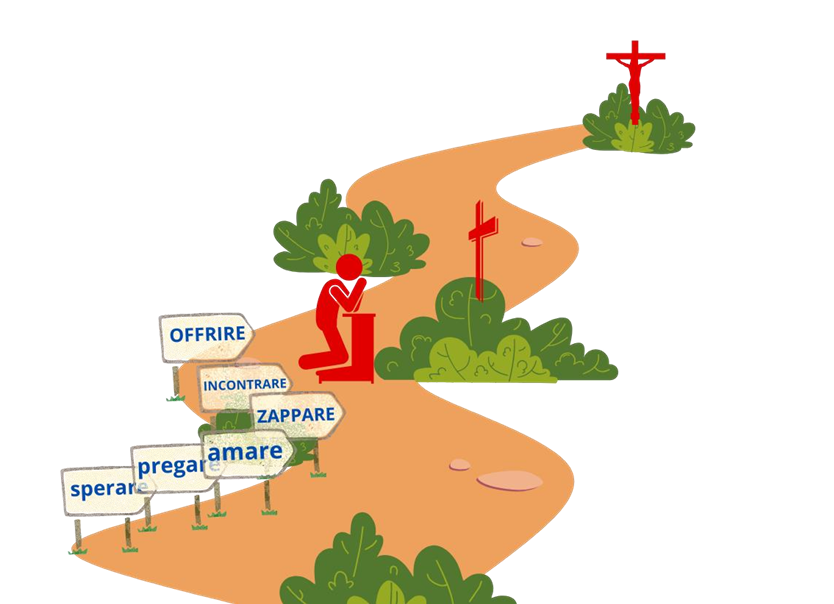
Before the cross of Christ: the work of mercy of burying the dead
Now, before continuing our journey, let us pause before the cross.
Face to face with Jesus: us and Him / me and Him.
“Before Jesus there are no secrets: He reads within the heart, in the heart of each one of us”.
A shoot shall sprout from the stump of Jesse, and a branch shall grow out of his roots.
The spirit of the Lord shall rest upon him: a spirit of wisdom and of understanding, a spirit of counsel and of fortitude, a spirit of knowledge and of fear of the Lord.
(Isaiah 11:1-2)
“The profound, true, perhaps unconfessed meaning of the Adoration of the Cross is the encounter, face to face, with the Man of Sorrows.
In the disfigured face of Jesus, sign of suffering and deep agony, each of us encounters himself, his problems, his sufferings, disappointments, anxieties, fears.
We approach Him, in procession, to stand in His presence for just a few seconds. They are perhaps the most eternal seconds ever: our mind and our heart show Him the nakedness of our being. To Him who first experienced the most atrocious sufferings in His flesh.
To kiss the feet, the side, and the hands of Christ Crucified is like saying to Him: stay close to us, do not leave us alone.
It is not mere suffering, but com-passion!
It is not agonizing over what Jesus suffered, but finding ourselves together on the journey of a difficult life full of afflictions.
I have seen elderly people, young people, individuals of every social background bow before Him, kissing His wounds. We all stood before Him with sympathy of spirit, because none of us is exempt from suffering.
That is why the celebration of Good Friday is not a devotional act an end in itself: it is real, genuine, the most human action.
But there is more, much more.
The One before us, enthroned on that Cross, is the Christ, the Lord of life, the Risen One, He who conquered death.
Our com-passion is in truth hope for life, because we present the fragility of our human nature to the One who we know can transform it into life and eternal joy.
Here it is: the encounter of the Cross is the encounter of life.
That man with the disfigured face is our salvation. He is our God.
And it is wonderful to know that this Jesus is Emmanuel, God with us, our brother”.
(A. Savarino, The Encounter of the Cross, Encounter of Life, April 18, 2025)
Prayer to the Holy Face of Saint John Paul II
Lord Jesus, crucified and risen, image of the Father’s glory, Holy Face who gazes upon us and searches us, merciful and meek, to call us to conversion and invite us to the fullness of love, we adore You and bless You.
In Your luminous Face we learn how we are loved and how to love; where freedom and reconciliation are found; how to become builders of the peace that radiates from You and leads to You.
In Your glorified Face we learn to overcome every form of selfishness, to hope against all hope, to choose the works of life against the deeds of death.
Grant us the grace to place You at the center of our lives; to remain faithful, amidst the risks and changes of the world, to our Christian vocation; to announce to all peoples the power of the Cross and the Word that saves; to be vigilant and active, attentive to the least of our brothers; to recognize the signs of true liberation, which began in You and will find fulfillment in You.
Lord, grant Your Church to stand, like the Virgin Mother, by Your glorious Cross and by the crosses of all men and women to bring them consolation, hope, and comfort.
May the Spirit You have given us bring Your work of salvation to maturity, so that all creatures, freed from the bonds of death, may contemplate in the Father’s glory Your Holy Face, shining brightly forever and ever. Amen.
(Prayer proposed by the Pope during the pastoral visit to the Archdiocese of Lucca on September 23-24, 1989)
Our journey will be more vigorous and beautiful if we pause in prayer before the Glorious Cross of the Risen Christ.
What if we tried to bury the dead?
What can we do in practice?
The first six corporal works of mercy are contained in chapter 25 of the Gospel of Matthew. Burying the dead, an act of Christian piety, is a work of mercy added by Church tradition as the ultimate corporal gesture of love and respect toward the deceased.
“It must be acknowledged that, among all the corporal actions of mercy, the burial of the dead is the one people care least about; indeed, today it has become almost impossible to experience with awareness and human feelings. Compassion and mercy even toward the dead belong to those ‘unwritten and unalterable laws’ that emerge, or should emerge, from the heart of every person and that require for the dying a place, the cemetery, where one sleeps and rests; where, for Christian faith, there is the sign of a life that cannot be lost and that beyond death receives a new form, that of eternal life.
Finally, let us not forget that this corporal action of mercy also works great good in the one who performs it: it leads one to reflect on the question of death, on what death is as an enigma/mystery for each person; to measure one’s own limits; to discern what is essential to life; to reflect on what others mean to us; to gauge whether our love lasts only as long as the other is useful to us or if it endures even when the other is no longer here. Christian faith reveals to us that, through baptism, we have died together with Christ and have been buried together with Him, to rise again with Him in the resurrection (cf. Rom 6:3-5; Col 2:12). We have therefore been buried together with Christ, and practicing this deed toward others is saying ‘amen’ to our journey alongside Jesus toward the Father, God”.
(Enzo Bianchi, Burying the Dead)
Points for reflection
“He will transfigure our lowly body to conform it to his glorious body” (Phil 3:21).
Source and image: N. Savarino, “Witnesses of Mercy”
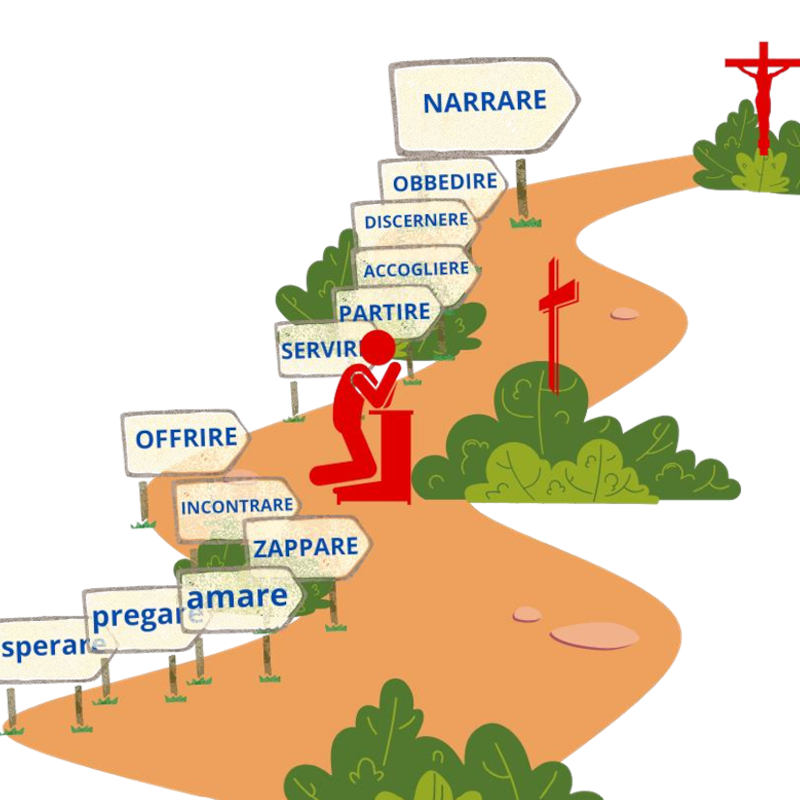
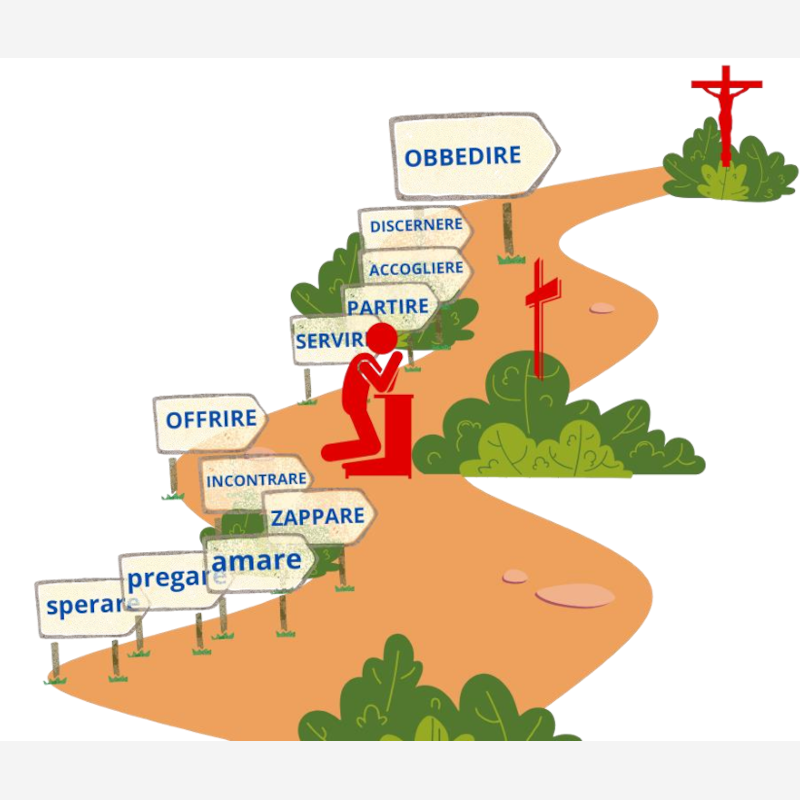
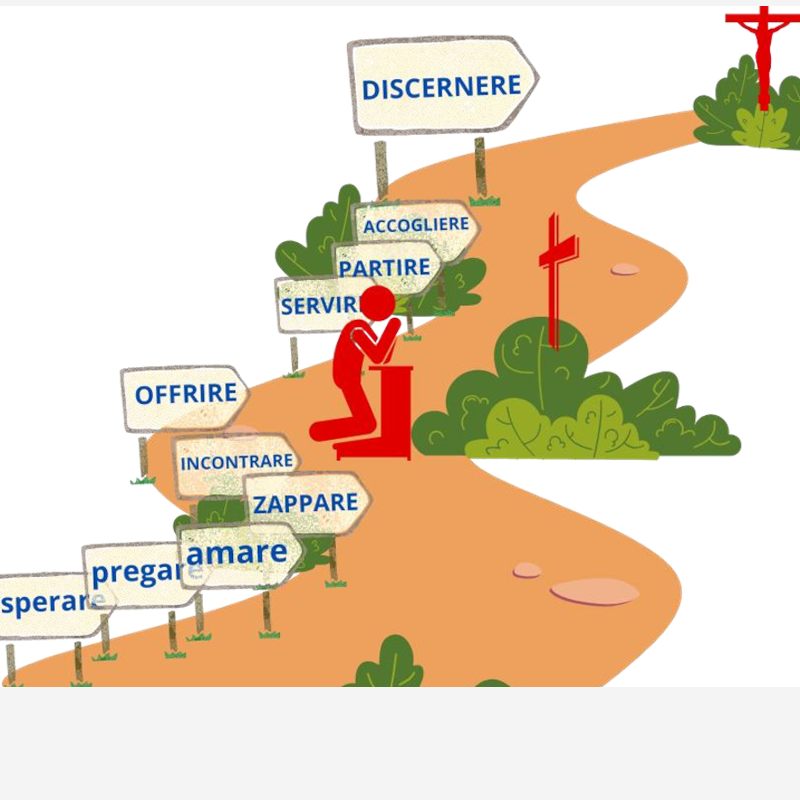
Being Witnesses of Mercy – ILLUMINATE
2 February 2026