



 Italy
Italy
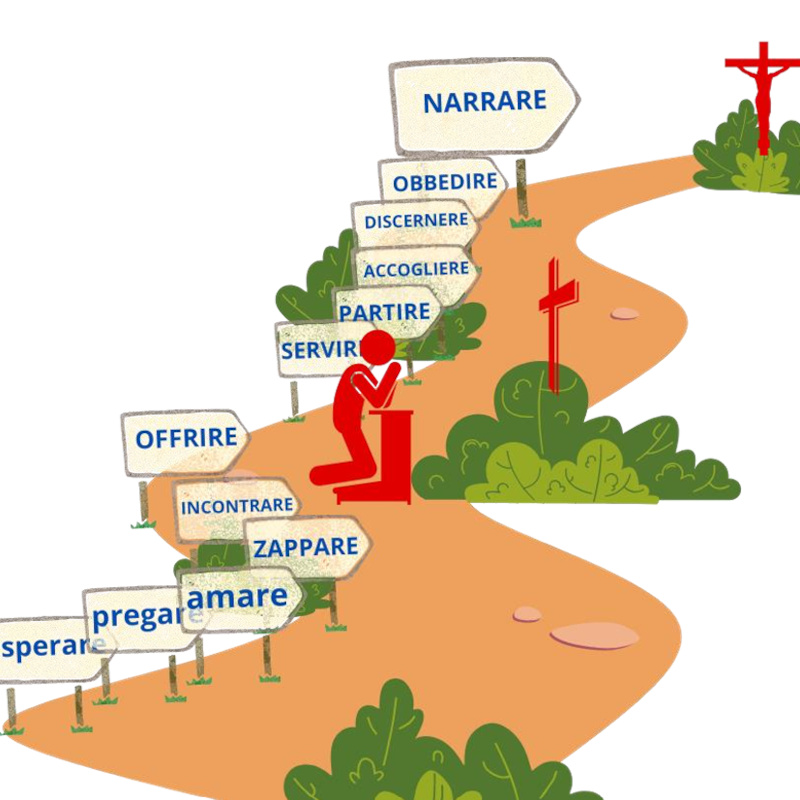
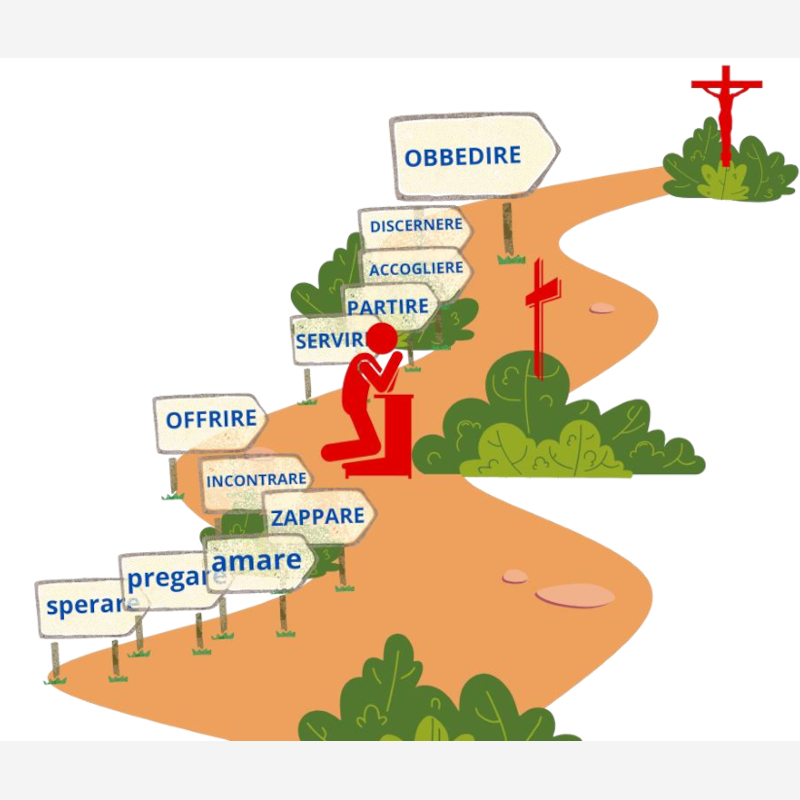
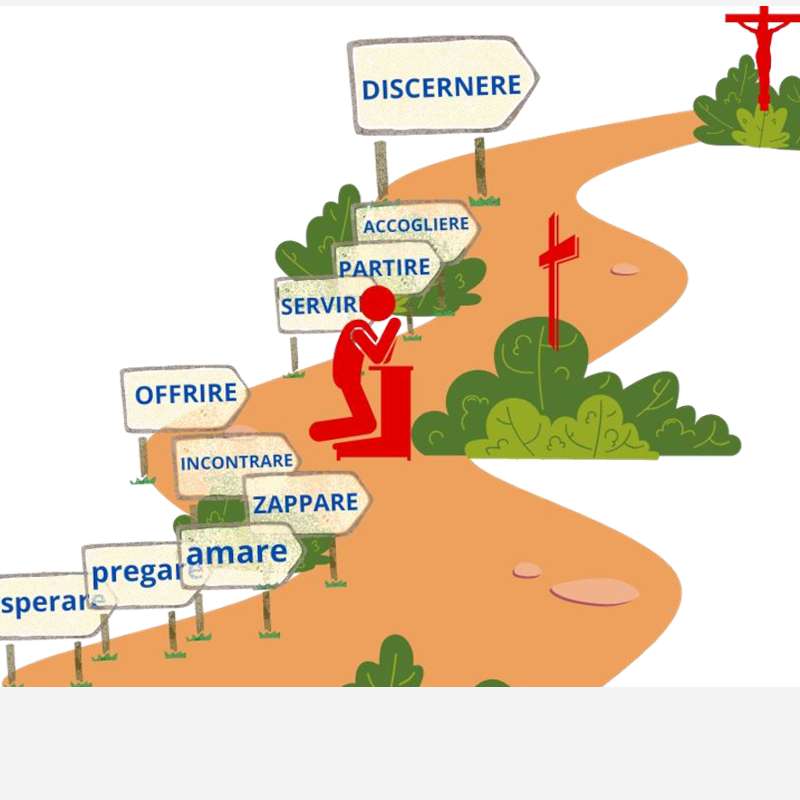
The column “Witnesses of mercy” with the (flippable) book by Nino Savarino. This Monday, the verb “to pray” and the work “to pray to God for the living and the dead”.
One chapter at a time from the book by Nino Savarino, Governor of the Misericordia of Rosolini, friend of spazio + spadoni and collaborator on various projects and the blog.
From Psalm 143 (142)
Lord, hear my prayer, listen to my cry for mercy; in your faithfulness and righteousness come to my relief.
It is always time for prayer
Pope Francis said: “Prayer opens the heart to the Lord and, when the Spirit enters, it changes your life from within. Therefore, we must pray, to open our hearts and make room for the Spirit.
Prayer is an impulse, an invocation that goes beyond ourselves: something born in the intimacy of our being that reaches out, sensing the longing for an encounter. That longing is more than a need, more than a necessity: it is a path. Prayer is the voice of an ‘I’ that fumbles, that moves cautiously in search of a ‘Thou’. The meeting between the ‘I’ and the ‘Thou’ cannot be calculated: it is a human encounter, and we often grope in the dark to find the ‘Thou’ our ‘I’ is seeking.”
What would humanity be without prayer?
There are many forms of prayer: praise, adoration, thanksgiving, intercession. There is prayer in the secret of one’s room and communal prayer. There is silent prayer and persevering prayer. There is the prayer of words and the prayer of gestures. Our journey will be gentle and wonderful if we nourish it with prayer, whatever kind it may be. Above all, of praise and thanksgiving.
What can we do in practice?
Pray to God for the living and the dead. We often think that practicing mercy is merely an action. This work of mercy reminds us that prayer is also an act of love, situated on the same level as the other works of mercy. The prayer of intercession for the living and the dead is a great act of charity and prepares the heart for charity. Consider Mother Teresa of Calcutta.
There is the well-known episode of the journalist who wished to interview her, and she asked him: “How many hours a day do you pray?”. The journalist was taken aback, expecting a different request. Mother Teresa explained her question: “You see, without God, we are too poor to help the poor. Without prayer, it is difficult to persevere in true service to the poor,” and then added: “Remember that I am only a poor woman who prays. By praying, God places his love in my heart, and thus I can love the poor.”
(Father Ezio Bolis, Monthly Catechesis, October 28, 2015)
Food for thought
“Rejoice always, pray continually, give thanks in all circumstances; for this is God’s will for you in Christ Jesus.” (1 Thessalonians 5:16-18)
Source and image: N. Savarino, Witnesses of mercy
Being Witnesses of Mercy – ILLUMINATE
2 February 2026