
 Algeria
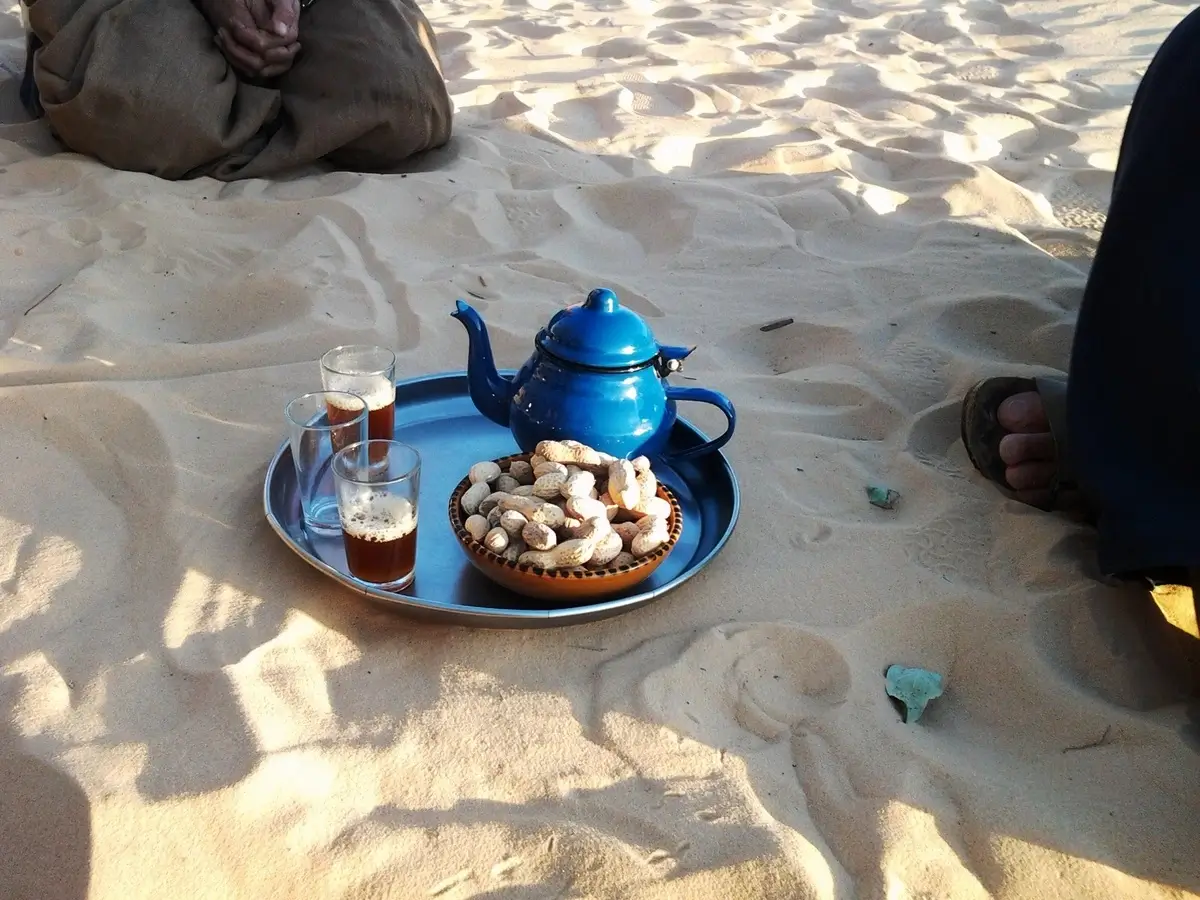
“Blessed is the one who will eat in the kingdom of God!”
Jesus replied to one of the dinner guests: “A man gave a great dinner and invited many guests. At dinner time, he sent his servant to tell the invited guests: ‘Come, everything is ready’” (Lk 14:15b-17).
When I lived in Algeria, in the city of Touggourt, located in the Sahara Desert, I happened to be invited to a circumcision celebration, the rite of passage to adulthood for all Muslim boys. Touggourt is a completely Muslim city of about 150,000 inhabitants, among whom there are just seven Catholics. I was their parish priest.
After spending a few months there, I was invited by a Muslim friend to attend a special celebration. Some children had been circumcised, and Ahmed asked me if I wanted to take part in the party organized by his friend Ali for his eight-year-old son, who was among them. I accepted the invitation.
Being invited to a Muslim religious celebration, as a Catholic, is a great honor. I entered Ali’s house and was surprised to see how many people were there. Naturally, they were all men. We sat on some cushions on the floor, around a tabla, a low circular table on which a huge platter of couscous awaited us. Each of us, with a spoon, took his own portion from the dish, respecting the others.
We didn’t talk much. It is customary not to speak while eating. I didn’t even meet Ali’s son, but I left that house aware that something important had just happened.
By inviting me, the entire ummah, the Muslim community, was welcoming me to the city.
It was a great sign of acceptance: from that moment on, we could become friends.
Ali’s dinner in Touggourt helps me understand what happens in the house of a leader of the Pharisees (Lk 14:1-24). Jesus enters the house on the Sabbath (Lk 14:1), the day of the weekly Jewish feast, sits at the table, meets the other guests, and explains to them what the kingdom of God is through the parable of a great dinner.
Jesus responds to one of the fellow guests who had just exclaimed: “Blessed is the one who will eat in the kingdom of God!” (Lk 14:15b). In the parable, Jesus gives space, action, and a voice to a man who invites three different groups to the great dinner hosted at his house, sending his servant three times (Lk 14:17, 21, 23).
The first guests decline at the last minute, despite having already accepted the invitation. The master expresses his anger over the refusal, but he does not seek revenge and does not give up. He extends the invitation to the poor and transforms the resulting situation into something unexpected, scandalous, and revolutionary.
The new guests are people unimaginable to the Pharisees listening to Jesus, as well as to the readers. The result is the creation of a heterodox social order, completely opposed to the existing system.
The master’s reaction reveals to us the generosity of this man, born of compassion, which leads him to change the relationships he had established. The rejection by his peers, paradoxically, prompts him to act just as Jesus had asked (Lk 14:12-14).
The poor of the city have been invited. They are certainly numerous, but, incredibly, there is still room, and the master is anxious for his house to be full. It is interesting to note that the poor, the beneficiaries of the dinner, are the only ones who say nothing, and yet they are the very ones who will eat with the master.
Attention remains focused on the host, who gives a new order to his servant, amid growing tension: the first are invited, the second must be brought in, and the third even compelled to attend the dinner. It is time for the feast, everything is ready, so one must hurry.
We do not know the outcome of the third and final invitation extended to those outside the city. In narrative terms, the story lacks a concluding situation and leaves us curious.
We would expect a conclusion to the entire scene, but the narrator surprises us by offering a justification for the master’s behavior and switching from the third person to the first person singular. Who is speaking? The master of the house or Jesus himself?
The text skillfully plays on the different levels of parable and reality, so that the “I” expressing itself can belong to both. Luke’s narrative skill allows readers to identify with that “I tell you” with which the banquet scene concludes (Lk 14:24).
The conclusion insists on the exclusion of the first guests invited, to prompt a question: is there or is there not room for us, readers, at the banquet? It is a question concerning our behavior toward others and our way of following Jesus.
The richness of this parable is a tool for transforming present reality and offers an invitation to the feast, that is, to the communal sharing of the richness of human relationships. Furthermore, it allows us to hold together its social value and the eschatological reference to the kingdom of God.
Sharing a meal can have a truly profound meaning.
My experience in Touggourt continues through Father Marco and Brother Ottorino, two PIME missionaries who live in that city today. Their encounters with Muslim friends can offer a glimpse into the kingdom of God.
Photo by Father Piero Masolo