


 Democratic Republic of the Congo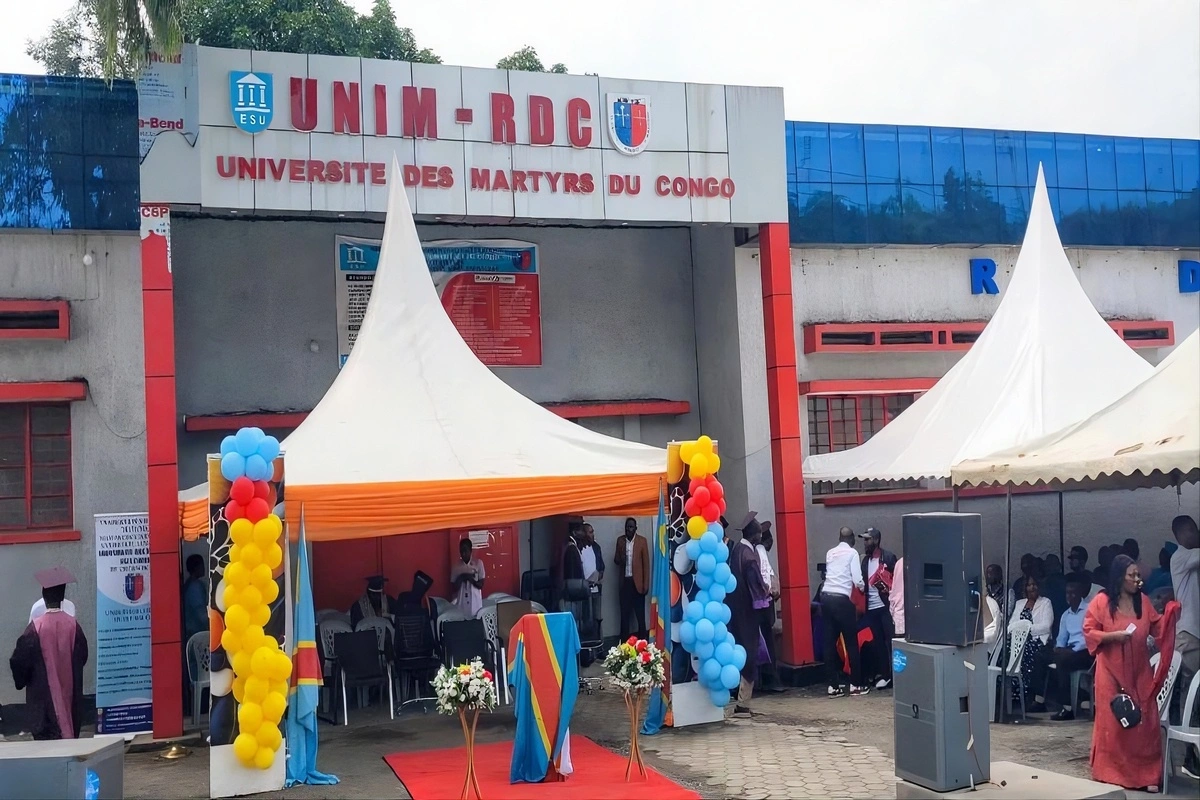
The University of Martyrs of Congo establishes the African Center for Peace, Mediation, and Diplomacy (CAPMD-UNIM).

According to researcher Destin Byandike, a specialist in international negotiation  and the new correspondent for spazio + spadoni, the observation is clear: after decades of conflict in the eastern part of the country, there is a lack of conflict prevention mechanisms originating from within.

The CAPMD positions itself as a form of "university diplomacy", founded on four pillars: LISTEN, DIALOGUE, RECONCILE, RESOLVE.

The goal is to train Congolese mediators, develop research activities, and accompany communities on the ground.

Under the leadership of Prof. and General Alain Alisa Job Sambokera, the CAPMD invites researchers, decision-makers, and partners to join and endorse this initiative.
Mr. Destin Byandike, what observation prompted UNIM to create this center?
The observation stems first and foremost from research. During training at UNIM’s School of Diplomacy, Negotiation, and Mediation, our research findings demonstrated one key fact: an African center specialized in peace dialogue, conflict resolution, and regional and international cooperation is needed for comprehensive security in Africa.
The DRC, especially in its eastern region, has faced cycles of conflict for decades. Despite international interventions, there is a lack of prevention mechanisms emerging from within.
At UNIM, we realized it is time for Congolese academia to produce scientific and concrete solutions for its own people. That is how the CAPMD-UNIM was born.
How does your approach stand out?
Our motto summarizes everything: LISTEN, DIALOGUE, RECONCILE, RESOLVE.
We do not seek to impose peace from above. We want first to listen to the root causes of conflict, bring communities together, and facilitate compromises at the local level.
The CAPMD aims to train Congolese mediators, produce research on peace in the DRC, and go into the field. It is a form of university diplomacy.
Why focus on eastern DRC?
Because that is where suffering is most acute today: massive displacements of people, breakdown of the social fabric.
However, our vision is both national and African. If we succeed in stabilizing the East through dialogue, we will provide a model for the entire continent.
What is the role of Europe and international partners?
The role of partners is fundamental, but it must be one of support. We need technical and financial partnerships for training and research. The CAPMD aims to sign agreements with various partners for the 2026–2027 period.
However, leadership must remain Congolese and African. Europe can help fund knowledge, not replace it.
Are you optimistic about peace in the DRC?
I am a researcher, so I am realistic. But I am also Congolese. And I believe that as long as we choose dialogue over weapons, there is hope. This is our commitment.
«At the heart of conflicts, we choose dialogue; in the face of divisions, we build peace».
I would also like to acknowledge the efforts and vision of Professor and General Alain Alisa Job Sambokera, whose leadership made this initiative possible within UNIM.
«Peace is not decreed. It is built, first and foremost by listening to those who suffer».
I therefore invite African researchers, decision-makers, diplomats, and experts to embrace this initiative, which will provide a concrete and context-appropriate response to the reality experienced in the Democratic Republic of the Congo.
Photo by Destin Byandike