



 Italy
Italy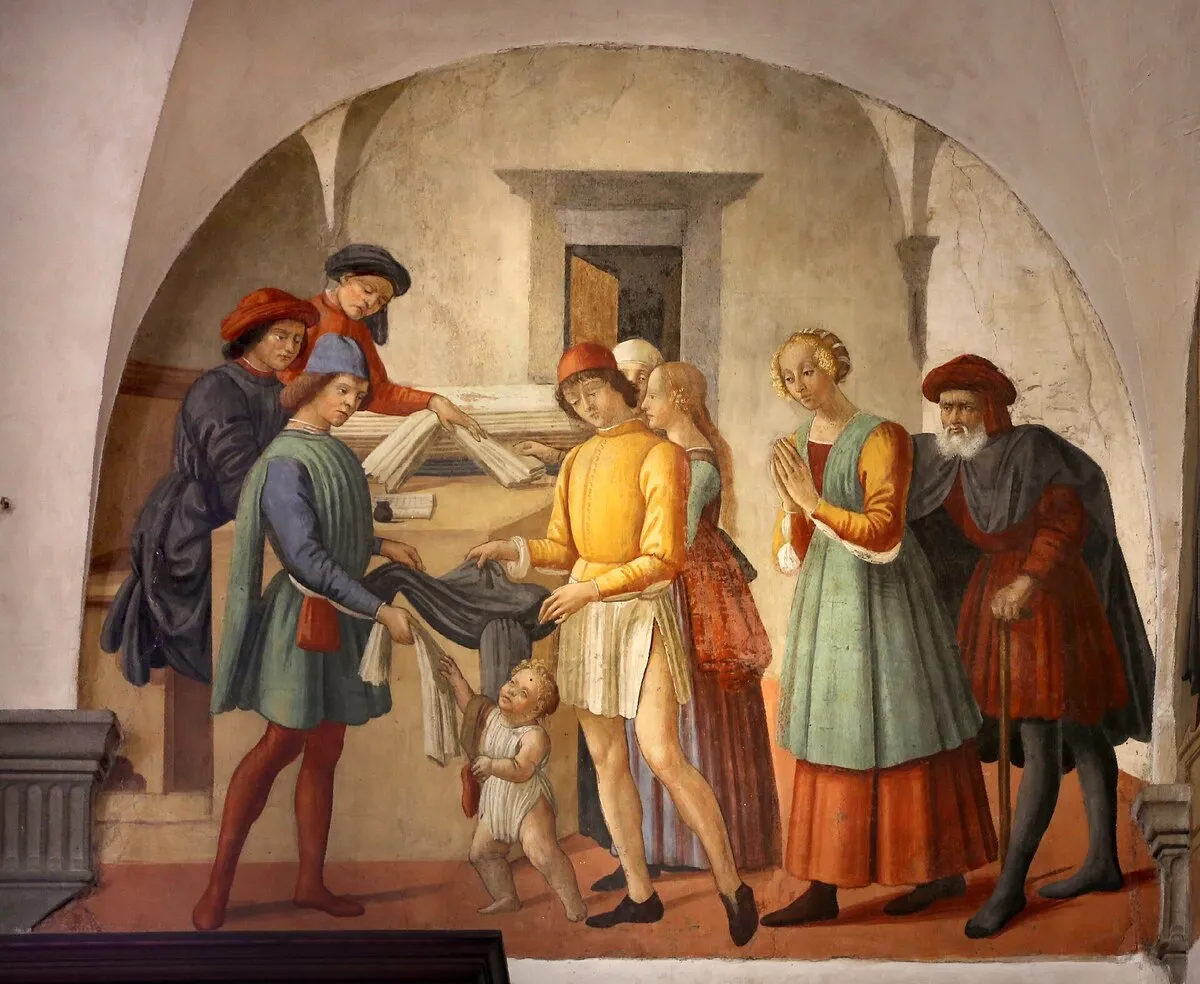
The corporal Work of Mercy “clothing the naked” seen through painters
Everyone is a naked soul and feels the need to clothe themselves in a garment of respectability, of qualities appreciated by others, to give meaning to their life and feel like someone tangible (Pirandello).
This Work of Mercy has its roots in the gesture of God who covered the human nakedness of our first parents after original sin: “The Lord God made garments of skin for Adam and his wife and clothed them.”
Embracing the limits of human frailty, from which stems bewilderment before others, God promptly intervenes and addresses this sorrowful condition. It is merciful love for His creatures that led Him to remedy that shameful situation in which our forebears found themselves.
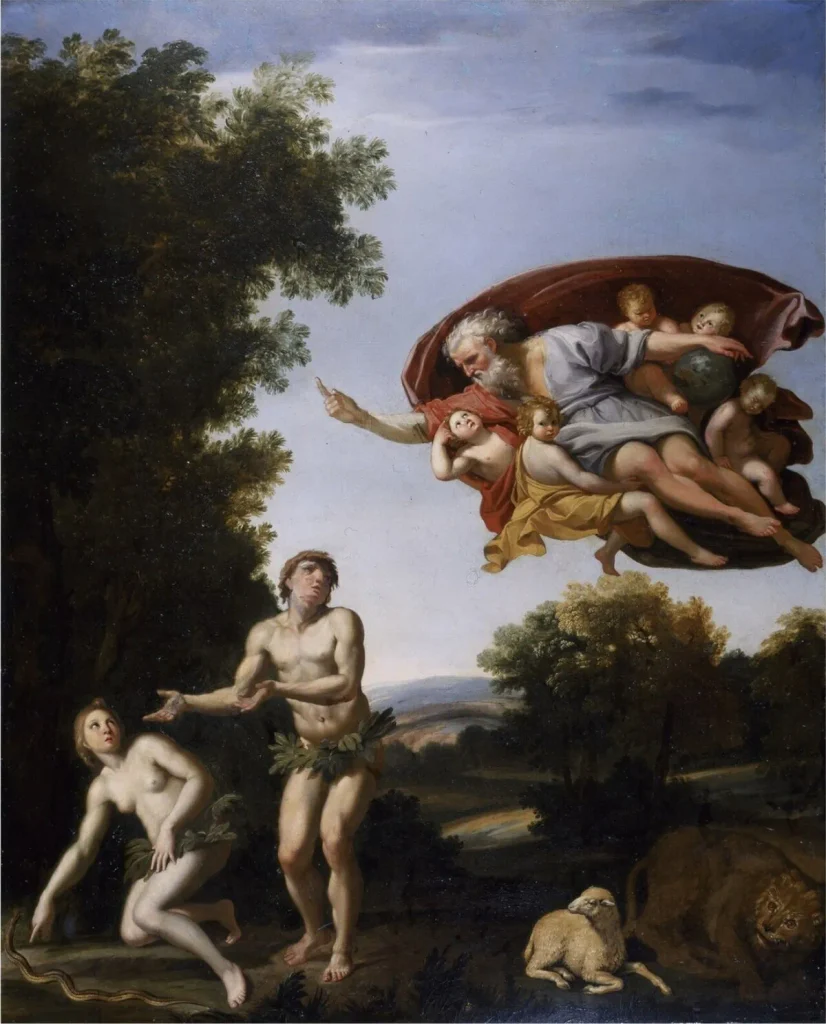
In the 1626 painting, destined for the world’s most prestigious exhibitions and art galleries to be admired, Domenichino (1581–1641), painter and architect, depicts a panorama of the earthly paradise, where untouched nature still shows peace between the lion and the lamb.
The sculptural, almost statuary figures immerse themselves in a scenic setting of great refinement. In the left corner, Eve points to the serpent still slithering at her feet, while Adam excuses himself by pointing to Eve; at the top right, God is surrounded by angels, just as the artist had observed in the Sistine Chapel, showcasing his admiration and homage to Michelangelo.
The face of God the Father expresses compassion and tenderness, yet His gesture conveys the grave consequences of that disobedience, prompting Him to remedy it in the interim by clothing them. The warm colors and the light streaming from various sources illuminate the most significant details, turning the entire composition into a fairytale and paradisiacal narration of the biblical event.
The act of clothing those in extreme poverty entails caring for that person, restoring the sense of dignity gradually lost through the tribulations of life.
Dating back to the 15th century is the fresco by Francesco d’Antonio, a collaborator of Ghirlandaio, painted for the Ospizio dei Buonomini in Florence, depicting figures distributing clothes to the poor within a contemporary architectural setting.
What strikes the viewer in this softly colored work is the humble, respectful disposition of all figures who, illuminated by clear and diffused light, prepare to give and receive.
It is a work celebrated for its descriptive simplicity, yet it perfectly conveys that clothing the naked means not only attending to someone’s physical body, but also restoring, at least in part, their strength and offering emotional and spiritual encouragement to move forward in society.
This Work of Mercy made a fourth-century knight “famous,” who later became a great saint: Saint Martin of Tours, to whom Lucca dedicated a grand cathedral, consecrated in 1070.
From the year 1000 onward, an extraordinary blossoming of imposing cathedrals took place, adorned with rich sculptural decorations designed to illustrate the Christian message for worship and meditation.
According to prominent historians, Lucca was among the earliest cities in Tuscany to embrace Christianity and support the flow of pilgrims traveling along the Via Francigena toward Rome.
Chivalric tales were recounted in diverse ways during the Middle Ages, and Martin was among these figures: he served in the Roman imperial guard, ensuring public order.
During one of his patrols in the harsh winter of 335, he encountered a half-naked beggar. Knights of that era were obligated to return to the barracks with their cloak at all costs under penalty of severe discipline. Seeing the man suffering intensely, Martin drew his sword and divided his cloak in two. That night, he dreamed of Jesus saying to him: “Here is Martin, the unbaptized Roman soldier; he has clothed me.” Upon awakening, he found his cloak restored whole. On the facade of the Lucca cathedral stands one of the most distinctive sculptural groupings of the Italian Middle Ages: Saint Martin and the beggar from the 13th century. The outdoor group is a copy of the original attributed to Guido da Como, preserved inside the cathedral.
The figure of the saint, endowed with a youthful countenance and mounted on horseback, is captured in the act of cutting his cloak. The beggar stretches out bare arms to receive the soldier’s gift, his slightly bent legs accentuating a posture of humble plea.
Everything is balanced and sharply delineated, such as the folds of the garments and cloak, eliminating any impression of static posture and allowing light to create harmonious chiaroscuro gradations.
Even the sword, placed horizontally by the sculptor, loses its lethal connotation and gently brushes the beggar’s shoulder, almost establishing a fraternal bond. Even the horse’s head, spirited and alert, turns toward the beggar as if understanding the noble deed being performed.
The lesson drawn from this history remains profoundly relevant today, as our era witnesses an unprecedented number of refugees requiring clothing and protection.
Consequently, Christians, through their charitable deeds toward those in destitution, must realize they are a direct reflection and testimony of God’s mercy.
On the other hand, our homes contain wardrobes overflowing with clothing that we can readily share.
Above all, we must perform this act of mercy with the love and reverence born of the conviction that in the vulnerable person we have clothed Jesus: «I was naked and you clothed me» (Mt 25:36).
Cover image: Wikipedia

Being Witnesses of Mercy – ILLUMINATE
2 February 2026