


 Italy
Italy
We live in a society of relativism. By distancing ourselves from God, we have lost certainty about what is good and what is evil. Morality is no longer based on shared common principles. We are in a situation similar to the decline described in the Book of Judges, which repeatedly says: “Everyone did what seemed right to them” (Judg 17:6; 21:25). In this complete individualism, we have arrived at a “fluid society”, where everyone does as they please and it becomes difficult to understand what is right.
Trying to help those who live with doubt and uncertainty is the first of the spiritual Works of Mercy. Pope Francis stated: “To show mercy towards those who doubt is equivalent to soothing the pain and suffering that stem from the fear and anguish that are consequences of doubt. It is therefore an act of true love intended to support a person in the weakness caused by uncertainty.”
God is truth
God is truth: “I bless the Lord who gives me counsel; even at night my heart instructs me” (Ps 15:7); “I will make you wise and show you the way to follow; with my eyes upon you, I will give you counsel” (Ps 31:8); “Counsel and sound judgement are mine; I am understanding, power is mine” (Prov 8:14); “Your word is truth” (Jn 17:17); “I advise you to buy from me gold refined by fire so that you may become rich” (Rev 3:18); “You will guide me with your counsel and afterwards receive me into your glory” (Ps 72:24).
Jesus is the Truth: “I am the way, the truth and the life” (Jn 14:6); “The Spirit of the Lord will rest upon him, a Spirit of wisdom and understanding, a Spirit of counsel and strength” (Isa 11:2); “Whoever hears my word and believes the one who sent me has eternal life” (Jn 5:24; 8:51); “You are already clean because of the word I have spoken to you” (Jn 15:3).
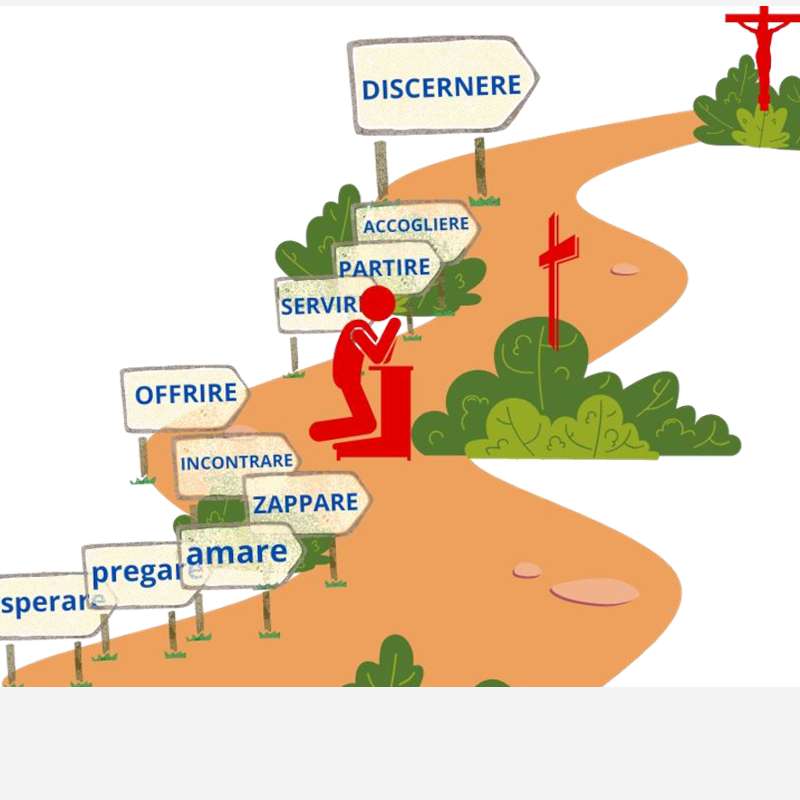
Discernment
At every age, believers are called to practise discernment and to ask themselves what the Lord wants of them, what their calling is in life and in their concrete circumstances.
The word discernment derives from the Latin discernere, composed of dis, “between”, and cernere, “to distinguish”: to discern is to choose among the various possibilities, and for believers it means listening to the Lord in order to understand his will, his plan for us.
Among the various charisms listed by Paul is the “discernment of spirits” (1 Cor 10:12), that is, the ability to distinguish the divine Spirit from the demonic one. This capacity for discernment can be exercised by priests, but also by lay men and women. Scripture tells us: “Keep company often with a devout man, whom you know to observe the commandments and whose soul is like your own; if you stumble, he will know how to sympathise with you” (Sir 37:12); “Seek advice from every wise person and do not reject any good counsel” (Tob 4:18); “Listen to counsel and accept correction, so that you may be wise in the future” (Prov 19:20; 3:21); “Wisdom is found among those who take advice” (Prov 13:10); “The wise listen to counsel” (Prov 12:15).
“(The righteous person) will be filled with a spirit of understanding; like rain, they will pour forth words of wisdom, and in prayer they will praise the Lord. They will direct their counsel and knowledge and meditate on the mysteries of God. They will make the teaching of their doctrine shine forth and will glory in the law of the Lord’s covenant. Many will praise their understanding; they will never be forgotten, their memory will not disappear, and their name will live from generation to generation” (Sir 39:6-10); “How fitting wisdom is in the elderly, and discernment and counsel in honoured people!” (Sir 25:5); “The knowledge of the wise grows like a flood; their counsel is like a spring of life” (Sir 21:13).
Pope Francis said: “How can we know if something comes from the Holy Spirit or if it stems from the spirit of the world or the spirit of the devil? The only way is through discernment, which calls not only for a good capacity for reasoning and common sense; it is also a gift which we must ask for. If we ask the Holy Spirit for it with confidence, and at the same time strive to cultivate it through prayer, reflection, reading and good counsel, we will surely grow in this spiritual capacity. Discernment… is necessary at all times: to be able to recognise God’s timetable and his grace, so that we do not waste the Lord’s inspirations or disregard his invitation to grow… At the same time, discernment leads us to recognise the concrete means that the Lord provides in his mysterious plan of love… When, in God’s presence, we examine the paths of life, no area can be excluded. In every aspect of life, we can continue to grow and offer something greater to God, even in those areas where we experience the greatest difficulties… Discernment is not a presumptuous self-analysis or an egotistical introspection, but an authentic process of going out of ourselves towards the mystery of God, who helps us live the mission to which he has called us for the good of our brothers and sisters” (Gaudete et exsultate, nos. 166, 169, 175).
May the Lord give us his Holy Spirit so that we may understand the mission to which we are called in every situation, and our vocation in his plan of Salvation at every stage of our lives; and may he give us the humility to turn to brothers or sisters who are wiser in Faith, so that they may help us discover his will.
Catechesis
Pope Francis said: “I think someone might ask me: ‘Father, I have so many doubts about faith; what should I do? Do you never have doubts?’ I have many… Of course, at certain moments everyone has doubts! Doubts that concern faith, in a positive sense, are a sign that we want to know God better and more deeply, Jesus, and the mystery of his love for us. ‘But I have this doubt: I search, study, look into it or ask for advice about what to do.’ These are doubts that help us grow! It is therefore good for us to ask questions about our faith, because in this way we are encouraged to deepen it. Doubts, however, must also be overcome. For this, it is necessary to listen to the Word of God and understand what it teaches us.” Doubt can therefore be an important opportunity for growth through a deeper understanding of the Word of God, which leads me to draw closer to the Lord and his Light. But at times it can be a simple pretext for avoiding conversion and avoiding the commitment to change my life radically in the light of the Gospel.
“An important path that helps greatly in this is catechesis, through which the proclamation of faith encounters us in the concrete reality of personal and community life” (Pope Francis).
One can never emphasise enough the importance of catechesis that explores the rational foundations of Faith, dismantles the toxic images of God we carry within us, which are philosophical or even pagan in origin but do not correspond to the God proclaimed to us by Jesus Christ, and brings us back to what is essential in Faith. A serious and well-prepared catechist truly knows how to counsel those who doubt and dispel their uncertainties.
“At the same time,” Pope Francis added, “there is another equally important path: living as fully as possible our faith. Let us not turn faith into an abstract theory in which doubts multiply. Instead, let us make faith our life. Let us try to put it into practice in serving our brothers and sisters, especially those most in need. Then so many doubts vanish, because we feel the presence of God and the truth of the Gospel in the love which, through no merit of our own, dwells within us and which we share with others.”
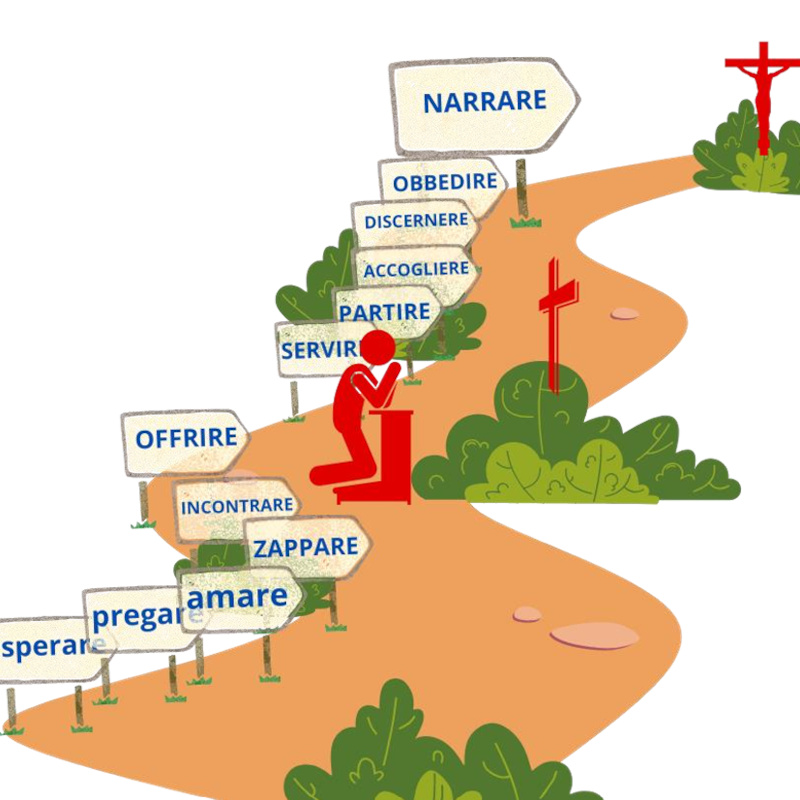
Being Witnesses of Mercy – ILLUMINATE
2 February 2026