



 Italy
Italy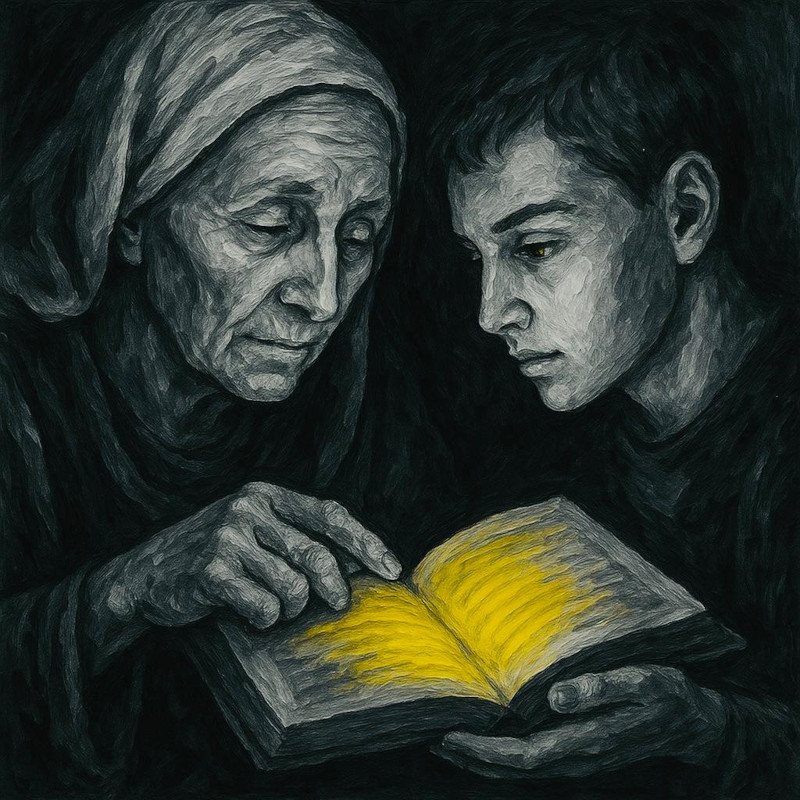
The situation
Global illiteracy statistics outline an alarming reality. According to estimates from the United Nations Sustainable Development Goals report, approximately 750 million adults and 617 million children and adolescents worldwide lack essential literacy skills. Women make up roughly two-thirds of this illiterate population. The lowest literacy rates are concentrated in southern and western Asia, sub-Saharan Africa, and the Arab states, with several regions recording literacy levels near 60%.
This deficit severely limits social, economic, and personal advancement, curtailing career opportunities, educational access, and full engagement in public life.
From a religious standpoint, data from the Pew Research Center indicates that out of every ten inhabitants on Earth, three are Christian, 2.5 are Muslim, 1.6 are non-religious, 1.5 practice Hinduism, 0.7 practice Buddhism, and 0.02 (two per thousand) are Jewish. In absolute numbers, the global population comprises 2.3 billion Christians, 1.8 billion Muslims, 1.2 billion unaffiliated individuals, and 1.1 billion Hindus.
Consequently, out of roughly 6.4 billion people on the planet, an estimated 4.1 billion have never encountered the authentic proclamation of the Gospel of Jesus, either because it has never been proclaimed to them or because it was presented in an unconvincing or distorted manner.
God’s commandments are the happiness of humanity
The Scriptures present numerous laws and ordinances, given not as arbitrary burdens or trials, but as the true pathway to human flourishing. Aligning one’s path with God’s will leads to genuine fullness and joy (Deut 28; 30). It is comparable to a master architect who provides an instruction guide to ensure the work functions at its peak without degradation. When Moses proclaimed the divine Law, he declared: “These are the commandments, the statutes, and the rules that the Lord your God commanded me to teach you… that your days may be long… and that you may multiply greatly in a land flowing with milk and honey” (Deut 6:1-6), setting forth the way to an upright and peaceable existence.
Sin is not merely the external infringement of an abstract code: according to the Greek root hamartia and the Hebrew chata’, it signifies “missing the mark” of one’s authentic human fulfillment. As the Wisdom of God warns in the Book of Proverbs: “He who sins against me injures himself; all who hate me love death” (Prov 8:36).
The Psalmist celebrates this dynamic: “Blessed is the man… whose delight is in the law of the Lord, and on his law he meditates day and night” (Ps 1:2); “In the way of your testimonies I delight as much as in all riches… Your testimonies are my heritage forever, for they are the joy of my heart… your law is my delight” (Ps 119:14, 111, 162, 174); “Your testimonies are very trustworthy” (Ps 92:5); “I have more understanding than all my teachers, for your testimonies are my meditation… Righteous are your testimonies forever” (Ps 118:99, 111, 144).
It is God who “teaches humanity knowledge” (Ps 93:10) and “leads the humble in what is right” (Ps 24:9). Though “God speaks in one way, and in two, though man does not perceive it” (Job 33:14), the Word speaks through the prophets: Moses (“Speak to the people of Israel”, Ex 31:13; Lev 1:2), David (“The Spirit of the Lord speaks by me; his word is on my tongue”, 2 Sam 23:2-3), Jeremiah (Jer 13:13; 23:38), Ezekiel (Ezek 3:1; 11:5), Haggai (Hag 1:2), and Zechariah (Zech 1:3).
Jesus taught as “one who had authority, and not as their scribes” (Matt 7:29), proclaiming the truth in synagogues (Luke 4:15), the temple courts (John 18:20), and public squares (Luke 13:2), praised by all who heard him.
The duty to teach
Pope Francis underscored that the Church has always felt the imperative to invest in education, since evangelization intrinsically demands restoring human dignity to the poor. From the earliest Christian «school» founded in Rome by Saint Justin in the second century to deepen scriptural knowledge, to Saint Joseph Calasanz, who opened the first free public schools in Europe, countless holy men and women brought instruction to the marginalized to break cycles of poverty and prejudice. Laity, consecrated persons, and clergy gave their lives to educate youth, understanding that this work of mercy transforms the fabric of society. Saint John Bosco, through the oratory and technical classrooms, trained young people on the streets for honest work while educating them in Christian values. Education serves as an indispensable form of evangelization.
While certain individuals receive a specific ecclesial charism as teachers (1 Cor 12:28; Eph 4:11; Rom 12:7), every believer is summoned to share God’s truth: “If anyone loves righteousness… she teaches self-control and prudence, justice and courage, than which nothing is more useful for people in life” (Wis 8:7); “Teach what accords with sound doctrine” (Titus 2:1).
During his public life, Christ sent his disciples ahead to preach and heal (Luke 10:1; 9:1), commissioning them as laborers into the harvest (Matt 9:38; John 4:38) and messengers calling guests to the royal banquet (Matt 22:3). Their mission reflects the mission of the Son: “As the Father has sent me, even so I am sending you” (John 20:21); “For it is not you who speak, but the Spirit of your Father speaking through you” (Matt 10:20). The final commission remains universal: “All authority in heaven and on earth has been given to me. Go therefore and make disciples of all nations, baptizing them in the name of the Father and of the Son and of the Holy Spirit, teaching them to observe all that I have commanded you. And behold, I am with you always, to the end of the age” (Matt 28:18-20).
Following the ascension of Jesus, the era of the Church begins. The Acts of the Apostles chronicles the outreach of the Word from Jerusalem to the ends of the earth (Acts 1:8), addressing every tongue and culture as manifested at Pentecost (Acts 2:7-12). The Apostle Paul embodies this apostolic mandate toward the nations (Gal 1:16; Rom 9-11).
Today, every baptized person—priest, religious, or lay faithful—shares the vocation to testify to the resurrection. Paul’s exhortation remains binding for all: “Woe to me if I do not preach the gospel!” (1 Cor 9:16), sharing the Word in season and out of season (2 Tim 4:2), refusing to stay silent (Acts 4:20), and communicating the unsearchable riches of Christ (Eph 3:8).
The Second Vatican Council defines the distinct vocation of the laity: “Each lay person must stand before the world as a witness to the resurrection and life of the Lord Jesus and a symbol of the living God” (LG 38). Called to sanctify secular realities where the Church can become the salt of the earth only through them, lay faithful carry the duty of spreading the divine design of salvation to all people (LG 33). In the prophetic office of Christ, married and family life constitutes an invaluable school of daily apostolate, radiating the reality of the Kingdom into the world (LG 35).
Image created digitally by spazio + spadoni
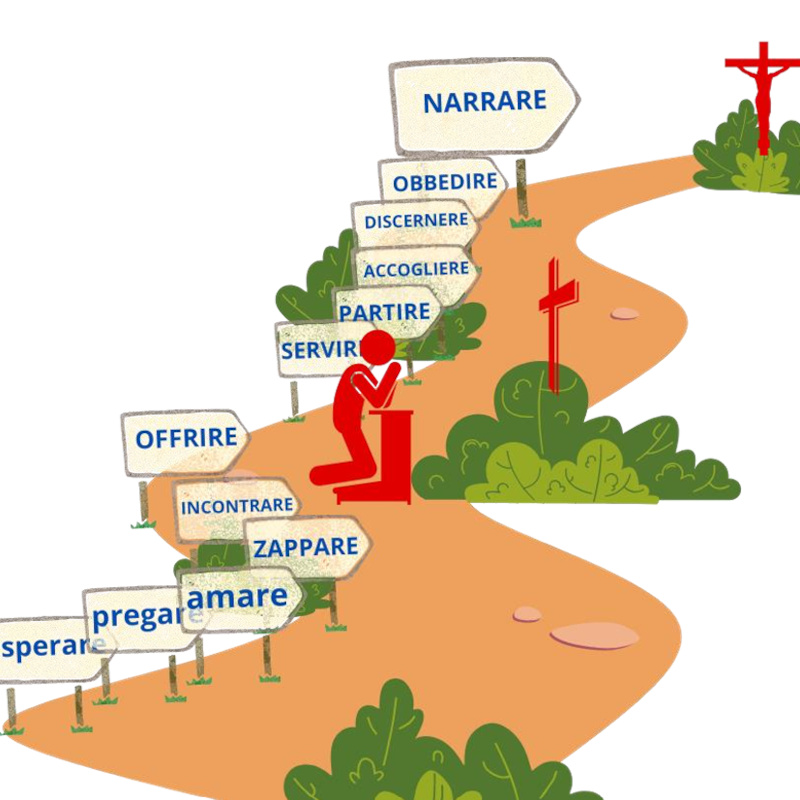
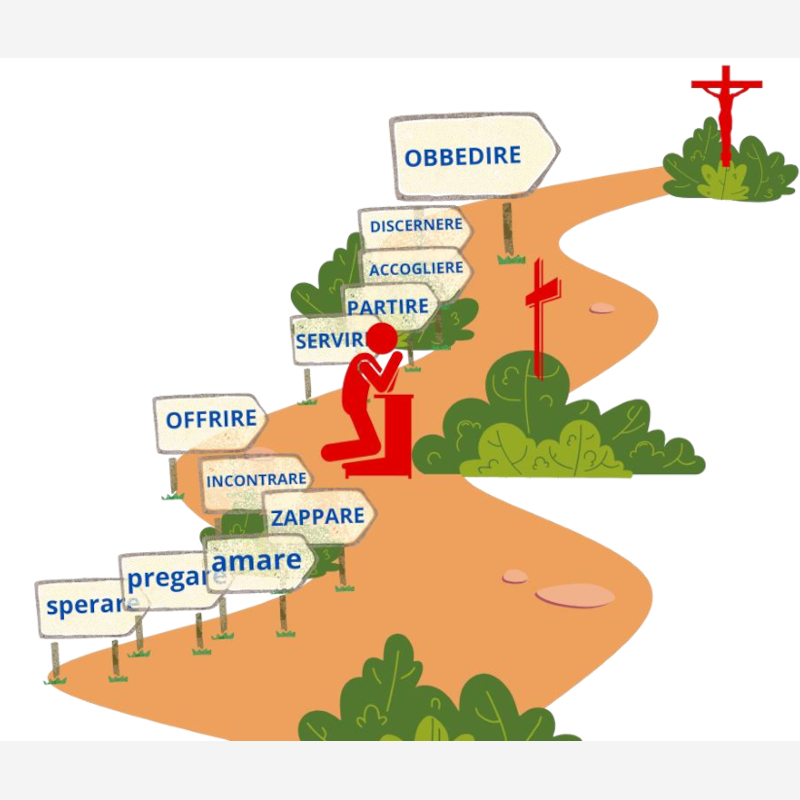
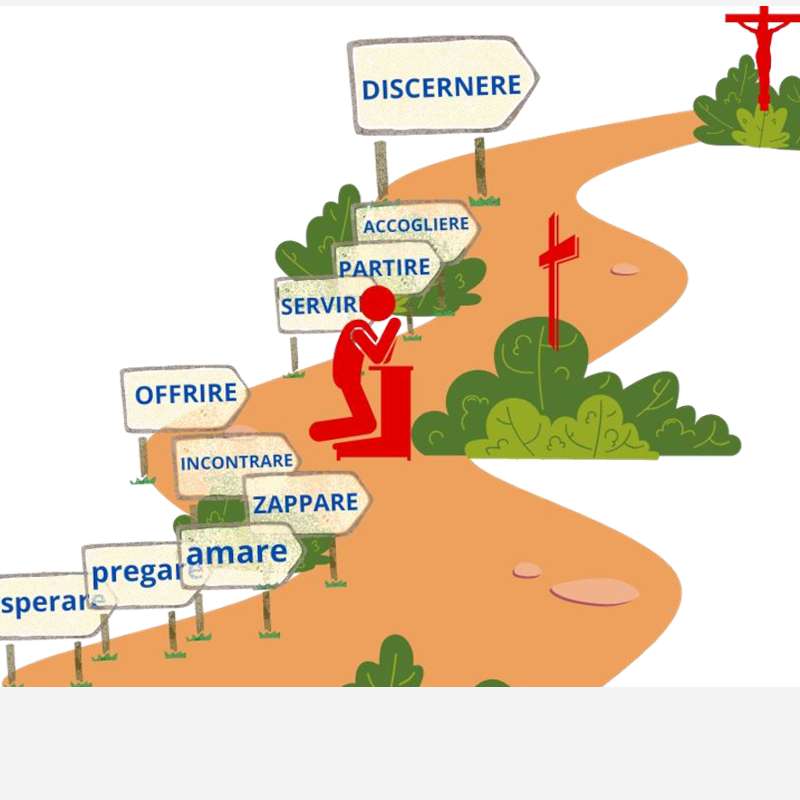
Being Witnesses of Mercy – ILLUMINATE
2 February 2026