



 Italy
Italy
Actualizing the Works of Mercy through the eyes of don Ferdinando Colombo
In Scripture, there are many examples of doubt presented to us. We recall, for example, Zechariah’s doubt before the angel’s announcement in the temple: “How shall I know this? For I am an old man, and my wife is advanced in years” (Lk 1:18).
Contrasting this doubt is Mary’s “good” doubt: “How can this be, since I have no husband?” (Lk 1:34).
We also recall the episode of Nicodemus, who visits Jesus by night to resolve his doubt: “How can a man be born when he is old?” (Jn 3:4), “…how can this be?” (Jn 3:9), as well as the rich young man who asks the Lord “What must I do to inherit eternal life?”, or Matthew the Evangelist’s account of Jesus’ final meeting with his disciples at the end of his Gospel: “Now the eleven disciples went to Galilee, to the mountain to which Jesus had directed them. And when they saw him they worshiped him, but some doubted.” (Mt 28:16-17).
Well known is the episode of Thomas, in which doubt is even voiced with strength, almost as an act of provocative challenge: “…Unless I see” (Jn 20:24-29). In this case, I appreciate Jesus’ attitude: he does not evade Thomas’ doubt, but submits to his request for verification, almost confirming it.
Even our own doubts in the face of incomprehensible and unacceptable situations—such as an incurable disease, the death of a young person, or the seemingly unchallenged dominion of violence and injustice—find profound resonance in the Gospel.
The Lord’s cry on the cross
Yet the most impressive doubt is the one we perceive in the Lord’s cry upon the cross: “My God, why have you forsaken me!” where we see that before the ultimate trial of death, Jesus, in his human nature, out of deep closeness and shared solidarity with humanity’s plight, enters into the dense, deep mist of doubt.
Rather than being a denial of faith, doubt can thus be understood as inherent to the very structure of faith in the God of Israel, who manifests in history and reveals Himself in the humanity of Jesus of Nazareth.
Loved, welcomed, and listened to
For these reasons, I believe the person who doubts must first of all not be judged, but loved, welcomed, and listened to with deep respect and care.
To find the strength to do this, let us remember God’s mercy toward our own doubts and questions, asking Him to help us approach the doubts of others with the same mercy and humility.
Yet we who believe must also remain vigilant: the believer is not an owner of truth, but remains forever a seeker of it, even while knowing and professing it.
Whoever wishes to give good counsel must above all show closeness, love, and respect toward the person seeking help. This was Jesus’ way: close to disciples, the sick, the suffering, and sinners.
We live in a culture that magnifies individualism and personal whim. Because of this, counseling the doubtful is often regarded with suspicion in a culture where relativism reigns.
Reflection and prayer
Moreover, we all know that if our advice is not preceded by serious reflection and prayer, it can easily degenerate into manipulation; at the same time, we know that offering illuminating counsel can prove to be an invaluable gift for someone’s life.
We must find the right path and the right balance in this exercise of moral charity.
«By quenching the thirst for truth of the one who doubts, with wise counsel that comes from the Lord, you will have dug for him a well of fresh water».
We know that nowadays, due to the complexities of life and the hardship of understanding and interpreting it, many turn to fortune-tellers, palm readers, tarot cards, astrology, and horoscopes.
This only confirms the profound sense of disorientation and uncertainty of our times, alongside the genuine need for true, effective guidance.
The Counsel
Counsel, with a capital C, is one of the seven gifts of the Holy Spirit.
The Spirit of Counsel illuminates our hearts, allowing us to discern the right way to speak, behave, and follow the path set before us.
It grants us the capacity to read life, especially its most difficult and seemingly hopeless circumstances, through the eyes of God.
This capacity, this strength, does not originate from us; it is a gift that God makes generously available: one need only open their heart to receive it.
Thus, the first and foundational guidance is to ask for the strength of Counsel, so as to understand how God views the situation on which our advice is sought.
What would Jesus say now?
How would He interpret the situation presented to us? I believe that the more we live in communion with God, allowing ourselves to be shaped and questioned by His Word, feeding upon Him, the more capable we become of living in harmony with truth and justice, and the deeper we can perceive into human hearts and complex circumstances to offer a gentle, helpful word to those who ask (Massimo Papotti).
An episode regarding counsel for the doubtful recounted by Pope Francis:
“I remember once in the shrine of Luján, I was in the confessional before a long queue. There was a modern young man, with earrings, tattoos, and all that… He came to tell me what was happening to him. It was a serious, difficult problem.
He said to me: I told all this to my mother, and my mother told me: go to Our Lady, and she will tell you what you must do. Here was a woman who possessed the gift of counsel. She did not know how to solve her son’s problem, but she pointed him to the right path: go to Our Lady, and she will tell you.
This is the gift of counsel. That humble, simple woman gave her son the truest counsel. Indeed, this boy said to me: I looked at Our Lady, and I felt that I had to do this, this, and this… I didn’t need to speak; his mother and the boy himself had already said it all.
This is the gift of counsel. You mothers who have this gift, ask for it for your children. The gift of advising one’s children is a gift from God.”
Prayer
Sequence to the Holy Spirit
Come, Holy Spirit,
send down from heaven a ray of your light.
Come, father of the poor, come, giver of gifts, come, light of hearts.
Perfect consoler, sweet guest of the soul, sweet refreshment.
In labor, rest; in heat, relief; in tears, solace.
O most blessed light, fill the inmost hearts of your faithful.
Without your power, there is nothing in man, nothing without guilt.
Wash what is dirty, water what is dry, heal what is wounded.
Bend what is rigid, warm what is cold, guide what goes astray.
Give to your faithful, who trust only in you, your sacred gifts.
Grant virtue and reward, grant a holy death, grant eternal joy. Amen
Illustration by Sister Marie-Anastasia Carré (Communauté des Béatitudes)
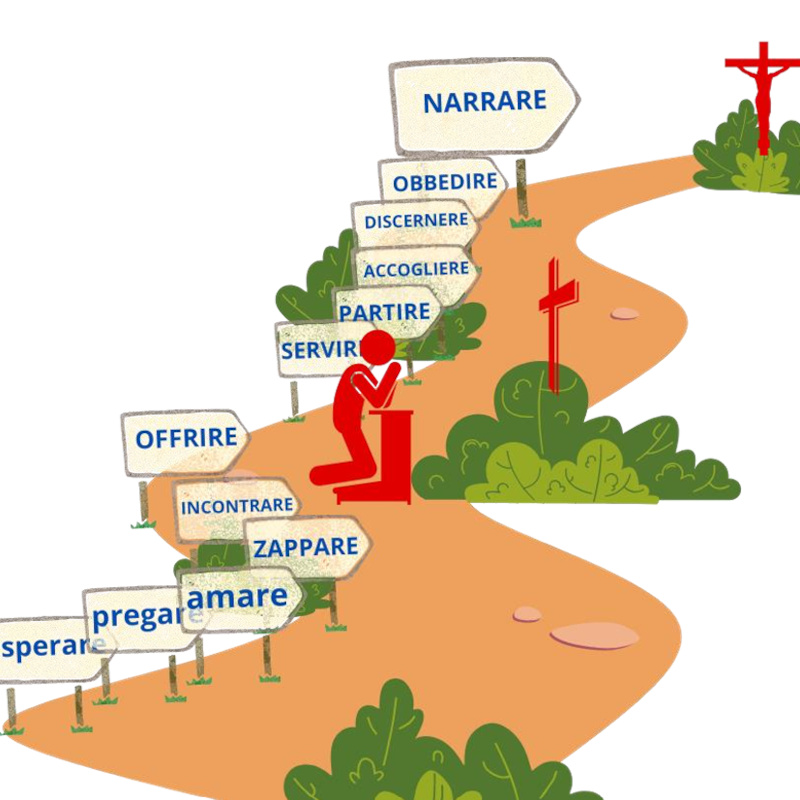
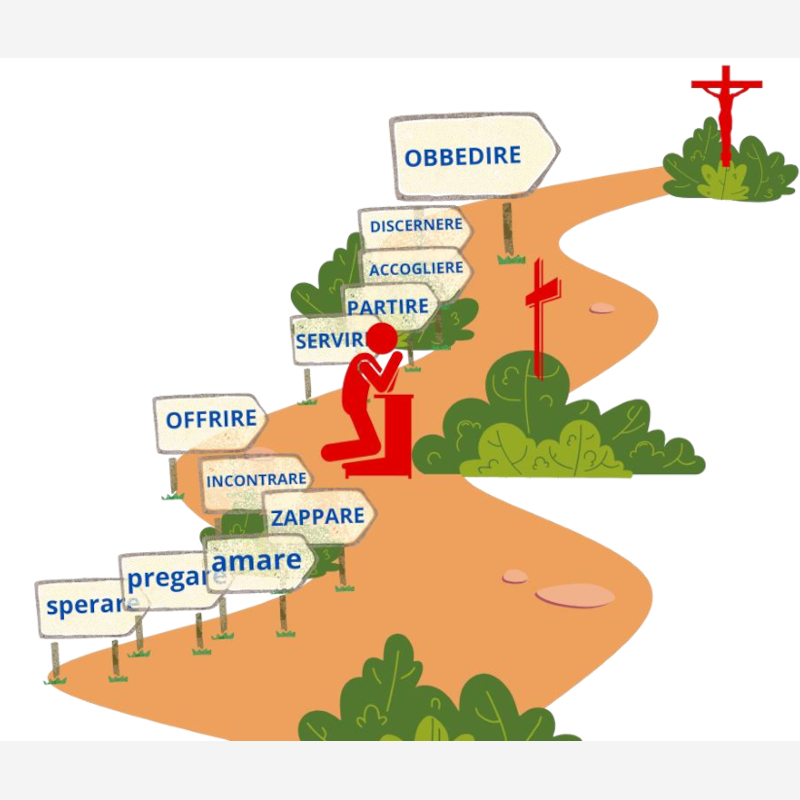
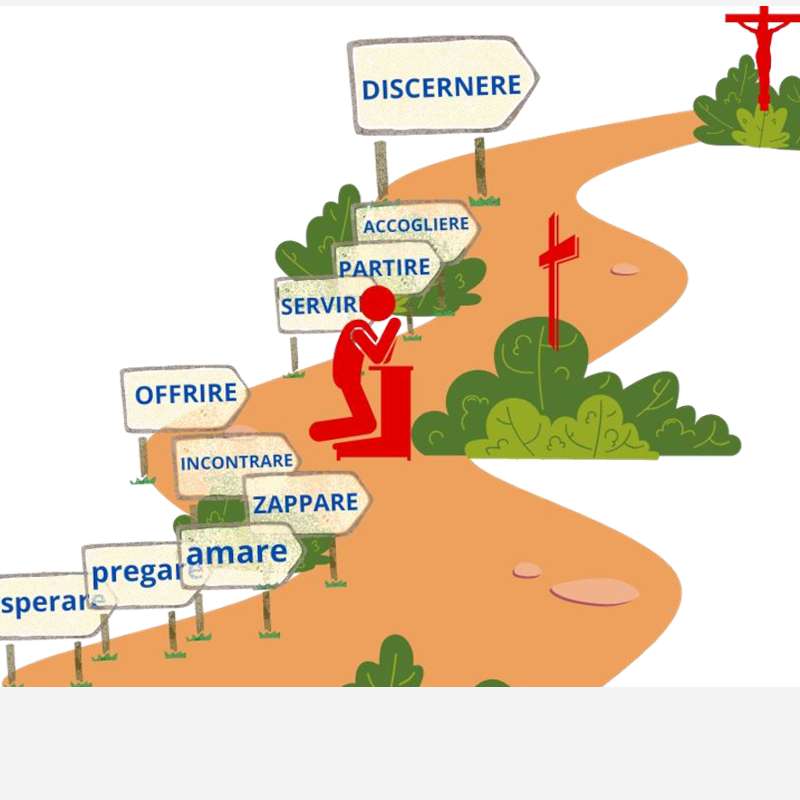
Being Witnesses of Mercy – ILLUMINATE
2 February 2026