


 Italy
Italy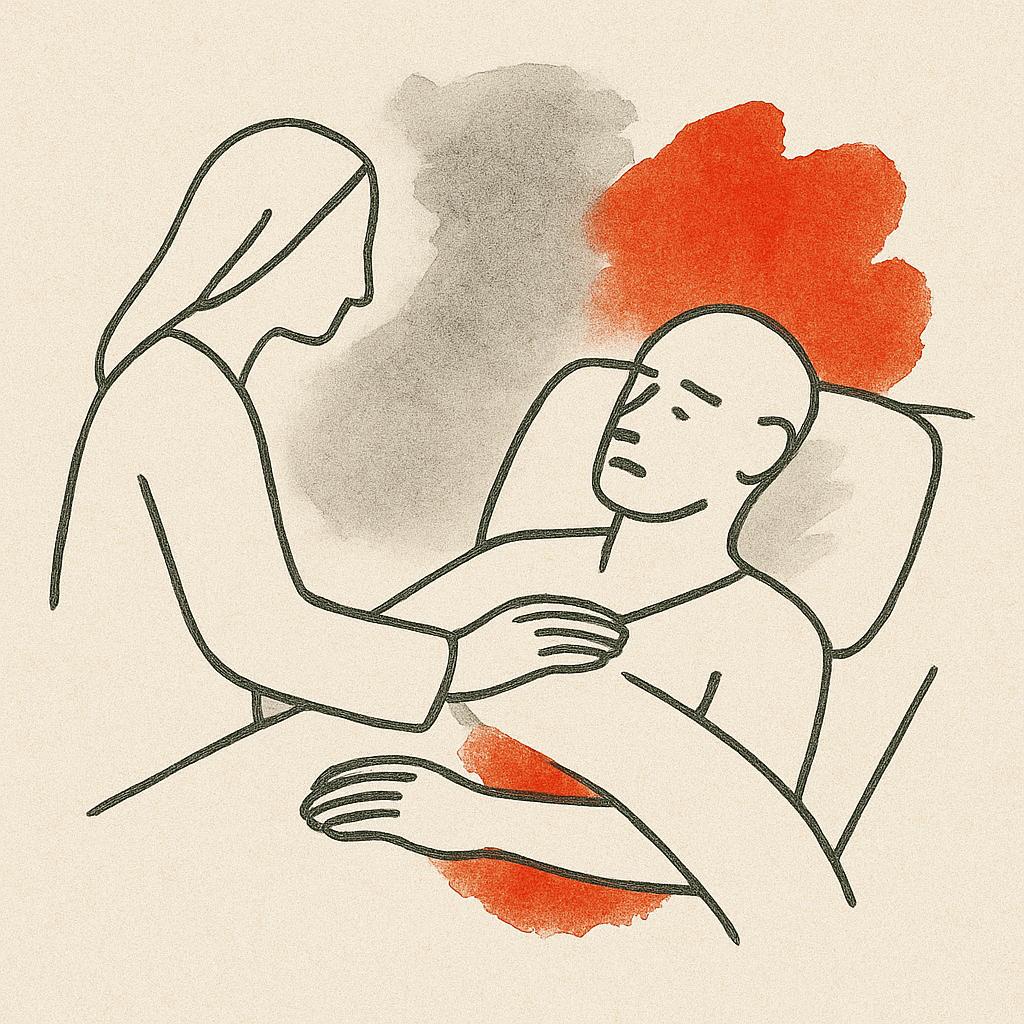
From the website of the National Office for Pastoral Healthcare of the CEI, the commentary on the fifth corporal Work of Mercy (by Fr. Carmine Arice, Director of the National Office for Pastoral Healthcare 2012 – 2017).
Concrete mercy in the evangelical judgment
In the Gospel account of the final judgment (cf. Mt 25:31-46), we read Jesus’ admonition: «I was sick and you visited me» (Mt 25:36). It is an admonition because at the evening of our life we will be judged on love and not on the good intentions we might have had. Nor is our act of faith sufficient to be acknowledged as blessed by the Father of Jesus Christ, because «faith works through love» (Gal 5:6), the Apostle Paul reminds us.
Mercy is «done». Pope Francis wrote in the Bull of Indiction of the Jubilee Year: «God’s mercy is not an abstract idea, but a concrete reality with which he reveals his love as of that of a father or a mother, moved to the very depths out of love for their child» (Bull no. 6). This is why the Church speaks of Works of Mercy.
The fifth corporal Work of Mercy is visiting the sick. We can consider that within the verb «to visit», there is also the verb to assist, to take care of! Visiting the sick is a privileged moment in which the ecclesial community brings the light and grace of the Lord to those who suffer, recognizing with humility that the Lord Jesus identified with the sick person and not with the visitor.
The sacramentality of the sick person
Clothed in «Christic sacramentality», the sick person asks the visitor to share a dimension of dispossession, helplessness, and poverty. He is an expression of the Christian community that desires to meet the face of the suffering Christ. Recognizing this sacramentality and unalterable dignity, the visitor enters the sickroom on tiptoe and with deep respect.
Suffering and illness strike man like bandits; in Luke’s well-known parable of the Good Samaritan, they attacked the unfortunate traveler. Along with physical distress, the sick person also experiences solitude, which in severe cases can turn into despair.
Pain isolates
«He who suffers intensely sees from his condition, with terrible coldness, things on the outside: all those little deceptive enchantments in which things usually swim when a healthy eye gazes upon them have vanished for him; indeed, he stands before himself stripped of frills and colors».
Illness, poverty, and suffering wound the person, compounding physical discomfort with moral distress. The nakedness in which the traveler is left in Luke’s parable is an icon of the violated modesty of every sick person. Within him there always reside, even if unexpressed, the question of meaning and the weight of his existential problems.
Visiting the sick therefore means offering with discretion, love, and competence, a closeness to cross the river of illness together, to feel less alone, and to perceive, even while permanently confined to a bed, being an integral and significant part of the ecclesial community to which one belongs.
Widespread presence and domestic care
It is useful to keep in mind that increasingly the sick and non-self-sufficient elderly live in homes rather than in hospitals or residential facilities. For this reason, an extensive presence of trained pastoral workers throughout the territory is ever more necessary: workers who, in addition to visiting the sick in healthcare facilities, visit the homes of those who spend their days in bed, often in solitude.
It must be considered that while the visit of the Extraordinary Minister of Holy Communion is generally addressed only to Christian faithful who desire the Eucharist, visiting the sick can reach all the sick of the parish and local care settings.
The effectiveness of the pastoral helping relationship
Since the effectiveness of the pastoral helping relationship depends largely on the human and spiritual qualities of the person carrying it out, it may be helpful to recall a few points of attention that the pastoral worker visiting the sick must bear in mind, without claiming to be exhaustive.
The pastoral worker does not bring an object, but witnesses Someone, first and foremost through the gift of self, time, and an open heart, welcoming the story of the sick person in their vulnerable individuality (there are no illnesses, only sick individuals).
During the visit, the worker welcomes the patient’s feelings of anger or acceptance of the situation, which are equally noble. The protagonist of the encounter who sets the rhythm of the pastoral dialogue is the sick person, who has the right to express what is in their heart, even crying out like Christ on the cross: «My God, my God, why have you forsaken me?» (Mk 15:34).
For this reason, the worker is primarily called to listen to the verbal and non-verbal narrative of the person visited, offering empathetic understanding that enables them to feel welcomed and understood.
These attitudes of the visitor can help the sick person endow their experience with meaning and take on «sacramental» value; when offered freely, with love and competence, they foster—respecting the timing and sensitivity of the patient—the encounter with Christ the Physician in prayer, the Word of God, and the sacraments.
Let us not forget, moreover, that where it is not possible, for various reasons, to pray with the sick person, it is always possible, in silence and outside the visit, to pray for them.
(Text from November 2016)
Image created digitally by spazio + spadoni
Being Witnesses of Mercy – ILLUMINATE
2 February 2026