


 Italy
Italy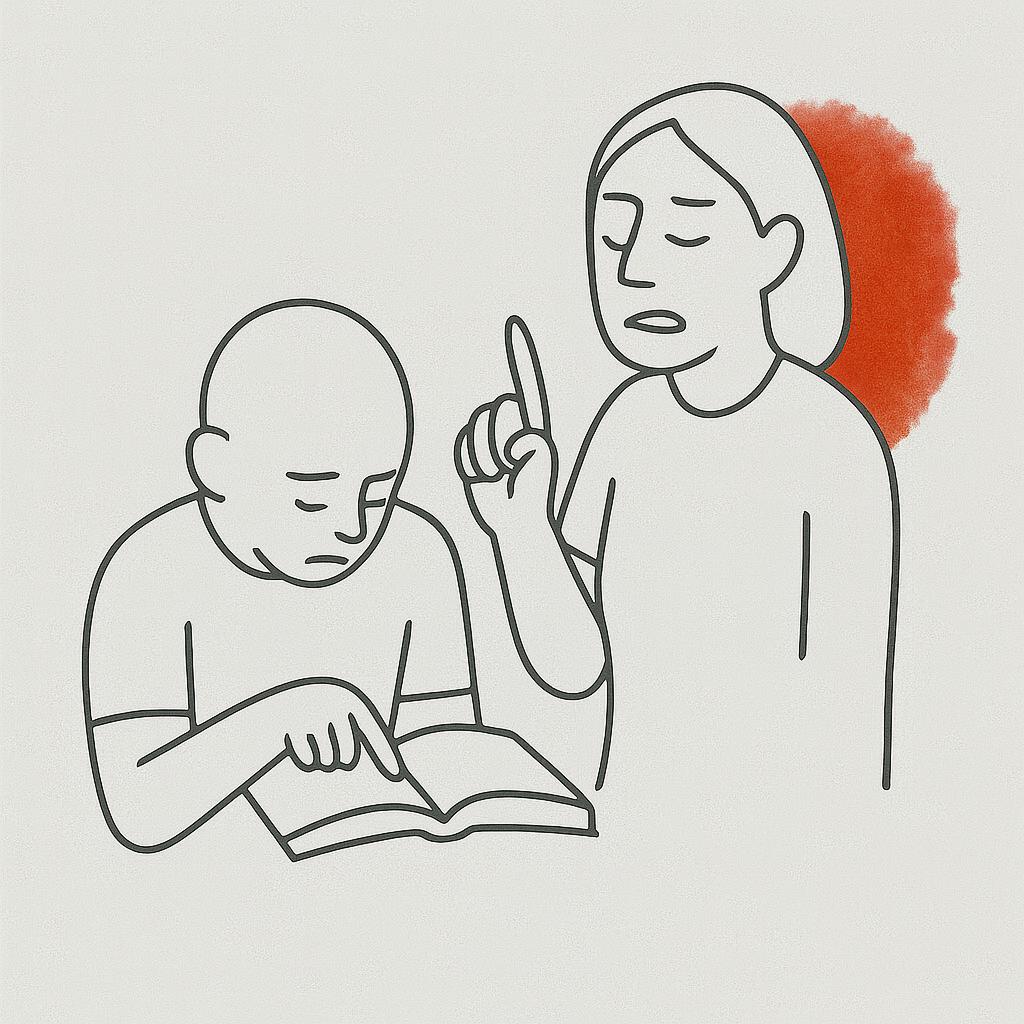
From the website of the National Office for Pastoral Healthcare of the CEI, the commentary on the second spiritual work of mercy
(Dr. Giovanni Cervellera, President of A.I.Pa.S.)
If we inverted the terms of the phrase, we would read: “ignoring teachers”, and we would capture much of the contemporary attitude toward the transmission of knowledge. Paul VI had already sensed the difficulty of listening to teachers, stating positively: «Modern man listens more willingly to witnesses than to teachers». Intolerance toward teachers often turns into a rejection of teachings. What sense does it make, then, to propose education again if the ignorant person does not want to listen?
The direction of this work of mercy could easily turn into an exhortation to lecture, without considering its effects and without concern for the outcome, almost in a kind of resignation justified by the saying: «some sow, others reap». Teaching does not consist of the mere transmission of knowledge, but means establishing a relationship that enables the learning of new wisdom. Outside of a meaningful relationship, learning is impossible.
Other questions immediately arise: What to teach? How to teach? To whom to teach?
Regarding content, we can say that all human knowledge is contemplated in this work. Although, since it is a spiritual mercy, we might be tempted to believe that we should only speak of religious matters. The current social climate, revealing a poor knowledge of the elements of faith, prompts us to insist on these topics. And it is right that there should be a recovery, under penalty of witnessing a generation that, unable to recognize religious symbols, becomes incapable of understanding its own culture and, ultimately, itself.
Spiritual knowledge, therefore, must never be detached from human knowledge. It is an integral part of it, and only through comprehensive teaching can there be a true understanding of humanity in its entirety. A bas-relief by Canova, created in 1795, entitled: «Instructing the ignorant», illustrates this well. A woman helps her son with his homework, while opposite her four women learn respectively: prayer, sewing, embroidery, and weaving. Every form of instruction is considered a meritorious action.
To understand the “how”, let us look at the famous episode of Jesus at twelve years old in the Temple of Jerusalem. Tradition usually says: «Jesus taught the doctors in the temple», highlighting to our eyes the amazement of seeing a child lecturing the wise. The biblical text is actually more precise and less miraculous: «they found him in the temple, sitting among the teachers, listening to them and asking them questions». (Lk 2:46). Jesus listens and questions. His way of being, and consequently of teaching, is: listening and asking. These two verbs are fundamental in relational life, and especially in the experience of those who walk alongside people who suffer. We can never insist enough that listening is the only condition that allows a message to be conveyed. Furthermore, having a young child at the center of the scene gives us another indication, supported by that other Gospel passage where Jesus invites us to «become like children».
Only those who make themselves “small”, humble, and ignorant can teach. There is not even a need to invoke the Gospel. It would suffice to look at various personal experiences where it is difficult to learn from someone who appears arrogant, presumptuous, and haughty, thus not appearing “small”. The Evangelist concludes the account with the commentary: «and Jesus grew in wisdom and stature, and in favor». The dialogue in the Temple contributed to the sapiential growth of Jesus. In a similar way, the teaching of every educator is learning for themselves.
The true teacher does not place themselves at the center of attention, does not stand on a pedestal, and is not worried about proving their worth; rather, they hold genuine appreciation for the student and dedicate all their energies to the disciple. The wisdom possessed by the teacher serves to strengthen their presence and reassure themselves that they are capable of teaching. No known book can replace reading the “text” that every human being presents to their interlocutor. As a seal, the evangelical warning does justice to human presumption and opens to infinity: «You have only one teacher».
To whom, then, should teaching be directed? Undoubtedly to those who show a desire to know. There is no learning if interior motivation is not ignited. Therefore, nothing is possible if one tightly closes the door of the heart and mind. Yet, there are broad possibilities for creating the right atmosphere that encourages questions to emerge. Here, the teacher’s art matters greatly. Beyond that, no barrier of belonging can hold: everyone is the recipient of potential teaching.
Finally, to complement a “Western-style” education, often understood only in an intellectual sense, there is lately an emphasis on the “education of the heart”. Synthetically, it is a perspective that combines ideas with emotions and feelings. Beware, however, of a rationalistic drift that uses old methods and merely changes the content. The education of the heart requires original method, form, and content and, above all, the full involvement of whoever wishes to carry out this work of mercy.
(Text from November 2016)
Image created digitally by spazio + spadoni

Being Witnesses of Mercy – ILLUMINATE
2 February 2026