


 Italy
Italy
From the website of the National Office for Pastoral Healthcare of the CEI, a commentary on the fifth spiritual Work of mercy
(by Fr. Enzo Misuriello, Chaplain of the Piccola Opera Charitas Foundation)
Human frailty and the power of grace
The fifth spiritual Work of mercy invites us to forgive offenses received and, by particularly challenging our pride, is the most demanding of all, seemingly impossible in our society where humility, essential for forgiveness, is seen as a sign of weakness.
Human fragility makes the burden of forgiveness palpable, but the Christian possesses a certainty: «I can do all things through him who strengthens me».
Saint Augustine wrote: «Yet you will say: “But I am not God, I am a sinner.” Thank God that you admit having sins. Forgive, then, so that you may be forgiven. Nevertheless, our God himself urges us to imitate him».
Unconditional forgiveness and the Gospel measure
Indeed, unconditional forgiveness is a Christian hallmark originating in Christ, who on the cross, revealing God’s mercy in supreme fashion, petitions the Father: «Father, forgive them, for they know not what they do».
Forgiveness received must also be bestowed. Bestowing upon us the “Our Father”, the Lord teaches us to ask that our debts be forgiven as we forgive our debtors, adding: «For if you forgive others their trespasses, your heavenly Father will also forgive you; but if you do not forgive others, neither will your Father forgive your trespasses».
Christian forgiveness knows no bounds. To Peter’s inquiry regarding how many times one ought to forgive, the Lord replied by affirming the necessity to forgive always and by teaching the parable of the unmerciful servant who, forgiven by his master, is unable to grant forgiveness to a fellow servant. «God always forgives, always. But he asks that I forgive. If I do not forgive, in a certain sense I close the door to God’s forgiveness».
An inner journey and the testimony of Carlo Castagna
Forgiveness is the fruition of an inner journey wherein the capacity to give oneself to others matures despite suffering and endured evil. It does not diminish the other’s responsibility nor turn a blind eye to evil, but confronts it with the loving gift of grace, capable of renewing wounded relationships. It is not born of momentary impulses, but of continual growth in forgiving minor offenses and petty grievances, because «whoever is faithful in very little is also faithful in much».
The testimony of Carlo Castagna stands as an eloquent example. On December 11, 2006, he lost his wife, daughter, and grandson, brutally murdered by two neighbors, yet he offered forgiveness immediately, eliciting widespread awe and disbelief. The tragedy, remembered in history as the “Erba Massacre”, is also known as “The Erba Forgiveness”, the title of a book gathering interviews and reflections given by Castagna.
In these, he reflects: «My wife and I always kept in mind a phrase carved onto the facade of a church near Erba concerning the cross: “If you welcome me I support you, if you reject me I crush you.” Forgiveness is not the product of naive optimism or personal merit; it is a gift God grants so that life may begin anew. Every day I experience both their departure and their presence. On December 11 at 8:05 PM, I feel a chill, the chill of death and departure. Then life moves on with the certainty that they are always near me. When I enter my room, I feel Paola is beside me, taking part in my prayers. There is no alternative to this path. In any circumstance, a Christian must counter the radical nature of evil with the radical nature of good; even in an ordeal as devastating as mine. As we are loved by God, so must we love our enemies. “What credit is that to you – says the Gospel – if you love only those who love you?”».
From suffering to the beatitude of mercy
Suffering makes forgiveness all the more arduous. At times, the sufferer must forgive the insensitivity, superficiality, and lack of tact of caregivers. How challenging forgiveness becomes in instances of malpractice that culminate in loss of life! Yet even within suffering, new avenues for forgiveness can unfold.
According to positive psychology, «even forgiveness helps the individual break free from a particularly stressful situation, consolidate more adaptive mental states and behaviors, and improve relationships, breaking the loneliness in which unforgiveness risks trapping them».
Granting Christian forgiveness is answering the call to perfection: «You therefore must be perfect, as your heavenly Father is perfect». Tellingly, in the Gospel of Luke the same call is an exhortation to mercy: «Be merciful, even as your Father is merciful». It means living and yearning for the beatitude: «Blessed are the merciful, for they shall obtain mercy».
(Text from November 2016)
Image created digitally by spazio + spadoni
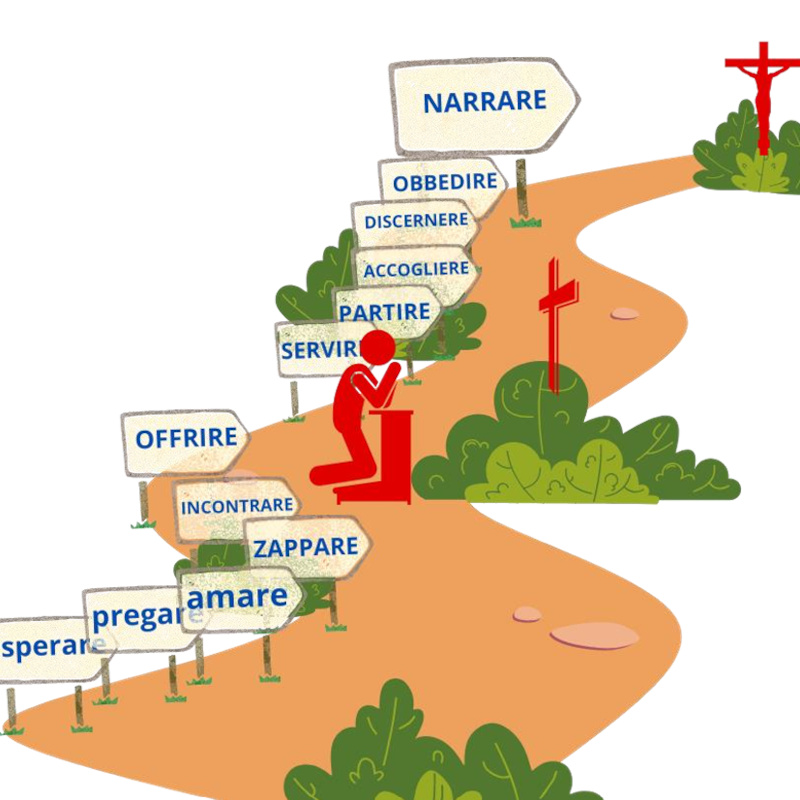
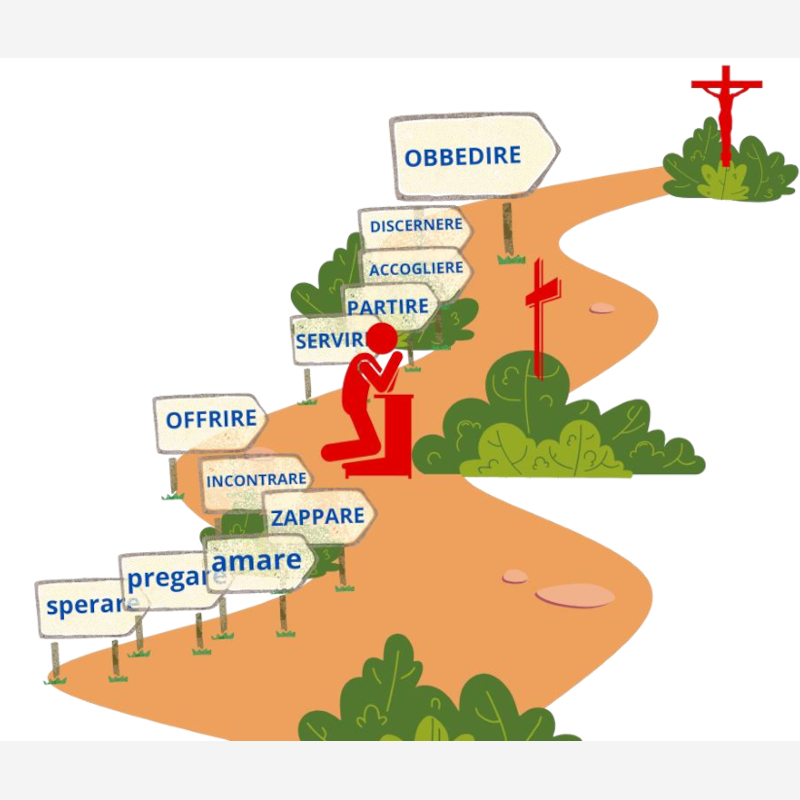
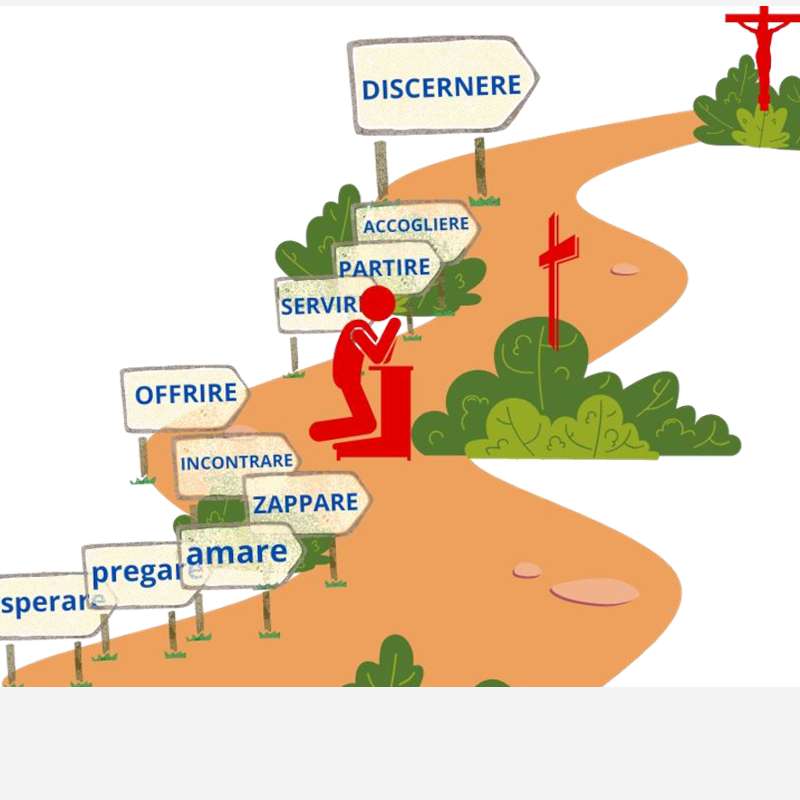
Being Witnesses of Mercy – ILLUMINATE
2 February 2026