



 Italy
Italy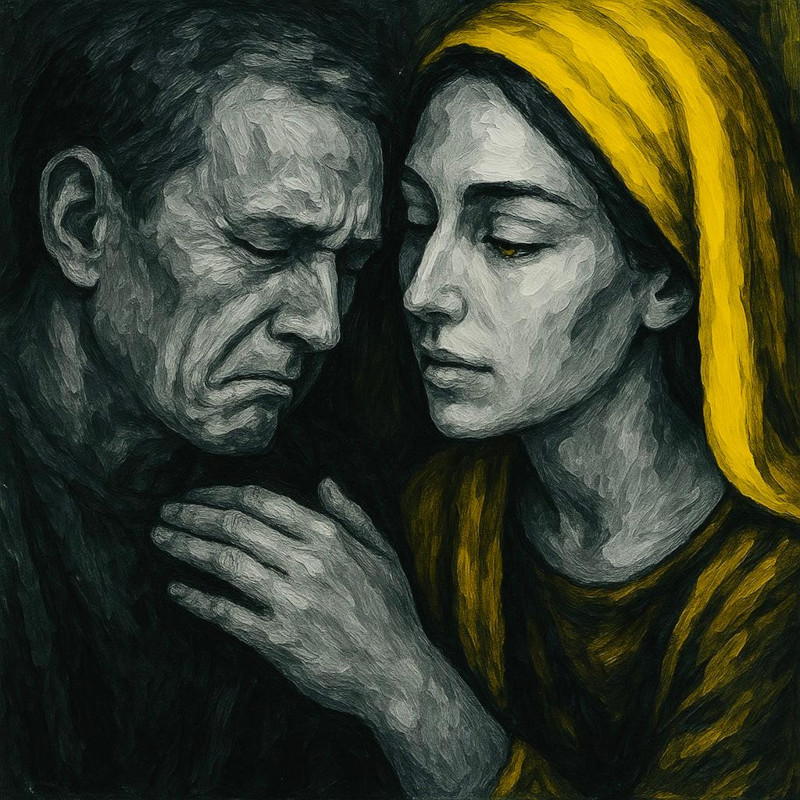
Forgiveness, the greatest of gifts
The Hebrew verb slh, the most common term used to designate forgiveness, means erasing the memory of the harm received. At other times nasa’ is used, which denotes lifting up to remove, but also taking away, eliminating. The word “to forgive” in Greek is afiêmi, which means: “to send away, let go, permit, grant, not hinder, depart”. A related word translated as “forgiveness” is apoluô, which means: “to set free, dismiss, release”. Forgiveness is therefore the annihilation of the evil committed, liberation from a burden that oppresses us, complete release from negativity in our lives.
In the Italian language the word “perdonare” is formed by the prefix “per-”, which expresses fullness and abundance, and the verb “donare” (to give): the compound verb therefore means “to give completely / entirely, to give in the highest degree / in abundance”. In other words, “to forgive” is the verb “to give” in the superlative degree.
Since God is Love, and is a gratuitous gift, the highest expression of God is forgiveness: “As great as he is, but such also is his mercy” (Sir 2:18).
All of patristic tradition has always affirmed that God’s greatness is manifested more in his mercy than in creation. Thomas Aquinas states: “It is proper to God to exercise mercy: and in this especially his omnipotence is made manifest”.
The forgiveness of sins is for the believer an assurance of Faith: in the Apostles’ Creed we proclaim: “I believe in the forgiveness of sins”.
All of sacred Scripture is a hymn to God’s forgiveness.
God forgets sins
Not only does God always forgive: he completely forgets our sins. Far from the usual depiction of a God who awaits us at the end of our lives with a scale to weigh whether good or evil prevailed in us, or with a huge ledger recording all our deeds!
“The rabbis used to say that God possesses an ability we humans lack: that of forgetting the sins we commit, forgetting them because they are erased and thus considered as never having been committed. We can forgive, but not forget; God, on the other hand, when he forgives sins, forgets them” (E. Bianchi).
Marvelous: according to Scripture, our sins are “cast into the depths of the sea” (Mic 7:19), they will become “white as snow and like wool” (Is 1:18), they will be “blotted out like a cloud and like a mist” (Is 44:22), because God truly forgets all our wrongdoing!
It is striking how God in Scripture never demands that man apologize to him: he asks for conversion, that is, for man to return to the path of his own fulfillment and happiness, but never to make an apology to him: think of the parable of the prodigal son (Lk 15:11-32). His love is such that he does not even feel offended by our sins, but unconditionally bestows the immensity of his mercy on everyone. The only forgiveness he asks us to seek is from our brothers and sisters, to be reconciled with them. His suffering, his sorrow, lies in our missed beatitude, not in the personal slight against him. Such is the measure of his Love!
Forgive us our debts as we forgive
Why then, in the prayer Jesus taught us, must we say: “Forgive us our debts as we also have forgiven our debtors” (Mt 6:10)? Why is God’s forgiveness conditioned upon our mutual forgiveness? Often it would seem more honest to pray: “Forgive us our debts much, much more than we forgive our debtors!”.
Yet the Old Testament had already warned: “Forgive your neighbor the wrong he has done, and then your sins will be pardoned when you pray. If someone cherishes anger against another, how can he seek healing from the Lord? He shows no mercy to a fellow human being, yet dares to pray for his own sins? Being only flesh, he nurses a grudge; who will make atonement for his sins?” (Sir 28:2-5). And Jewish tradition teaches that on the Day of Atonement (Yom Kippur) only sins committed against God are forgiven, whereas for sins against other human beings, “Yom Kippur secures forgiveness only if one has first been reconciled with one’s brother”.
We are not in the mercantile logic of do ut des, typical of many religions: we are once again at the heart of Christianity. Pleading with God for something immediately implies taking responsibility for it and beginning to live it: for this reason, we can only ask God for reconciliation if we have become reconciliation toward our brothers and sisters.
True love for God is always love for our brothers: “This is the commandment we have from him: whoever loves God must also love his brother” (1 Jn 4:21); “If therefore you are offering your gift at the altar, and there remember that your brother has something against you, leave your gift there before the altar, and go; first be reconciled to your brother, and then come and offer your gift” (Mt 5:23-24).
Jesus repeatedly makes this logic explicit: “Forgive, and you will be forgiven… for with the measure you use, it will be measured to you in return” (Lk 7:36-38); “If you forgive others their trespasses, your heavenly Father will also forgive you; but if you do not forgive others, neither will your Father forgive your trespasses” (Mt 6:14-15).
Yet let us never forget that in reality God’s forgiveness always precedes our reconciliation with our neighbor. The “Our Father” in Luke’s Gospel seems to explain this most fittingly when praying: “Forgive us our sins, for we ourselves also (kaì gàr autoì) forgive (aphìomen) everyone who is indebted to us” (Lk 11:4). It appears more clearly than in Matthew’s text that our ability to forgive our brothers stems (“for indeed”, or as liturgical translations render it, “as we also”) from the fact that God forgives our sins first: thus the present tense is simply used, “we forgive”, and not the aorist referring to the past, as in Matthew.
The link between being forgiven and forgiving is nonetheless inseparable. In any case, a lack of peacemaking with others will cancel out God’s mercy. Jesus clearly explains this dynamic in the parable of the unmerciful servant, whose Master forgives an enormous debt (ten thousand talents, an astronomical sum), yet who fails to forgive a trifling debt of a fellow servant (a hundred denarii: small change in comparison), concluding: “Then the master summoned him and said to him: «Wicked servant, I forgave you all that debt because you pleaded with me. Should you not also have had mercy on your fellow servant, as I had mercy on you?». And in anger his master delivered him over to the jailers, until he should pay all his debt. So also my heavenly Father will do to every one of you, if you do not forgive your brother from your heart” (Mt 18:23-35).
We are before a mystery. God’s love precedes us: his love is gratuitous, and it reaches us while we are still sinners, not forgivers. If each of us waited to appear before God only when fully reconciled with every brother and sister, we would never come into his presence. This must be understood clearly.
Yet God’s immense Love is hindered if our hearts remain closed to our brothers and sisters. A heart shut to one’s neighbor halts the omnipotence of God.
The Catechism of the Catholic Church states: “Now—and this is a terrible thing—this outpouring of mercy cannot penetrate our hearts as long as we have not forgiven those who have offended us… In refusing to forgive our brothers and sisters, our hearts become closed and their hardness makes them impervious to the Father’s merciful love” (n. 2840).
Pope Francis noted: “God always forgives, always. But he asks that I forgive. If I do not forgive, in a sense, I close the door to God’s forgiveness”.
Image created digitally by spazio + spadoni
Being sensitive to the pain of others to transform suffering into hope
27 July 2026