


 Italy
Italy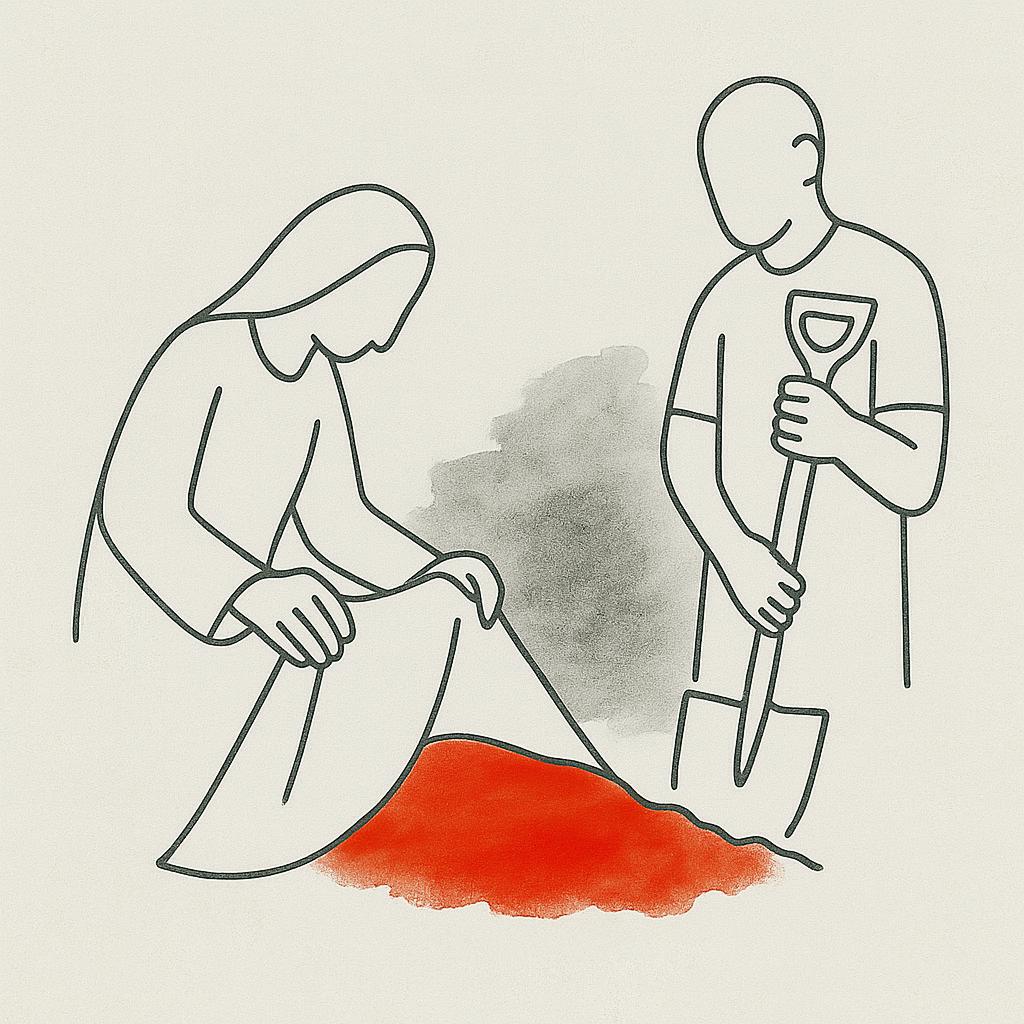
(Prof. Massimo Petrini, President of the Institute of Pastoral Healthcare Theology)
Inhumation as the model of Christian burial
Setting itself apart from the meaning of mummification, embalming, or cremation—in which the notion that death signifies the complete destruction of man is sometimes concealed—Christian piety has embraced burial (inhumation) as the funeral model for the believer.
On one hand, it recalls the earth from which man was taken (cf. Gen 2:7) and to which he now returns (cf. Gen 3:19; Sir 17:1); on the other hand, it evokes the burial of Jesus, the grain of wheat that fell into the ground and produced much fruit (Jn 12:24).
The Catechism of the Catholic Church adds: «The bodies of the dead must be treated with respect and charity, in faith and hope of the Resurrection. The burial of the dead is a corporal work of mercy; it honours the children of God, who are temples of the Holy Spirit».
The symbolism of burial and faith in the resurrection
Catholic tradition has always attributed profound spiritual significance dictated by faith to the act of burial. Through this lens, death is not the absolute end of existence, despite the biological decay of the body in the womb of the earth; rather, it marks the completion of the earthly pilgrimage, directed toward the fulfillment and synthesis of life found in the hope unveiled by the risen Christ.
The distinctive contribution of Christianity is not confined to the physical act of interment, but resides in a symbolism expressing faith in the resurrection, founded upon three essential pillars:
- the earth, where the body is laid, symbolizes a seedbed of germination, where the blossoming of life according to the Spirit will reach its completion (cf. 1 Cor 15:44);
- the grave is the symbol of peaceful rest in sleep, where communication with the departed continues on a different plane;
- the ground in which the dead rest symbolizes the invisible expanse where eternal life unfolds, shared by both the living and the dead.
The Church’s provisions regarding cremation
The Directory on Popular Piety and the Liturgy, observing that cremation has become a common practice in modern society due to changing living environments, points out the ecclesiastical regulation: «Christian funeral rites may be conceded to those who have chosen to have their bodies cremated, unless such choice was dictated by reasons contrary to Christian doctrine».
However, concerning such a choice, pastors are called to exhort the faithful not to keep the ashes of family members at home, but to provide them with proper burial until the day when God raises those who sleep in the earth and the sea yields up its dead.
Communion with the departed and Christian hope
Saint John Paul II stated: «Man rises from the earth and to the earth he returns (cf. Gen 3:19): this is an evident reality never to be forgotten. Yet he also experiences an irrepressible desire for immortal life. For this reason, the bonds of love that unite parents and children, husbands and wives, brothers and sisters, as well as the bonds of true friendship between people, do not dissolve or end with the inevitable event of death. Our departed continue to live among us, not only because their mortal remains rest in the cemetery and their memory is part of our existence, but above all because their souls intercede for us with God».
These certainties of faith must be embraced within the context of human sorrow and bereavement. Burial takes place equally within the hearts of those left behind. Once the sharpest pain has eased, they discover a profound spiritual reality: the departed loved one remains astonishingly close, a fellow pilgrim along the earthly path until they meet again in the eschatological horizon.
(Text from November 2016)
Being Witnesses of Mercy – ILLUMINATE
2 February 2026