


 Italy
Italy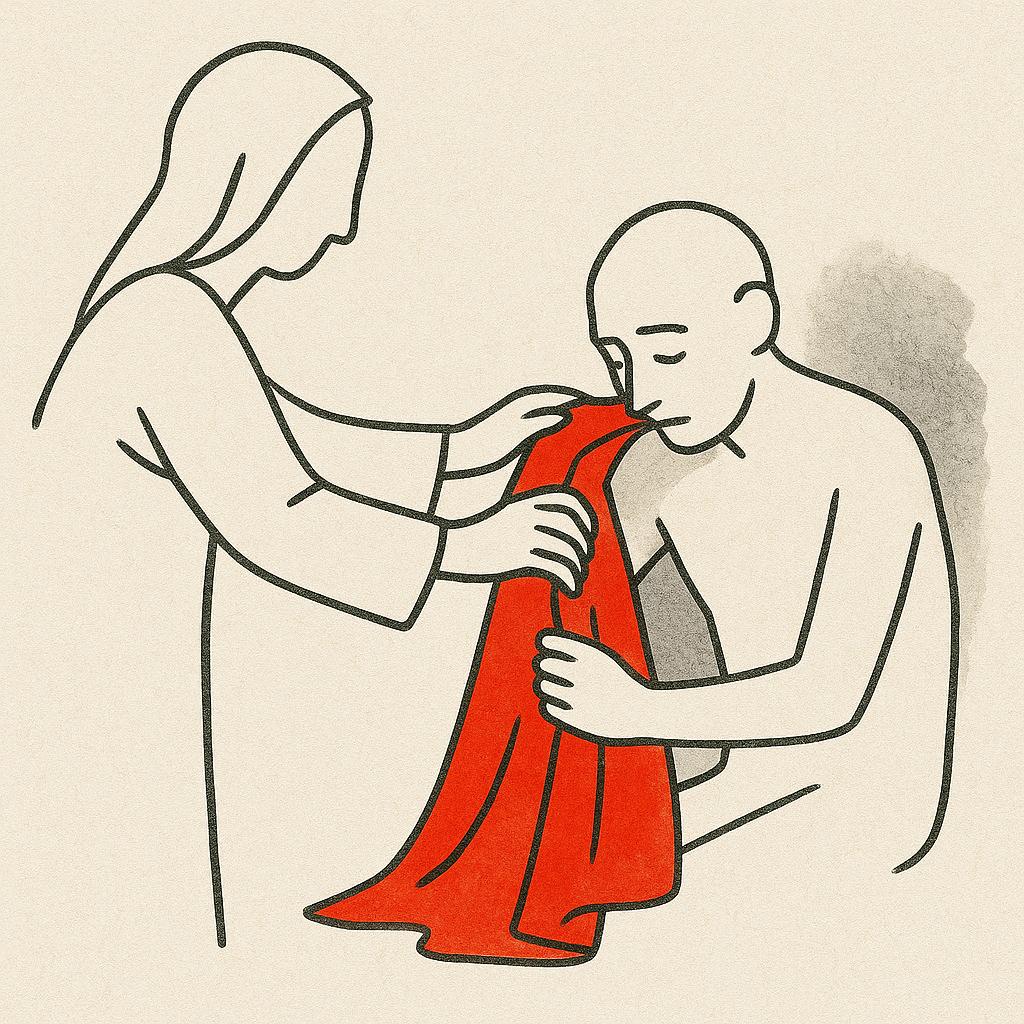
From the website of the National Office for the Pastoral Care of Health of the CEI, a commentary on the third corporal work of mercy (by Michele Sardella, diocesan and regional director for the pastoral care of health in Lazio).
The human act of clothing the naked is founded, according to the Bible, on the original gesture of God himself who covered human nakedness, preparing clothes and dressing Adam and Eve after their transgression: “The Lord God made garments of skin for the man and his wife, and clothed them” (Gen 3:21).
This act of mercy toward our first parents highlights God’s attentive care for us, knowing that nakedness signifies not only exposure to the elements, but also humiliation, unworthiness, weakness, defenselessness, and danger.
It is the nakedness that strips away identity, the nakedness of the anonymous, the destitute: the slave sold (Gen 37:23), the prostitute exposed to public gaze (Jer 13:26-27; Hos 2:4-6), the mentally ill person living in isolation and alienation (Mk 5:1-20).
Out of this divine concern for humanity, Scripture develops a profound compassion for the physical body expressed in commandments: “Give of your garments to those who are naked” (Tob 4:16), considered an attribute of righteousness (“the righteous man… covers the naked with a garment”: Ezek 18:5,7,16), and placed at the heart of authentic fasting (“is not this the fast that I choose:… to cover the naked when you see them”: Isa 58:7).
It is an act of true mercy to offer clothing to dress the naked
While today we rarely encounter individuals who are completely naked due to a total lack of clothes, various socioeconomic conditions can severely restrict or prevent their purchase.
Consider, for example, marginalized groups such as migrants, individuals with severe psychiatric conditions, people experiencing homelessness, barefoot children, and elderly people who cannot afford adequate clothing during the winter season.
These vulnerable groups often turn to charitable donation centers in search of relief and warm clothes.
When we share our unused garments, we must ensure they are clean, decent, and respectable in appearance and condition.
Renewing our wardrobe should not merely be an opportunity to purchase fashionable items, but a true act of solidarity and sharing.
What does it mean to clothe the naked within the pastoral care of health?
Dressing and undressing each day is a routine act, yet it can become an exhausting challenge for a sick person coping with physical disabilities, mood disorders, or cognitive decline.
In cases of cognitive impairment, such as Alzheimer’s disease, individuals often lose track of how to put on garments and in what sequence; they may fail to recognize the need to change clothes or struggle to dress appropriately for seasonal weather. Reduced physical mobility further compounds these difficulties: fastening buttons, zipping up coats, or tying shoelaces.
In such situations, assisting a person while promoting their residual autonomy is the best way to alleviate feelings of dependency. With patience and sensitivity, caregivers can assist them in selecting comfortable clothing that reflects personal taste, while minimizing buttons, buckles, and zippers that could cause friction or skin tears.
Caring for bedridden patients—whether in acute or chronic stages—requires heightened vigilance, especially when hospital gowns or nightgowns cannot be worn and the clothing effectively becomes the bedsheet.
Clothing embodies that innate sense of modesty which distinguishes human beings and extends well beyond sexuality. Exposing a bedridden patient for personal hygiene, bed linen changes, or physiological assistance demands deep respect and gentleness.
Goodwill or a simple sense of duty is not enough; we must remember that being covered and clothed touches the core of human identity, dignity, and subjectivity.
We often overlook the delicate nature of these caring acts, yet it is through them that we earn trust and honor the person before us.
Infusing our actions with this care means clothing our relationships
Consider how any of us would feel if sudden illness or loss of autonomy forced us to leave behind our home and familiar surroundings.
Entering healthcare institutions often severs family bonds and daily routines abruptly, which can trigger severe emotional distress and subsequent confusion, especially among the elderly.
Clothing our interactions with attentive listening, closeness, and empathy is an essential duty for those serving near vulnerable persons. This stance is even more critical in palliative care, where patients and families navigate the end of life with limited emotional resources.
The more cared for a patient feels, the more firmly they hold onto life, because love lived through concrete gestures is capable of clothing every dimension of existence.
Image created digitally by spazio + spadoni
Source: National Office for the Pastoral Care of Health of the CEI – Michele Sardella
Being Witnesses of Mercy – ILLUMINATE
2 February 2026