



 Italy
Italy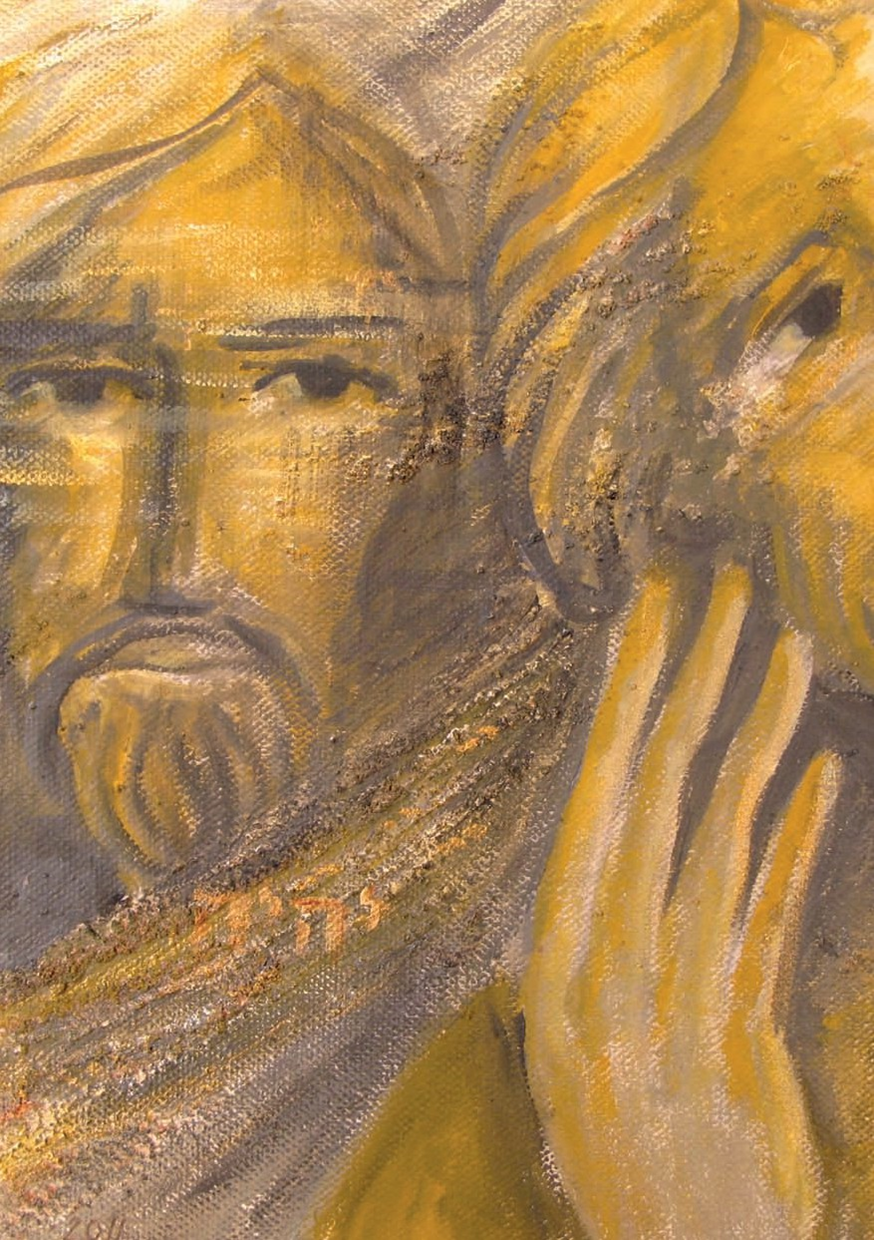
A famous text from Christian tradition, specifically Franciscan, allows us to approach this work of mercy in a critical and thought-provoking way.
In the Little Flowers, Francis explains to Brother Leo what perfect joy consists of, saying to him:
«When we arrive at Santa Maria degli Angeli, soaked with rain, frozen with cold, covered in mud, and afflicted with hunger, and we knock at the door, and the porter comes out in anger and says: Who are you?
And we say: We are two of your brothers; and he says: You do not speak the truth, you are two rascals who go about deceiving the world and stealing the alms of the poor; go away; and he will not open to us, leaving us outside in the snow and water, cold and starving until night; then, if we bear so much insult, cruelty, and rejection patiently, without becoming upset and without murmuring against him, and if we humbly think that the porter truly knows us and that God makes him speak against us; O Brother Leo, write that here is perfect joy.
And if we persist in knocking, and he comes out troubled, and drives us away like insolent scoundrels with insults and blows, saying: Get away from here, vile thieves, go to the hospital, for you shall neither eat nor lodge here; if we bear this patiently, with joy and good love; O Brother Leo, write that here is perfect joy.
And if, compelled by hunger, cold, and night, we knock again, calling and begging for the love of God with bitter tears to open and let us in, and he, even more scandalized, says: These men are persistent rogues, I shall repay them as they deserve; and he comes out with a knotted club, grabs us by the hood, throws us onto the ground, rolls us in the snow, and beats us knot by knot with that club: if we endure all these things patiently and with gladness, thinking of the sufferings of the blessed Christ, which we must endure for His love; O Brother Leo, write that here and in this is perfect joy».
The text questions us: who is “troublesome” in this narrative? The two friars knocking persistently seeking shelter from the cold and the night? Or the one who refuses to welcome them, making excuses and refusing to listen to reason?
That is: when is a person perceived as troublesome? When, and why, do they disturb us? When do we feel someone is unbearable? Why does a particular behavior annoy us?
In feeling annoyance toward someone and experiencing them as intolerable, there is also a revelation of ourselves to ourselves. Experiencing a person as annoying and troublesome may simply be the expression of selfish and racist feelings, or fear and rejection of confrontation.
One might consider, for example, the feeling that many harbor toward immigrants arriving in our country.
Furthermore, this text presents a striking case of the rejection of patience and endurance toward someone felt to be annoying, but also a heroic example of endurance and patience toward another’s intolerance transformed into aggressive violence.
This endurance is grounded in the Gospel and in the example of Christ, made possible through faith.
Francis indeed continues his discourse to Brother Leo, stating that it is a grace of the Holy Spirit to be able to conquer oneself and willingly, for the love of Christ, sustain suffering, insults, shame, and hardships, not boasting of this, but glorying solely in the cross of Christ:
«In the cross of tribulation and affliction we can glory, for the Apostle says: May I never boast except in the cross of our Lord Jesus Christ (Gal 6:14)».
Patience is God’s grand gaze upon humanity, a gaze that does not stop at details or incidental missteps, nor does it view sin as definitive, but places it within the entire existential journey man is called to walk.
Therefore, it exposes God to the risk of not being taken seriously, of being “used” by man. In Christ, and particularly in His passion and death, God’s patience reaches its peak as a radical assumption of human inadequacy, weakness, and sin.
In Christ, God accepts to “bear the weight,” to “endure” human incompleteness and inadequacy, taking responsibility for man in his fallibility. The “patience of Christ” (2 Thess 3:5) thus expresses God’s love; it is its sacrament.
Today, however, patience has lost much of its appeal: hurried times drive us toward impatience, immediacy, the desire for “everything now,” and possession that leaves no room for waiting.
Individualistic self-assertion becomes an unwillingness to wait for and understand the other, who all too quickly risks becoming bothersome, troublesome, or an obstacle.
Thus patience, which was once a wise and humane way of inhabiting the world, is largely forgotten. At the same time, we must realistically recognize that patience is not always a virtue, just as impatience is not always a vice.
Patience is an art. It has nothing to do with passive endurance. Rather, it is the one who lacks patience who far more frequently ends up merely enduring.
Patient, free, and loving forbearance toward those who are annoying, unpleasant, boring, or slow aligns with love for one’s enemy (cf. Mt 5:38-48; Lk 6:27-35). It demands interior work to learn to know and love the enemy within ourselves—what is troublesome and unbearable in us, which God, in Christ, patiently bore by loving us unconditionally.
In this way, patience becomes an opening of the future for the other, a confirmation of trust in them, and a shared struggle with and for them against the temptation of despair. (Luciano Manicardi)
Prayer
«I asked God» (by Kirk Kilgour)
I asked God for strength, that I might achieve grand plans: He made me weak, that I might be preserved in humility.
I asked God for health, that I might do great things: He gave me pain, that I might understand it better.
I asked Him for wealth, that I might possess all things: He made me poor, that I might not be selfish.
I asked Him for power, that men might need me: He gave me humiliation, that I might need them.
I asked God for everything, that I might enjoy life: He left me life, that I might appreciate everything.
Lord, I received nothing of what I asked for, but You gave me everything I needed, almost against my will.
The prayers I did not utter were answered.
Praise be to You, O my Lord; among all men, no one possesses what I have!
Illustration by Sister Marie-Anastasia Carré (Communauté des Béatitudes)
Being Witnesses of Mercy – ILLUMINATE
2 February 2026