


 Italy
Italy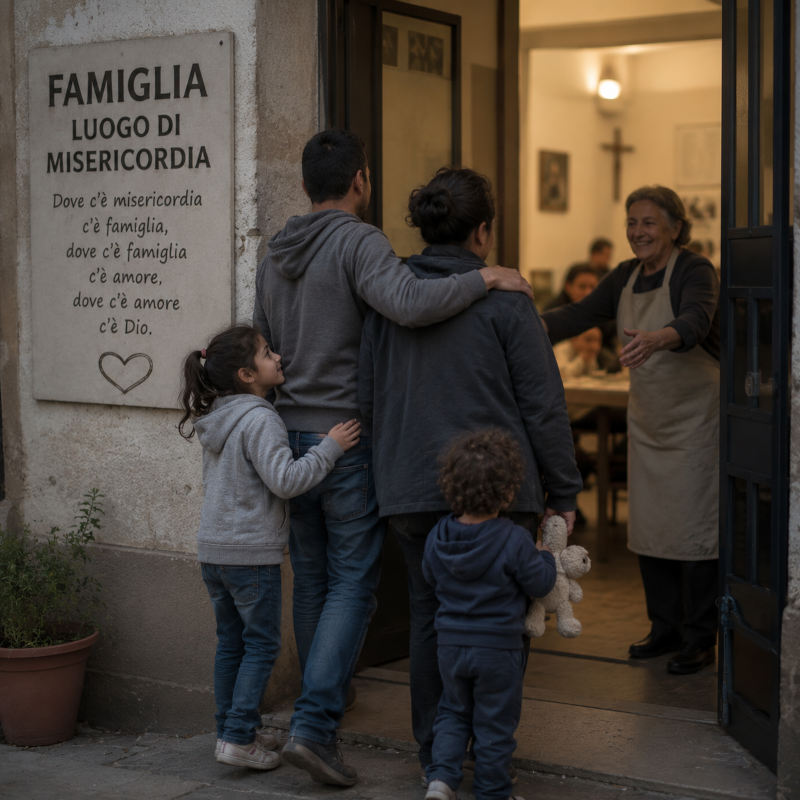
On the occasion of the Day of Families, let us rediscover the value of the domestic unit not only as a cell of society, but as the first and fundamental laboratory of concrete love
The family is the place where the theory of good becomes daily practice through the works of mercy
- The family as a space for growth and welcoming
- Living mercy within domestic walls
- Educating through small gestures
- From the home to the world
1. The family as a space for growth and welcoming
The Day of Families is not merely a celebratory occasion, but an opportunity to reflect on the profound mission that every home holds. The family represents the first school of humanity, the place where we learn to recognize the other not as a stranger, but as part of ourselves.
In this ecosystem of affection, mercy ceases to be an abstract or theological concept to transform into a lifestyle.
It is within domestic walls that the gratuitousness of love is experienced for the first time, laying the foundations for the development of empathetic citizens capable of looking at others with a benevolent gaze.
2. Living mercy within domestic walls
Living the Works of Mercy in the family means knowing how to express them in the ordinary language of coexistence. Feeding the hungry, for example, is not only the act of physical nourishment, but the time spent preparing a meal with care and sharing it without the distraction of screens. “Patiently bearing troublesome people” or “forgiving offenses” become vital daily exercises to maintain harmony.
The home is the place where vulnerability is allowed: visiting the sick here means taking care of a feverish child or a tired grandparent, transforming fatigue into an act of tenderness that heals the soul even before the body.
3. Educating through small gestures
Education in mercy inevitably passes through the pedagogy of small gestures.
Children do not learn compassion from speeches, but by observing how parents handle conflict, how they welcome whoever knocks on the door, or how they help a neighbor in difficulty. Involving children in preparing a care package for those in need or simply teaching them the importance of a “thank you” or a “sorry” means sowing mercy.
These fragments of goodness, if cultivated with constancy, structure the personality and make doing good feel natural, transforming moral duty into a spontaneous attitude of the heart.
4. From the home to the world
In conclusion, a family that lives and educates in mercy becomes a powerful engine of social change. When love is experienced as a gift received and shared internally, it naturally tends to overflow towards the outside.
A community made up of families practicing mutual care is a more resilient, less violent, and more inclusive community.
The challenge of the Day of Families is therefore to remind us that the revolution of tenderness always begins with a minimal gesture: attentive listening at the end of the day, a healing embrace, an outstretched hand in the silence of the kitchen. It is here that the future is built.
Image
- Digitally created image by spazio + spadoni