


 Italy
Italy
Italy continues to lose births
Italy continues to face one of the most delicate social challenges of recent decades: the progressive decline in birth rates. Data released in 2026 confirms a consolidated trend. In the first quarter of the year, approximately 83 thousand children were born, a lower figure compared to the same period in 2025. The demographic winter is not merely a matter of statistics: it reflects the economic, employment, and social difficulties that push many couples to postpone or even give up their desire to have children.
Alongside those who choose to delay motherhood, there are women who face pregnancy under conditions of extreme vulnerability. Loneliness, domestic violence, job loss, poverty, or the absence of a family network can transform the expectation of a child into a moment of great fear.
A network that welcomes life
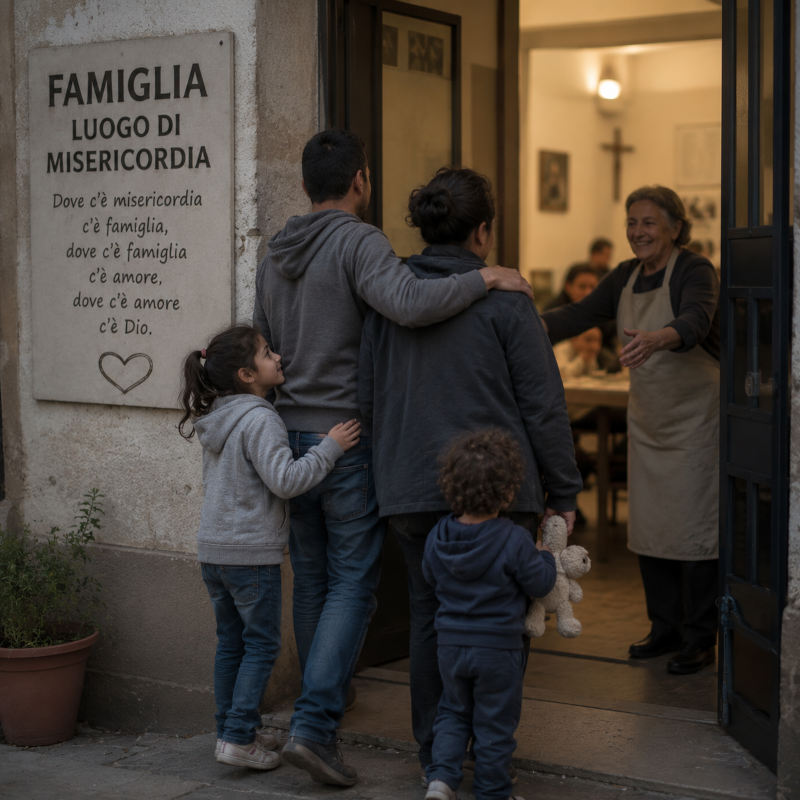
It is precisely in these situations that the Shelter Homes of the Movement for Life step in across numerous Italian cities. These facilities offer shelter to pregnant women and mothers with young children who do not have a safe environment in which to live.
Welcoming goes far beyond providing accommodation. Guests receive material support, listening, psychological guidance, medical and legal advice, as well as concrete help to build a path toward personal and professional independence. The goal is to enable every mother to experience motherhood with serenity, without feeling abandoned during the most delicate period of her life.
Support that continues after childbirth
The commitment of the Shelter Homes does not end with the birth of the child. Many facilities assist mothers throughout the first year of the child’s life, a period when difficulties can still be overwhelming.
Alongside the Homes, the Centers for Help to Life and the Gemma Project also operate, creating a solidarity network that over the years has supported thousands of difficult pregnancies. The testimonies gathered often tell the same story: women who arrive convinced that they have no alternatives and who, through meeting volunteers and workers, rediscover the possibility of building a future for themselves and their children.
The power of listening
Those who work in these facilities know that the primary assistance is not financial, but human. Even before providing material goods, attentive and non-judgmental listening is guaranteed, capable of restoring trust and dignity.
Many women report finding, for the first time after months of suffering, someone willing to share the weight of their worries. It is this closeness that often makes the difference, turning a seemingly hopeless situation into a new beginning.
Mercy that becomes home
Faced with the demographic crisis, public debate often focuses on financial incentives and family policies—tools that are certainly necessary. However, there is also another response, less visible yet equally vital: that of communities choosing to care for the most vulnerable people.
The Shelter Homes of the Movement for Life represent a concrete expression of the work of mercy “to shelter the harborless”. Today, that gesture means opening the door to a woman who has nowhere to go, accompanying her through pregnancy, and helping her build a future together with her child.
In a country where the number of births decreases every year, these realities remind us that supporting a mother means safeguarding life, offering hope, and contributing, day by day, to building a more compassionate and attentive society.
Digitally created image by spazio + spadoni