



 Italy
Italy
What does “to comfort” mean?
The Hebrew term for comfort-consolation comes from the root nhm, which primarily means to breathe deeply, to groan, and in a causative sense, “to give breath,” to let someone catch their breath in a situation of sorrow or fear (as Joseph did toward his frightened brothers: Gen 50:21). To comfort is to help an oppressed person, crushed so much that they cannot catch their breath, to breathe again. Hebrew etymology emphasizes this physical and psychological aspect of consolation: giving breath, bringing relief.
The Italian word “consolare” (to comfort) has Latin roots. It comes from the verb “consōlari,” meaning “to soothe,” “to alleviate.” This verb is composed of the prefix “con-,” meaning “together,” and the verb “solari,” meaning “to console.” Therefore, comforting literally means “consoling together,” “alleviating together.”
However, according to Cardinal Ravasi, another root lies at the foundation of the word «to comfort». «The etymology of this word is the term “solo” (alone): therefore, “to comfort” is essentially “to be with someone who is alone.” The concept is suggestive because so much sadness or pain arises precisely from being alone and abandoned, devoid of a presence to warm you, a hand to caress you, a word to break the silence and tears. Not for nothing does the word “desolate” essentially mean “to be completely alone.”»
In any case, the Latin etymological root indicates closeness, companionship, and communion with those in affliction and trial.
God is always with us
We often think of God as someone existing in the hereafter, somewhere far away, with whom it seems impossible to establish any relationship. He appears so utterly “other” as to be unreachable.
Yet already in the Old Testament, God said: “This command that I enjoin on you today is not too high for you, nor is it too far away. It is not in heaven, that you should say: «Who will go up to heaven for us to get it for us and make us hear it, that we may observe it?». Nor is it across the sea, that you should say: «Who will cross the sea for us to get it for us and make us hear it, that we may observe it?». No, the word is very near to you, in your mouth and in your heart, for you to put into practice” (Dt 30:11-14); “For what great nation has a god so near to it as the Lord our God is to us whenever we call upon him?” (Dt 4:7).
And in the New Testament it is affirmed: “No one has ever seen God; the only-begotten Son, who is God and is in the bosom of the Father, he has made him known” (Jn 1:18). Indeed, “the Word became flesh and made his dwelling among us, and we saw his glory, the glory as of a Father’s only-begotten Son, full of grace and truth” (Jn 1:14). And Jesus says: “Whoever has seen me has seen the Father” (Jn 14:9).
Jesus is the incarnation of God coming down from heaven to stand at our side forever. The angel announced to Mary: “He shall be called Emmanuel, which means God with us” (Mt 1:23; cf. Is 7:14). And the Gospel of Matthew concludes with the promise: “Behold, I am with you always, until the end of the age” (Mt 28:20).
We are never alone again: God is at our side to share our anxieties, our fears, our anguish, our illnesses, and our very death!
God is comfort
God tells us: “I, I am your comforter” (Is 51:12); “As a mother comforts her son, so will I comfort you; in Jerusalem you shall find your comfort” (Is 66:13); “The Lord comforts his people and shows mercy to his afflicted” (Is 49:13); “I will heal him, lead him, and give him comfort. And on the lips of his mourners I place: «Peace, peace to the far and the near», says the Lord, «and I will heal them»” (Is 57:18-19); “I have seen the affliction of my people in Egypt and have heard their cry…; I know well what they are suffering. Therefore I have come down to rescue them from the hands of the Egyptians and lead them out of that land into a good and spacious land, a land flowing with milk and honey” (Ex 3:7-8); “Because the poor are despoiled, because the needy groan, I will now arise, says the Lord; I will grant safety to him who longs for it” (Ps 12:6).
Indeed, “the prayer of the poor goes from their lips to the ears of God, and his judgment comes quickly” (Sir 21:5); “This poor man cried, and the Lord heard him, and saved him from all his troubles… When the just cry out, the Lord hears them, and rescues them from all their distress” (Ps 34:7.18); “He regards the prayer of the destitute and does not despise their plea” (Ps 102:18); “For the Lord hears the poor and does not spurn his prisoners” (Ps 69:34); “In danger I called upon the Lord; the Lord answered me and set me free” (Ps 118:5-7; cf. 107:13-14); “God, who consoles the downcast, comforted us” (2 Cor 7:6).
Jesus presented himself in the synagogue of Nazareth saying: “The Spirit of the Lord God is upon me, because the Lord has anointed me; he has sent me to bring glad tidings to the lowly, to heal the brokenhearted…, to comfort all who mourn, to provide for the mourners of Zion, giving them a crown instead of ashes, oil of gladness instead of mourning attire, a mantle of praise instead of a faint spirit” (Is 61:1-3; cf. Lk 4:18).
The Holy Spirit is the “Paraclete”, a Greek word whose primary meaning is precisely “Comforter”: “I will ask the Father, and he will give you another Comforter to be with you always… But the Comforter, the Holy Spirit that the Father will send in my name, will teach you everything and remind you of all that I told you” (Jn 14:16.26); “When the Comforter comes whom I will send you from the Father, the Spirit of truth that proceeds from the Father, he will testify on my behalf” (Jn 15:26).
This is why Jesus proclaims: “Blessed are they who mourn, for they will be comforted” (Mt 5:4)!
Comforting the afflicted
In the Second Letter to the Corinthians, Paul provides an authentic catechesis on consolation: “Blessed be the God and Father of our Lord Jesus Christ, the Father of compassion and God of all encouragement, who encourages us in our every affliction, so that we may be able to encourage those who are in any affliction with the encouragement with which we ourselves are encouraged by God” (2 Cor 1:3-4). God comforts us in all our tribulations, and we must overflow with this divine comfort toward everyone experiencing affliction.
The definition of God as the “God of all encouragement, who encourages us in our every affliction” also highlights the profound role that God’s comfort played in the faith experience of Paul and the other apostles. Through this continuous consolation, God sustains his ministers in trials, while divine comfort flows through the apostles to the Christians of Corinth. Having personally experienced being comforted by God, the apostles become capable of comforting suffering Christians in turn.
Sirach had already warned: “Weep with those who weep, and mourn with those who mourn” (Sir 7:34). And Paul emphasizes: “Rejoice with those who rejoice, weep with those who weep” (Rom 12:15).
«We are called to anticipate the comforting work of God. But we must do so under certain conditions. For instance, recognizing that comfort, like grief and bereavement, takes time. Listening to the suffering of those in pain to understand what gesture or word is most appropriate in the moment… Think of how often the words and attitudes of those offering condolences turn into a showcase of superficiality, a triumph of awkwardness, a kind of obligatory and tiresome ritual one cannot escape… The Bible shows us, through the story of Job, failed consolations: his friends who came to him «to comfort him» (Jb 2:11) ruined everything with senseless words, earning the rebuke of «troublesome comforters» (Jb 16:2). The psalmist of Psalm 69 laments that «I looked for comforters, but found none». Conversely, those who have lived through grief and learned to inhabit its sorrow, embracing its emptiness, can humanize the encounter with the afflicted through discretion and an understanding transfigured by personal experience. Such is the power of consolation that «fitting» words or gestures offered to the grieving remain etched in memory like a precious and rare gem» (R. Davanzo).
«Saint Francis, the Chronicles tell us, «bent down with wonderful tenderness and compassion toward anyone afflicted by physical suffering; his heart melted in the presence of the poor and the sick, and when he could not offer material help, he offered his affection, a truly maternal tenderness». It will therefore be a source of profound satisfaction to offer the oil of consolation and the wine of hope to those who weep and are crushed by sorrow, turning in confident prayer to the source: «Holy Spirit, comfort our sadness».
Our heart is filled with afflictions and we are often downcast. «Our Lord, make us worthy of your comfort, which is more enduring than affliction» (Isaac of Nineveh). The Pentecost Sequence proclaims: «Come, Holy Spirit, send down from heaven a ray of your light. Perfect consoler, sweet guest of the soul, sweetest relief. Rest in labor, shelter in heat, solace in tears»» (R. Messina). Let us invoke the Spirit to fill us with all comfort and make us capable of becoming authentic Comforters.
Image created digitally by spazio + spadoni


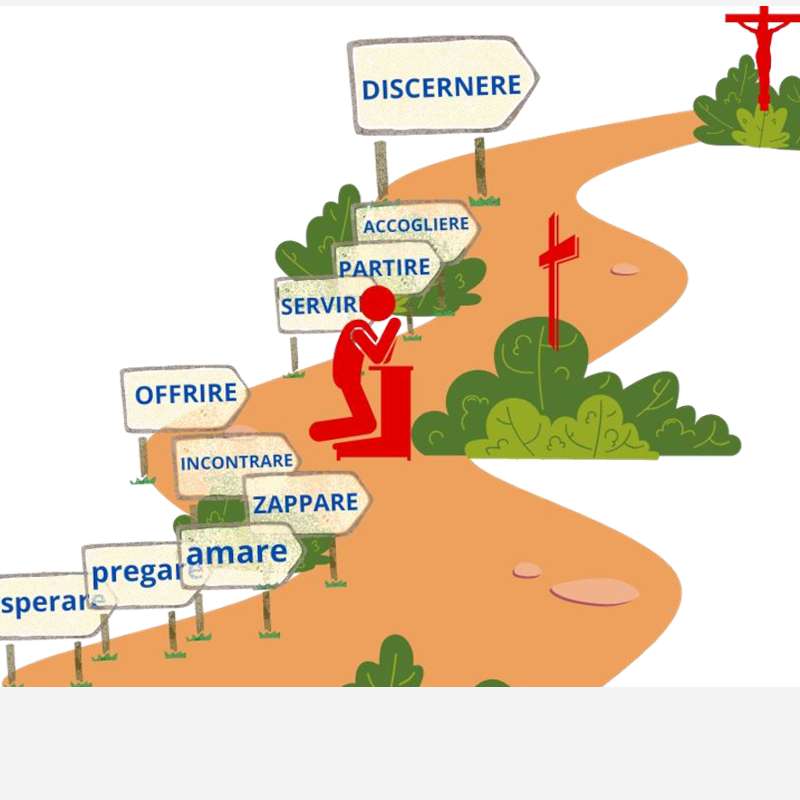
Being Witnesses of Mercy – ILLUMINATE
2 February 2026