



 Italy
Italy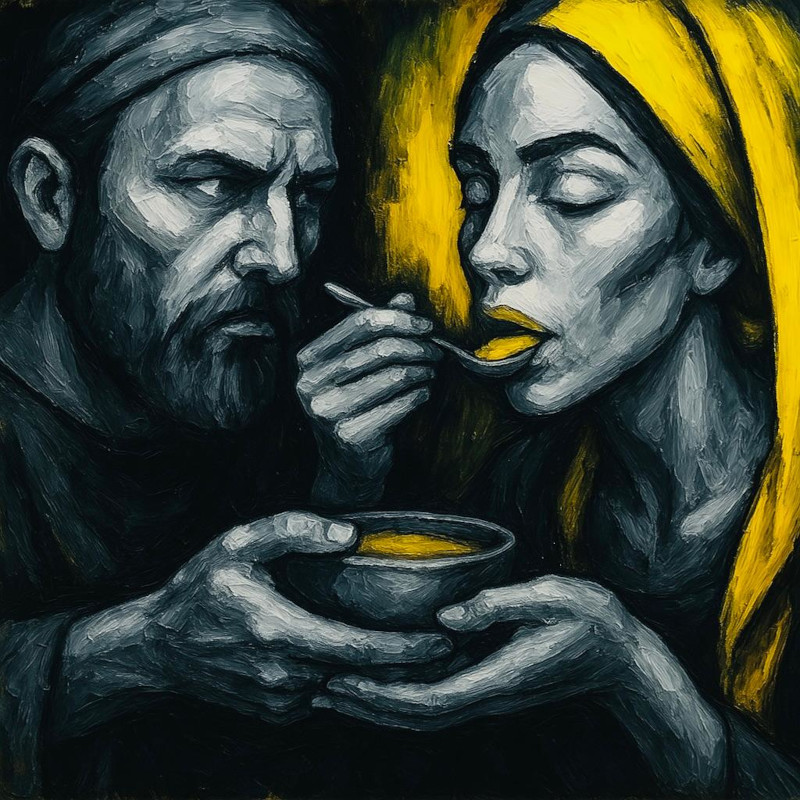
The situation
In 2025, world hunger remains a very serious problem, with an increasing number of people suffering from acute food insecurity. The Global Report on Food Crises 2025 indicates that over 295 million people across 53 countries live in conditions of severe food insecurity, an increase of 13.7 million compared to 2023.
The number of hungry people has grown for the sixth consecutive year, pushing millions to the brink of catastrophe, especially in vulnerable regions. Eastern and Central Africa are the hardest-hit regions, with 61.6 million food-insecure individuals in Eastern Africa and 50 million in Western and Central Africa. But even in Western nations, we see an ever-increasing number of people turning to soup kitchens and queuing for a hot meal.
God gives bread to the hungry
God knows that food is a primary human need, and he provides us with the model of care we must have toward those who hunger: in the wilderness, God gave Israel “bread from heaven for their hunger” (Neh 9:15). God “gives food to the hungry” (Ps 145:7), “gives them their food in due season” (Ps 103:27), “has filled the hungry with good things” (Lk 1:53), and promises the blessed in the Kingdom: “They shall hunger no more” (Rev 7:16).
Jesus likewise cares about nourishing those who follow him, multiplying loaves and fish for hungry crowds—a miracle recorded by all four Evangelists, and recounted twice by Mark and Matthew (Mk 6:30-44; 8:1-16; Mt 14:13-21; 15:32-39; Lk 9:10-17; Jn 6:1-13).
God feeds humanity through our commitment
Scripture frequently exhorts us to become God’s co-workers in feeding the hungry: “Do not grieve the hungry” (Sir 4:2); “Give of your bread to those who are hungry” (Tob 4:16); “Is not this rather the fast that I choose…? Is it not to share your bread with the hungry” (Is 58:6-7,10); “If a person shares bread with the hungry…, he is righteous and shall surely live” (Ezek 18:7,16). Even “if your enemy is hungry, give him bread to eat” (Prov 25:21). And Jesus commands: “You give them something to eat” (Mk 6:37).
In the Lord’s Prayer, Christians pray: “Give us this day our daily bread” (Mt 6:11; Lk 11:3: “give us each day our daily bread”): they acknowledge that everything comes from God. For the Hebrew people, the term “bread” signifies sustenance in general, that which is necessary (Gen 28:20; 47:15…).
Notice, however: the bread God gives cannot be reduced to the logic of “mine” and “yours”, but of “ours”: God gives his bread to all people as one human family. If some die of starvation while others suffer from illnesses related to obesity, the root lies in human sin.
“Let us put ourselves in God’s place for a moment, let us try to see things as he sees them. He is like a father of a family who has seven children and at every meal witnesses the same scene: two children by themselves grab almost everything on the table, leaving the others on an empty stomach” (R. Cantalamessa).
Asking God for “our” bread therefore means taking responsibility for the hunger of our brothers and sisters; it means committing to share our goods with those who have none; it means fighting against every disparity and social injustice, against an evil system where twenty percent of the world population becomes excessively wealthy while the remaining eighty percent remains destitute.
It is not merely a matter of giving away what is superfluous, but of striving before God for authentic solidarity and unity among the human family, called by God to an earthly banquet that serves as a sign and prophecy of the heavenly one (Is 25:6; 55:1-3; Mt 22:2; 26:29; Rev 19:9), where all “shall hunger no more, neither thirst anymore” (Rev 7:16).
Concerning the hoarding rich man in the parable of Lk 12:15-21, who revels in accumulated treasures yet suddenly faces death, Saint Basil writes: “Thus did that man repay his Benefactor. It did not cross his mind that nature belongs to all; he did not consider that what is superfluous must be shared with the needy; he paid no heed to the precept: «Do not withhold good from those to whom it is due» (Prov 3:27). And again: «Let not mercy and truth forsake you» (Prov 3:3) and «Share your bread with the hungry» (Is 58:7). He refused to hear the cry of all the prophets and teachers.”
Pope Benedict XVI, in the encyclical Caritas in veritate, affirms: “Feeding the hungry is an ethical imperative for the universal Church… The right to food, like the right to water, has an important place within the pursuit of other rights… It is therefore necessary to cultivate a public conscience that considers food and access to water as universal rights of all human beings, without distinction or discrimination” (no. 27).
Pope Francis invites us: “Let us not forget Jesus’ words: «I am the bread of life» (Jn 6:35) and «Let anyone who is thirsty come to me» (Jn 7:37). For all of us believers, these words are a provocation, a summons to acknowledge that our relationship with God passes through feeding the hungry and giving drink to the thirsty—a God who revealed his face of mercy in Jesus.”
Image created digitally by spazio + spadoni
Being Witnesses of Mercy – ILLUMINATE
2 February 2026