



 Italy
Italy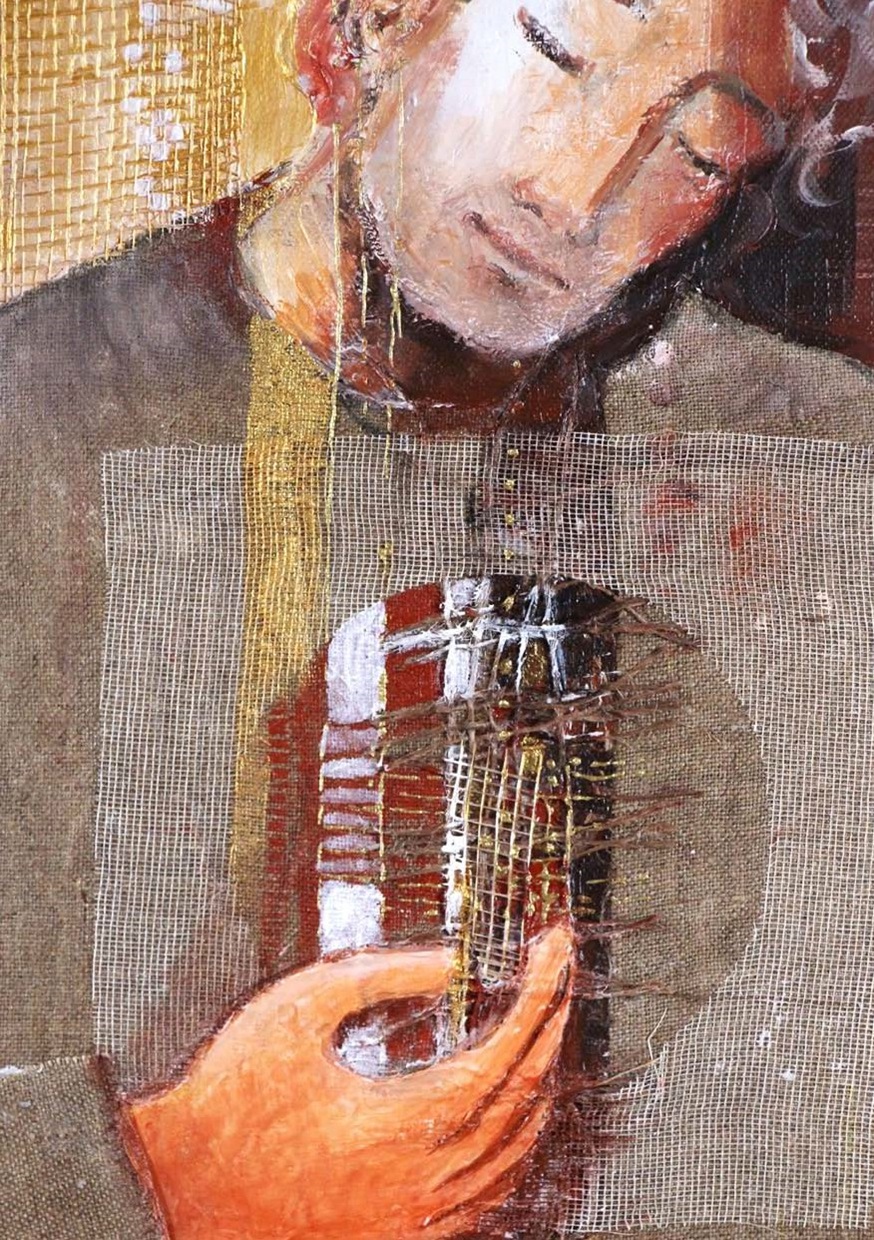
How can you say to your brother, ‘Let me take the speck out of your eye,’ when there is the log in your own eye? (Mt 7:4)
Admonishing sinners, a very delicate action that requires great humility and great love so as not to turn into an inadmissible act of interference in someone else’s life.
Admonishing sinners must be done as when we clothe a poor person because we see them in their nakedness and have true compassion on them. Then we clothe them in the Name of Christ, with love, without asking why they were naked…
That question belongs to God, as when He asked Adam: “and who told you that you were naked?”.
When Adam commits the first sin, he realizes for the first time that he is naked.
God asked him: «Where are you?»
He answered: «I heard the sound of you in the garden, and I was afraid, because I was naked, and I hid myself». He resumed: «Who told you that you were naked? … » (Gen 3:1-22).
Admonishing the sinner is warning him of the sins he commits and therefore of his being naked. (Lucetta Scaraffia)
“Sinners” and “admonish” are two harsh words to our ears. Pope Francis often says he is a sinner. All of us are sinners. But so many people of our time do not share this statement; they do not consider themselves sinners, but rather righteous, with some minor “human” flaw.
Sin as a private matter
The sense of sin has disappeared from many hearts. This is a logical consequence of the disappearance of the sense of God. Pius XII already said in the 1950s that “the sin of the century is the loss of the sense of sin”. What would he say today?
Another problem is added: today everything concerning God, religion, and sin is considered a “private matter”, and entering this sphere is seen as an interference in another’s private life, as a failure to respect their conscience and freedom.
This would be contrary to necessary tolerance and peace, and therefore an antisocial behavior. But this stance is unacceptable, because it reduces religion to a “private matter”, while in reality it encompasses all of life, our relationship with God, with our neighbor, with the world, and with ourselves.
It is important, therefore, to awaken consciences, speaking of God and His truth and calling by name the grave sins that destroy human beings, families, and society: superstition, idolatry, blasphemy, hatred, abortion, adultery, divorce, tax evasion, gambling, slander, etc.
Seeking, with gentleness, to help people who commit such sins understand that they are not following the path of life is not an offense against them, but—on the contrary—a true Work of Mercy.
Recognizing the evil of one’s sin
Recognizing the evil of one’s sin is the primary condition so that, with the help of divine mercy, a person may leave the path that leads to death, heal, and find life again.
Saint James writes: “My brothers, if anyone among you wanders from the truth and someone brings him back, let him know that whoever brings back a sinner from his wandering will save his soul from death” (Jas 5:19-20). We could be “spiritual physicians” for one another (Hermann Geissler F.S.O.).
Mercy is the way God-Trinity relates to the sinner. The moment evil and sin enter a person’s life, God’s response is to intensify His love for that person. God’s purpose is to “make righteous” the person who has done evil: to free them from evil, to restore them to the “right relationship” with Himself, with the Father, the Son, and the Holy Spirit.
«I do not desire the death of the sinner, but that they convert and live». God’s intervention is “an extra measure of love”, a more intense investment of gratuitous love, in the hope that the sinner realizes they are loved and returns to Him.
The justice of God-Trinity-Mercy desires that the sinner, welcoming His gratuitous Love, returns to Him; this is conversion through love.
It helps them recognize their sin and decide to abandon it because sin destroys His plan of love that gives meaning to each person’s life.
Thus God-Trinity-Mercy resumes His dialogue of love so that the person “may live”.
This sequence can be defined as a “super-gift”, for-giveness. This is Mercy.
God’s action is not to erase sin or to forget sins, but is directed toward the person of the sinner: a reconstructive intervention.
God-Trinity-Mercy JUSTIFIES, makes righteous, that is, capable of resuming dialogue with Him. The pinnacle of Mercy is this Justice of God: creative, restoring, justifying, which restores to man his dignity as a “child of God”. (F.C.)
«… it is necessary to recognize that we are sinners, to strengthen in us the certainty of divine mercy. “Lord, I am a sinner: come with your mercy”. This is a beautiful prayer. It is an easy prayer to say every day: “Lord, I am a sinner: come with your mercy”». (Pope Francis)
Prayer for the conversion of sinners
Jesus said to Sister M. Faustina Kowalska: “The prayer for the conversion of sinners is most pleasing to Me. I always answer it”.
Jesus, eternal truth and our life,
as a beggar I implore your Mercy for sinners.
Sweetest Heart of my Lord, full of compassion and mercy,
I plead with you for them.
O Heart, fountain of Mercy,
from which rays of incomparable graces flow upon all mankind, I ask of you light for those who are in sin.
Jesus, remember your bitter passion
and do not allow souls redeemed at so great a price by your blood to be lost.
O Jesus, when I meditate on the great value of your blood, I rejoice in such greatness,
for although sin is an abyss of ingratitude and wickedness, yet the price paid for it
is infinitely greater than the sin.
An immense joy ignites in my heart as I admire this inconceivable goodness of yours.
O my Jesus, I desire to bring all sinners to your feet, that they may glorify your Mercy, which is infinite. Amen.
Illustration by Sister Marie-Anastasia Carré (Communauté des Béatitudes)
Being Witnesses of Mercy – ILLUMINATE
2 February 2026