



 Italy
Italy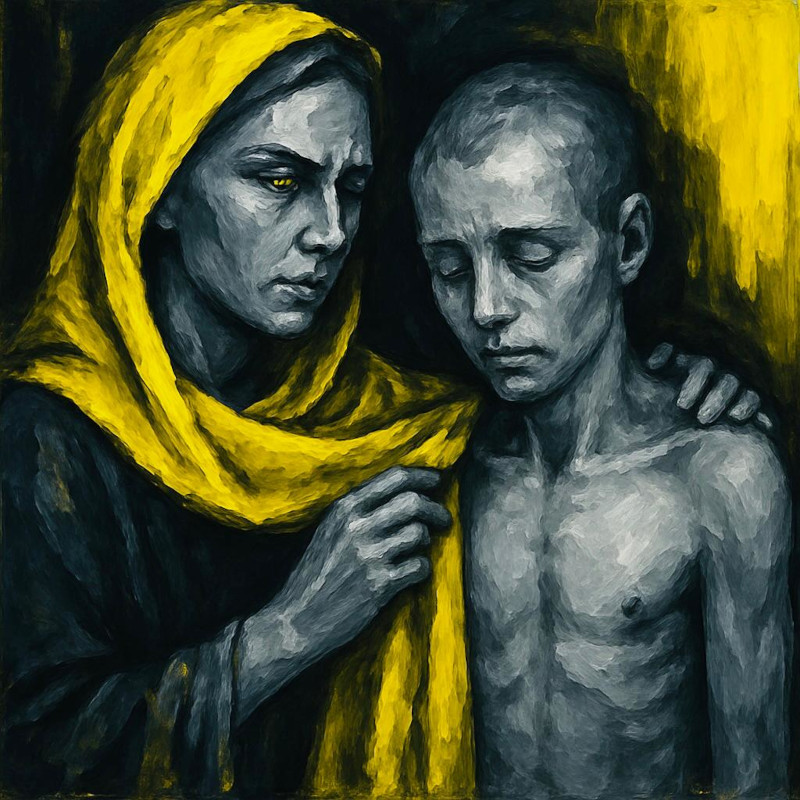
Man is born naked, as Job realistically recalls: “Naked I came from my mother’s womb, and naked I shall return” (Job 1:21), yet he needs not only food and water, but also clothing. The Book of Genesis states that “the Lord God made garments of skins for the man and for his wife, and clothed them” (Gen 3:21), since Adam and Eve, following original sin, “realized they were naked.” God is the first tailor who takes care of clothing the naked.
Throughout the Bible, a true “theology of clothing” unfolds. Clothing often carries significant symbolic meanings: consider the white garments characteristic of the divine realm (Mt 28:3; Mk 9:3; 16:15; Rev 6:11) or the profound meaning of Jesus being stripped of his tunic before being crucified (Mk 15:17, 20, 24). Likewise, the nakedness of the Risen Lord recalls the original paradisiacal condition of Adam as a friend of God (Gen 3:10-11): Jesus is the new Adam (1 Cor 15:45; Rom 5:14). The Risen Jesus no longer requires earthly clothes because “Christ, having been raised from the dead, dies no more” (Rom 6:9), unlike Lazarus who emerged from the tomb wrapped in burial cloths (Jn 11:44), destined to die again.
Clothing is also presented symbolically as an emblem of salvation: “You have stripped off the old self with its practices and have put on the new self, which is being renewed in knowledge in the image of its Creator” (Col 3:10); “Put on the new self, created to be like God in true righteousness and holiness” (Eph 4:24); “For all of you who were baptized into Christ have clothed yourselves with Christ” (Gal 3:27). And to the blessed, God will give “a white robe to each one” (Rev 6:11).
Clothe the naked
Sacred Scripture invites us to share our clothing, covering those who, especially in colder seasons, lack adequate attire to shelter from the elements or wander barefoot at the risk of illness. Across the world, primarily in Africa and parts of Latin America or Asia, but also in our cities today, particularly in prisons, hundreds of millions of people live without adequate clothes.
In the Old Testament, God urges us: “Give of your garments to the naked” (Tob 4:16); “Is this not rather the fast that I choose…? Is it not to share your bread with the hungry, and when you see the naked, to clothe him?” (Is 58:6-7, 10); “If he covers the naked with clothing… he is righteous; he shall surely live, says the Lord God” (Ezek 18:7, 16).
In the New Testament as well, John the Baptist simply stated: “Whoever has two tunics should share with him who has none, and whoever has food should do the same” (Lk 3:11). And Jesus instructed the apostles not to carry two tunics (Mt 10:10) and, above all, not to be anxious about clothing: “And why do you worry about clothes?” (Mt 6:28), concluding with the striking remark: “See how the flowers of the field grow. They do not labor or spin. Yet I tell you that not even Solomon in all his splendor was dressed like one of these” (Mt 6:28-29). The Lord Jesus Himself, before being crucified, was stripped like a criminal; an outrage and an insult not only to the Son of God, but to human dignity itself.
Saint James also warns: “If a brother or sister is poorly clothed and lacking in daily food, and one of you says to them, «Go in peace, keep warm and eat your fill», without giving them the things needed for the body, what good is that?” (Jas 2:15-16).
John Chrysostom asserts: “Do you wish to honor the body of Christ? Do not permit it to be an object of contempt in its members—that is, in the poor, who lack clothing to cover themselves. Do not honor Him here in church with silk fabrics while you neglect Him outside, where He suffers from cold and nakedness.”
And Saint Basil: “Who is the thief? He who takes the belongings of another. And are you not a thief, when you consider as your own what was entrusted to you to manage? He who strips a man of his clothes is called a thief. Does not he who fails to clothe the naked when he is able deserve the same name? The bread you keep belongs to the hungry, the coat you keep in your wardrobe belongs to the naked, the shoes that rot in your house belong to the barefoot, the silver you have buried belongs to the needy. You do injustice to as many people as you could have helped… How just the words on the day of judgment will seem to you… (Mt 25:41-43). The thief is not condemned alone, but rather the one who refuses to share goods with others.”
“Tradition provides us with the example of Saint Martin of Tours, who divided his cloak to share it with a poor man defenseless against the rigors of freezing winter, and Christ appeared to him in a dream that night to thank him for his gesture. Though the saint did not eradicate the cause of suffering, poverty itself, by clothing that man he sheltered him and helped ease his hardship. In the same way, our gift of clothing does not eliminate world poverty, but it effectively alleviates the suffering of at least one person” (G. Comolli).
Much like Pier Giorgio Frassati, who as a young child burst into tears over a beggar turned away by his father, crying that “perhaps he was sent by Jesus,” and secretly removed his own shoes and socks to give them to the mother of a half-naked child knocking at the door. Later, as a vigorous young man, he would often return home barefoot and shivering in the cold, having given his clothes to the poor he met along the way.
Image created digitally by spazio + spadoni


Being Witnesses of Mercy – ILLUMINATE
2 February 2026