



 Italy
Italy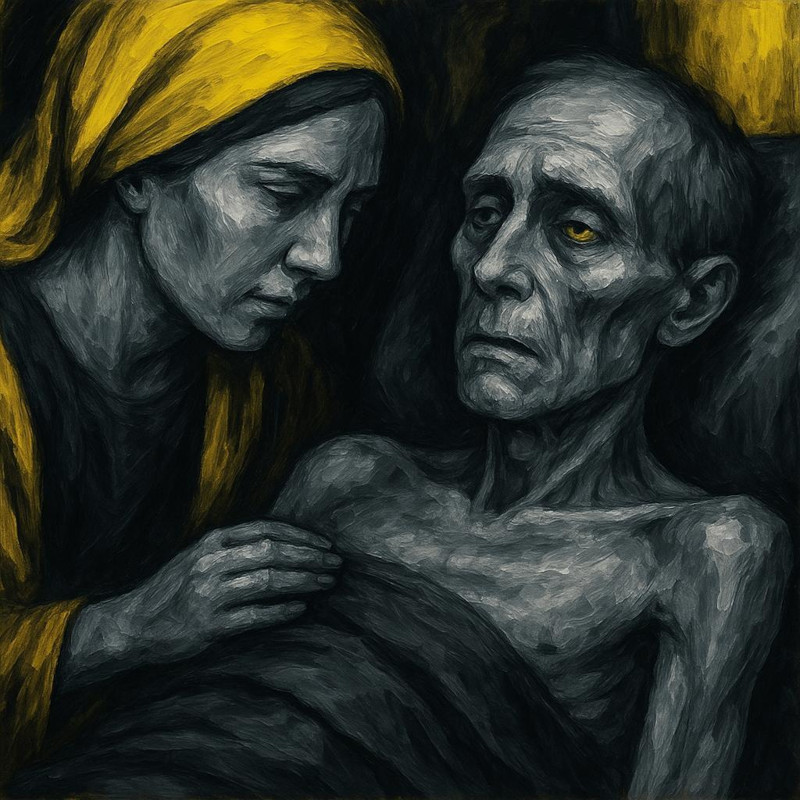
Jesus was certainly an extraordinary wonderworker: “They brought to him all who were sick… And he cured many who were sick with various diseases…” (Mk 1:32-34); “And wherever he went, into villages or cities or farms, they laid the sick in the marketplaces, and begged him that they might touch even the fringe of his cloak; and all who touched it were healed” (Mk 6:56). Among the sick, two categories that were “taboo” in Judaism held a special place for Jesus: lepers (Mk 1:40-44) and the “demoniacs”, likely psychiatric patients (Mk 1:21-28; 5:1-20; 7:24-30; 9:14-26).
Yet his miraculous healings were not merely a benefit for the fortunate individuals who received them: they were above all an expression of his power as Savior, of the deepest meaning of his mission; he had come to definitively defeat evil and death, and his victory began precisely within the spatiotemporal boundaries of poor, suffering humanity that flocked to him. For this reason, Mark calls them dynamis, power (Mk 6:2, 5, 14; 9:39), and never sèmeion, sign, or tèras, prodigy.
Miracles in the Gospels are therefore not, in themselves, propaganda signs performed to prove that Jesus is God, but revelatory moments of divine solicitude for those who suffer. Only in the light of the paschal mystery will they be understood as an anticipation of God’s power manifest in the resurrection. One understands the insistence on faith demanded of those who are healed: “Your faith has made you well,” Jesus says to the hemorrhaging woman and to the blind man of Jericho (Mk 5:34; 10:52); “All things are possible for the one who believes” (Mk 9:22-24). Jesus reiterates that complete salvation comes only through adherence to him, and the event of healing, however miraculous, is nothing other than an epiphenomenon of the total transcendence of creaturely limitation brought about by his incarnation.
The Son of God does not merely stand with those who suffer: he himself suffers, sharing the human experience of finitude and subsuming all its evil and pain. Faced with any illness or suffering, Jesus “is moved with pity,” “feels compassion” (Mk 1:41; 6:34; 8:2; Mt 9:36; 14:14; 20:34; Lk 7:13); before the death of his friend, he even “wept” (Jn 11:33-38).
Mediators of salvation
The disciple is called to extend the incarnation of the Son of God into the world by becoming a concrete sign of his love toward those who suffer, becoming himself, for those in pain, the primary experience of God’s goodness and salvation.
We are the first sacrament of Christ for those in distress: our legs are the legs with which Jesus reaches the sick, our arms are the arms with which Jesus assists them, our mouth is the one with which Christ consoles them and proclaims salvation. The believer is, for the brother or sister, the channel, the mediator of salvation. The believer assists the suffering person in the struggle against pain, sparing no effort to alleviate their affliction. Above all, the believer becomes a “neighbor” through an active and caring presence: often loneliness is the most painful aspect of illness and suffering, and shared presence is already a powerful medicine.
Because of this, the believer will never view illness and death as merely private matters, but will experience them and help others experience them as a family, community, and ecclesial event: love and solidarity, authentic experiences of Christ, are what must illuminate even our darkest moments. The believer helps the sick person preserve their freedom, make choices at every stage, and live their experience of suffering with deep humanity.
In this regard, it is essential to speak the truth to the sick person, respecting their capacity for understanding without ever extinguishing an absolute hope for recovery, including earthly recovery, which science acknowledges as possible even in extreme situations.
Finally, the believer becomes a “neighbor” to the sick above all by bringing them what is most precious and beautiful, the salvation of Christ (Acts 3:6): to the suffering person, the Christian announces the Gospel of joy, healing, and resurrection, proclaiming the name of Christ, who alone is the definitive answer to the tragedy of evil and the enigma of pain.
This is why the believer helps the suffering person encounter God in their personal story, inviting them to prayer, meditation on the Scriptures, and union with him in the Sacraments.
Healing the sick
The disciple of Jesus must therefore, like him, dedicate their entire life to an unrelenting fight against evil. We are saved to save, healed to heal, comforted to comfort (2 Cor 1:3-4).
One of the signs of the Kingdom that disciples are called to bear, just as Jesus did, is the healing of illness: “Summoning his twelve disciples, he gave them authority over unclean spirits, to cast them out, and to heal every disease and every sickness” (Mt 10:1; Mk 6:13; 16:17-18).
The New Testament encourages specific actions toward the sick: among these is the laying on of hands, following Jesus’ example: “At sunset, all those who had any who were sick with various diseases brought them to him; and he laid his hands on every one of them and cured them” (Lk 4:40). Among the “signs that will accompany those who believe” (Mk 16:17), Jesus indeed states: “they will lay their hands on the sick, and they will recover” (Mk 16:18).
Another evangelical practice is the anointing of the sick with blessed oil; the Twelve, sent by Jesus, “cast out many demons, and anointed with oil many that were sick and cured them” (Mk 6:12).
In the Church, a specific “sacrament of the sick”, which includes both the laying on of hands and the anointing with oil, concretely signifies to the suffering person the salvation the Lord brings: in the “Anointing of the Sick”, clinging to the Lord in the confession of sins brings healing and resurrection. James writes: “Are any among you sick? They should call for the elders of the church and have them pray over them, anointing them with oil in the name of the Lord. The prayer of faith will save the sick, and the Lord will raise them up; and anyone who has committed sins will be forgiven” (Jas 5:14-15).
Paul repeatedly mentions, among the “spiritual gifts, … manifestations of the Spirit for the common good” (1 Cor 12:1, 7), the “gift of healing” (1 Cor 12:9, 28, 30).
What does it consist of?
First, note how Paul distinguishes the “gift of healing” from the “working of miracles” (1 Cor 12:7-10, 28-30). The “gift of healing” is first and foremost the tenacious fight against illness, making use of the finest resources human science can offer. Sirach already advised consulting the physician, an instrument of the Most High to provide healing (Sir 38:1-15).
At other times, the believer is called to heal through intercessory prayer: “Most healings, at least as we observe them today, are neither miraculous nor instantaneous. What often happens is that, through prayer, the underlying causes of illness disappear—such as hatred, resentment, fear, rejection of life, anxiety, tension—and the sick person recovers peace and health. In many instances, the grace of prayer revitalizes and strengthens natural powers to restore health more quickly” (M. Iragui). Praying with and for the sick helps them cling ever closer to the Lord, becoming a source of deep inner well-being that frequently leads to physical improvement or healing.
“This does not rule out the occurrence of miraculous healings, born of a miraculous intervention of the Lord” (M. Iragui). Yet above all, the disciple of the Lord is called to announce the greatest miracle: that God took on human flesh in his Son to carry all our afflictions and conquer them in Christ’s resurrection. While earthly miracles may certainly be asked of God, the greatest gift to seek remains faith-filled acceptance of his boundless plan of love, by which he did not withhold his own Son for us: an authentic and heartfelt “amen” to this mystery is the true path to healing and integral salvation for humanity across all times.
Image created digitally by spazio + spadoni
Being Witnesses of Mercy – ILLUMINATE
2 February 2026