 Italy
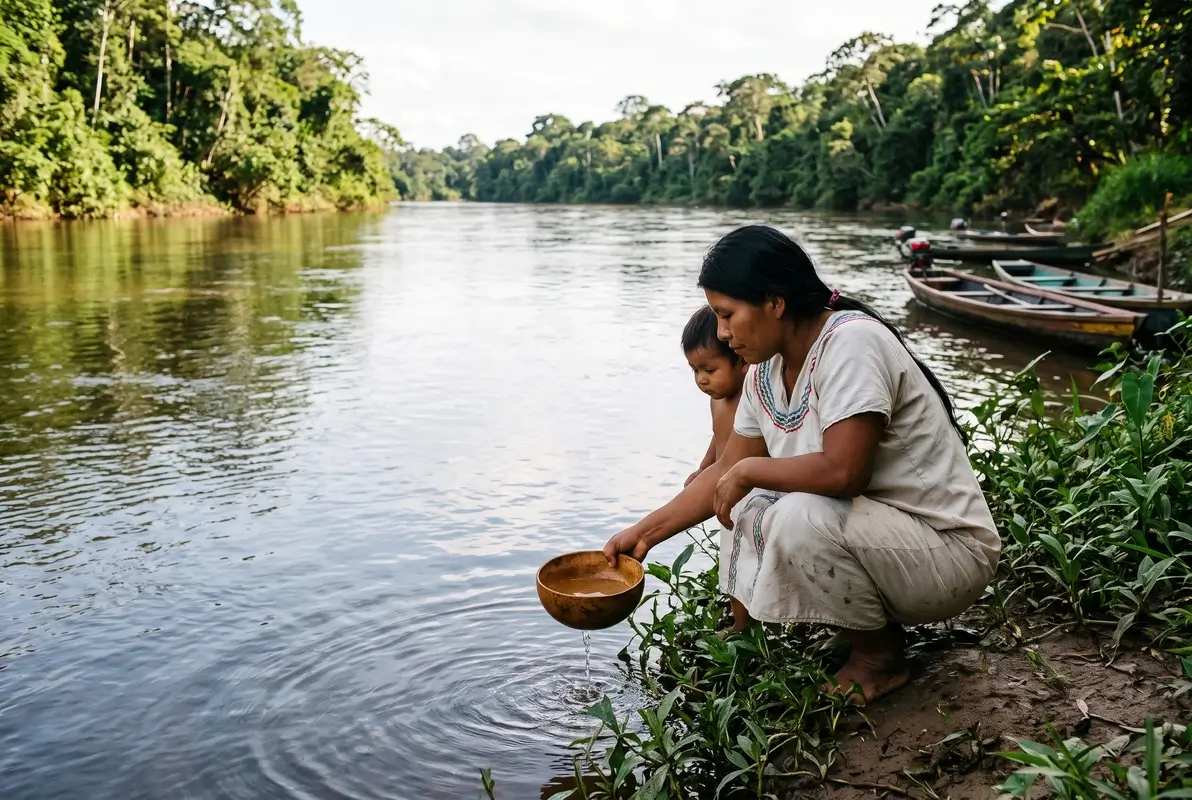
“No one explained to us that the water we were drinking was a way to poison our children.”
This dramatic testimony, gathered by Pedro Arrojo-Agudo, United Nations Special Rapporteur, reveals the most painful paradox of the Amazon: the planet’s green lung, guardian of one-fifth of the world’s freshwater reserves, sees rivers and basins transformed into toxic waste channels.
Pollution caused by extractive activities and oil spills not only devastates natural ecosystems, but directly tramples on the health and future of indigenous and rural populations.
The illusion of profit against human dignity
Access to water resources cannot and must not be subject to predatory market logic.
As highlighted by Arrojo before the UN Human Rights Council, the true root of the global water crisis does not lie in an objective natural scarcity, but in an economic model that prioritizes financial gain over the common good.
In the Amazonian river basins, the advance of illegal mining and industrial concessions contaminates aquifers with mercury and hydrocarbons.
This contamination deprives local communities of their primary source of livelihood, forcing entire families to live with chronic illnesses or undertake grueling journeys in search of clean water sources.
Treating river waters as a mere speculative tool represents a grave wound to social justice and the protection of creation.
Rediscovering the work of mercy of giving drink to the thirsty
Faced with this ecological and humanitarian emergency, the corporal work of mercy of giving drink to the thirsty takes on a deeply relevant and prophetic dimension. It is not limited to emergency relief, but rather constitutes an ethical duty of restitution, stewardship, and active defense of human dignity.
Giving drink to the thirsty today means resolutely opposing systematic pollution, protecting watersheds, and ensuring that every individual enjoys inalienable access to drinking water.
Indigenous peoples safeguard a vision of wisdom in which rivers are community lifeblood to preserve for future generations. Recognizing water as an inalienable right and collective heritage is the indispensable starting point for building a model of authentic and shared fraternity.
Digitally created image by spazio + spadoni
Source: Agenzia Fides