


 Dominican Republic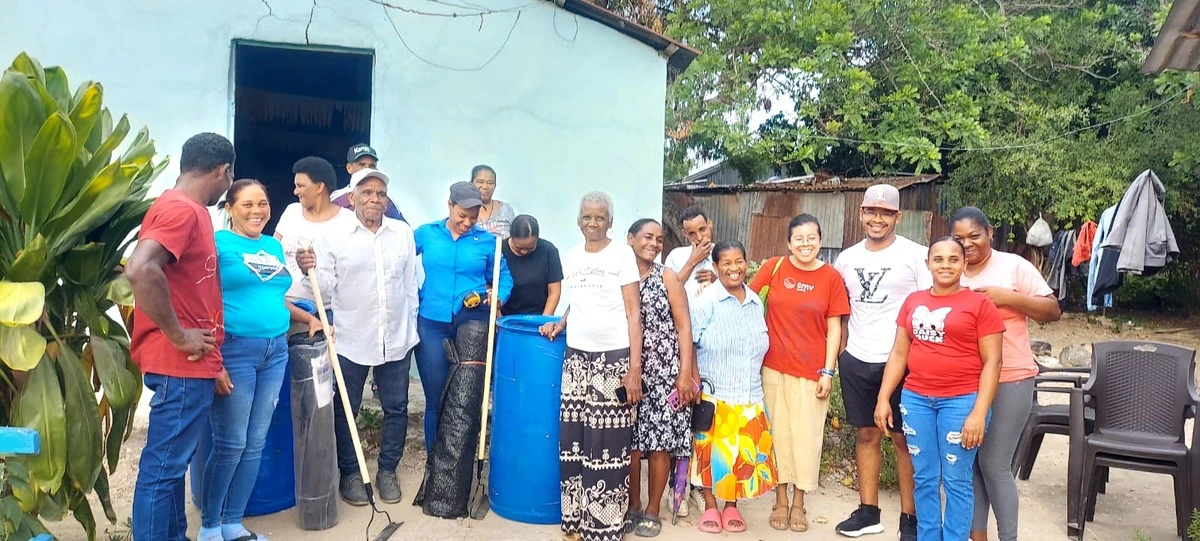
Today, I present to you a community garden project carried out in the community of La Peña, in San Juan de la Maguana (Dominican Republic).
The author is Lucía Alejandre Javier, an agricultural engineer and missionary of the Villaregia Missionary Community based in Texoco (Mexico) who, after making her first vows in June, spent a month with us in the mission we are carrying out in San Juan de la Maguana.
(by Lucía Alejandre Javier)
The Food and Agriculture Organization of the United Nations (FAO) publishes an annual report on the state of food security and nutrition in the world. The 2025 report highlights how high inflation has reduced purchasing power in numerous countries and, especially among low-income populations, has compromised access to healthy food.
In the Dominican Republic, the prevalence of moderate or severe food insecurity reaches 43.8% of the total population. For this reason, projects aimed at encouraging the adoption of technologies that promote access to a balanced and economically sustainable diet are of fundamental importance.
For just over a year, the Villaregia Missionary Community, together with the Foundation for the Development of the Provinces of Azua, San Juan and Elías Piña (FUNDASEP, of the Diocese of San Juan de la Maguana), has been promoting the creation of family gardens.
The gardens are spaces of about 30 m², located near homes, so that both men and women can look after them as part of their daily activities. In these gardens, however, they do not only grow aubergines, tomatoes, onions, beetroots and carrots; they also cultivate relationships and strengthen the community.
Through meetings with project participants, training activities are carried out, mutual support is promoted, and the exchange of experiences and knowledge among those with more experience is encouraged.The project also represents a source of great satisfaction for those who carry out the training activities. Agricultural engineer Odrys tells us:
«I was offered other jobs, where I might have earned a little more, but I wouldn’t trade the joy of seeing the people we support grow through agri-food projects in the poorest provinces of my region».
Thanks to the scientific and practical knowledge of trainers like Odrys, combined with their great human sensitivity, the project becomes a benchmark for the progressive introduction of vegetable production practices and crop diversification. These practices can help improve the quality of family nutrition, ensuring access to varied and nutritious food at low cost.
Although the gardens are small in size, they constitute a vast network of values that, little by little and thanks to the testimony of the participants, becomes the seed of an experience that contributes to strengthening the food security of the «granary of the South».
Photo by Rita Usai