


 Italy
Italy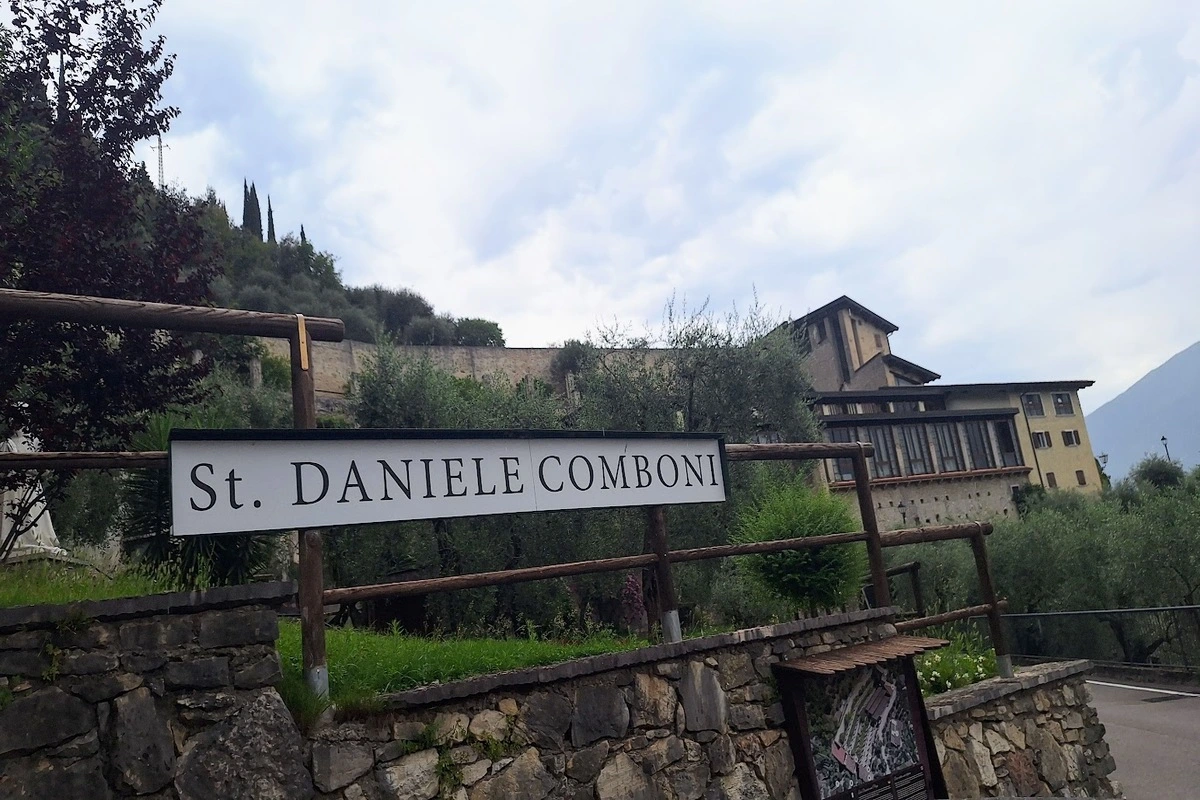
Perched in the picturesque locality of Tesöl (a name recalling the nets stretched for hunting) in Limone sul Garda (BS), the birthplace of Saint Daniel Comboni is not just a museum, but the beating heart of a mission that continues to speak to the world. Here, within the walls set inside an 18th-century historic lemon house, visitors can retrace the first steps of the “Bishop of Central Africa,” whose parents, Luigi and Domenica Pace, were caretakers of these lands.
From the Church of San Benedetto to the birthplace
However, the visit following in the footsteps of St. Comboni should ideally begin at the Church of San Benedetto in the center of Limone sul Garda, where Daniel’s parents were married in 1826 and where the future Saint was baptized, the sole survivor of eight siblings.
Upon reaching his home, one enters the core of his childhood: the interiors, such as the kitchen and the room where he was born, retain the flavor of an evangelical simplicity that forged his spirit of self-sacrifice.
The chapel, the museum, and the missionary vocation
Next to it, we find the humble chapel converted from an old woodshed, featuring a tabernacle in the shape of an African hut and a large olive wood crucifix.
In an additional space created inside the house, called the “Museum of Curiosities,” visitors can admire numerous artifacts collected by Comboni and Comboni missionaries during their missions in Africa.
Born in 1831, Daniel developed his vocation at a very young age, swearing in 1849 to consecrate his entire life to African missions. His “Plan for the Regeneration of Africa,” born from inspiration in front of Saint Peter’s tomb, was based on the revolutionary formula: “Save Africa with Africa,” making local peoples the protagonists of their own evangelization and human promotion.
The Plan for the Regeneration of Africa and its legacy
Despite exhausting struggles, malarial fevers, and the loss of many companions, Comboni never gave up under the motto “either Nigrizia or death.” In Verona, he founded the institutes of the Comboni Missionaries (MCCJ) and the Missionary Sisters Pie Madri della Nigrizia (SMC), which today carry forward his charism in dozens of nations. Appointed the first Bishop of Khartoum, he died right there on October 10, 1881, exhausted by work and illness, repeating: «I die, but the work will not die».
Today, the house in Limone, cared for by missionaries since 1968, remains an “open house to the world” and an oasis of reflection where hospitality services for pilgrims are organized.
All photographs were taken by the author on July 21, 2026, under the CC BY-SA license.