



 Italy
Italy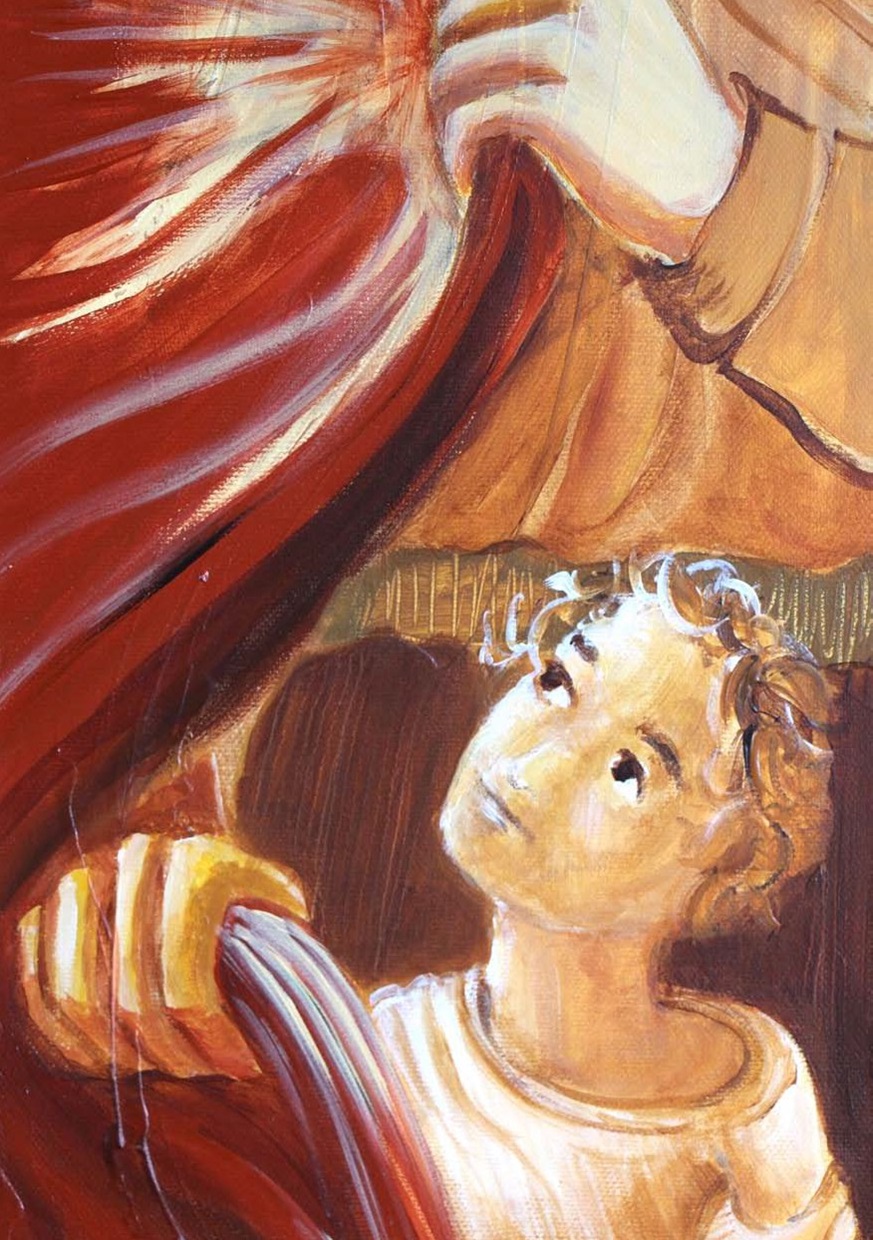
By now, clearly, we only think about how to dress. And if we don’t have that pair of Nike or Adidas shoes, we pout. Buying and buying clothes that become outdated after a couple of months! Meanwhile, there are people who, in their need, consider a few rags a complete wardrobe!
“If someone strips a clothed person, he is called a thief. And does he who fails to clothe the naked when he can, deserve any other name? The bread you keep for yourself belongs to the hungry; the coat you preserve in your wardrobe belongs to the naked; the shoes rotting in your house belong to the barefoot; the silver you keep buried belongs to the needy” (Saint Basil the Great, 330 AD)
Particularly striking is the admonition of Saint John Chrysostom: «Would you honor the body of Christ? Do not neglect Him when He is naked. Do not honor Him here in the temple with silk fabrics, only to neglect Him outside, where He suffers from cold and nakedness».
From Genesis to today
In Scripture, the human act of clothing the naked is founded on the original gesture of God Himself, who covered human nakedness by preparing clothes and dressing Adam and Eve after their transgression: “The Lord God made garments of skins for the man and his wife, and clothed them” (Gen 3:21).
The human transgression in the garden of the beginning caused humanity to leave the space of communion and realize their “nakedness”—that is, their limited, fragile creaturely condition. They began to feel distrust and fear toward one another, and otherness came to be perceived as a threat.
Thus Adam and Eve “sewed fig leaves together and made loincloths for themselves” (Gen 3:7). But only when God Himself makes garments of skins and clothes them (cf. Gen 3:21) will they find their dignity restored, their fragility embraced by divine mercy, and their limitations protected and covered.
Sharing clothes with the poor is an intimate gesture requiring delicacy, discretion, and tenderness. It engages directly with the body of the other, whose uniqueness is expressed above all in the face. The face remains bare, uncovered, and through its vulnerability reflects the fragility of the entire human body and the whole person.
Sharing clothes with the poor—not in the impersonal, efficient mode of collecting aid to ship abroad, but in a face-to-face encounter—becomes a tangible expression of charity, a celebration of gratuitous love. It is an exchange where the giver is not impoverished but enriched by the joy of the meeting, and the recipient is not humiliated. Being clothed brings them into relationship, making them feel welcomed in their need as a unique person, not as an anonymous beneficiary of discarded garments.
Clothing in Christian tradition
In Western Christian tradition, the act of clothing the naked is universally exemplified by Martin of Tours cutting his cloak to share it with a beggar defenseless against the bitter winter cold. Venantius Fortunatus writes in his Life of Saint Martin of Tours:
“To a poor man met at the gates of Amiens, who turned to him, Martin divided the shelter of his chlamys equally and with fervent faith placed it over his shivering limbs. One took a part of the cold, the other took a part of the warmth; heat and cold were shared between both men. Cold and warmth became a new currency of exchange, and a single poverty was enough when divided between two.”
At the end of the fourth century in the Syrian region, the baptismal rite included the neophyte stripping off their clothes and trampling them underfoot, the anointing of their naked body, immersion in the baptismal waters (in complete nakedness), and finally, emerging from the font, being clothed in a white robe.
The glorious nakedness of the dead and risen Christ (who hung entirely naked on the cross as a sign of humiliation) clothes and protects the newly baptized, who enter a new life having “put on Christ”: “For as many of you as were baptized into Christ have put on Christ” (Gal 3:27). Clothed with Christ in baptism, rising above their fragile, limited nature, Christians find themselves immersed in God’s mercy (Titus 2:4-5), covered and embraced by it. Their charity toward those who are naked, ashamed, helpless, humiliated, and stripped of dignity becomes a direct reflection and living testimony of divine mercy. (Luciano Manicardi)
«And why do you worry about clothes? See how the flowers of the field grow: they do not labor or spin… yet I tell you that not even Solomon in all his splendor was dressed like one of these! If that is how God clothes the grass of the field, which is here today and tomorrow is thrown into the fire, will he not much more clothe you—you of little faith? So do not worry, saying, “What shall we eat?” or “What shall we drink?” or “What shall we wear?”. For the pagans run after all these things, and your heavenly Father knows that you need them. But seek first his kingdom and his righteousness, and all these things will be given to you as well» (Mt 6:28-33)
Prayer of Cardinal Joseph Ratzinger
Lord Jesus, you were stripped of your garments, exposed to dishonor, cast out from society.
You took upon yourself the shame of Adam, healing it.
You clothed yourself with the suffering and the needs of the poor, those excluded from the world.
Yet in this very way, you give meaning to what seems meaningless.
In this way, you show us that your Father holds you, us, and the world in his hands.
Grant us deep reverence for human beings at every stage of existence and in every situation where we encounter them.
Grant us the luminous garment of your grace.
Illustration by Sister Marie-Anastasia Carré (Communauté des Béatitudes)
Being Witnesses of Mercy – ILLUMINATE
2 February 2026