



 Italy
Italy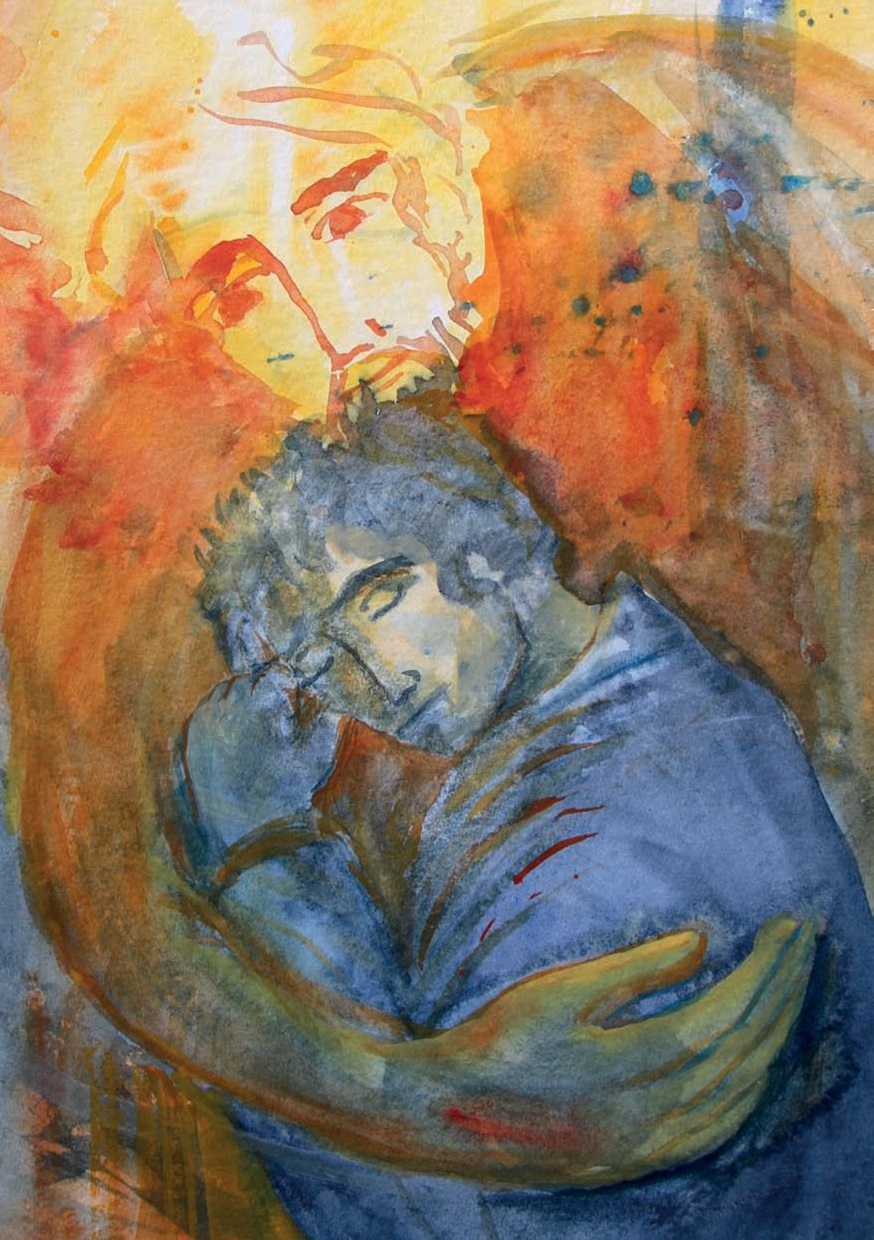
«I will ask the Father, and he will give you another Advocate to help you and be with you forever, the Spirit of truth. The Father will send him in my name, he will teach you all things and will remind you of everything I have said to you» (Jn 14:25-26).
An evangelical icon, both mysterious and profound, of consoling the afflicted is found in Jesus during the night of his passion.
«On reaching the place, he said to them: “Pray that you will not fall into temptation.” He withdrew about a stone’s throw beyond them, knelt down and prayed: “Father, if you are willing, take this cup from me; yet not my will, but yours be done.”
An angel from heaven appeared to him and strengthened him. And being in anguish, he prayed more earnestly, and his sweat was like drops of blood falling to the ground. When he rose from prayer and went back to the disciples, he found them asleep, exhausted from sorrow.» (Lk 22:39-45)
Jesus’ sorrow fills his disciples with grief, and they escape his affliction by taking refuge in sleep. Only an angel coming from heaven can stay near Jesus and console him: it is not recorded what was said or done, but it gives Jesus the strength to enter deeply into the struggle without falling into despair (Blessed Paul VI Community).
Perhaps never as in this era of the dictatorship of relativism has humanity – forever a “beggar for meaning and fulfillment” – lacked direction and perspective, and felt so deeply afflicted.
The widespread use of anti-anxiety medications across the world offers an undeniable and alarming sign of this reality.
The lack of goods, both material and spiritual; illness and suffering; disorientation and abandonment cause our tears. Who, then, can bring consolation?
What characteristics must consolation possess to be effective? Before ascending to the Father, Jesus promised mankind the perfect Consoler, invoked in the sequence of the Veni Sancte Spiritus: Perfect Consoler, sweet guest of the soul, sweetest refreshment.
Paraclete is the term Saint John uses in his Gospel to signify the Holy Spirit. Derived from legal terminology, its Latin equivalent is advocatus, literally “called alongside”, an advocate understood as a defender and, by extension, a consoler. In judicial texts, it refers to “one who stands beside the accused” to defend them (Chiara Mantovani).
Whoever chooses to console the afflicted will never lack purpose in this world; consoling the afflicted is undoubtedly one of the most accessible works of mercy and one constantly needed, yet it cannot be delegated to an institutional welfare system.
Pope Benedict XVI writes in section 28 of his encyclical Deus caritas est (God is love): «Love — caritas — will always prove necessary, even in the most just society. There is no ordering of the State so just that it can eliminate the need for a service of love.
Whoever wants to eliminate love is preparing to eliminate man as such. There will always be suffering which cries out for consolation and help. There will always be loneliness. There will always be situations of material need where help in the form of concrete love for one’s neighbor is indispensable.
The State which would provide everything, absorbing everything into itself, ultimately becomes a bureaucratic instance incapable of guaranteeing the very thing which the suffering human person — every person — needs: namely, loving personal concern.
We do not need a State which regulates and controls everything, but a State which, in accordance with the principle of subsidiarity, generously acknowledges and supports initiatives arising from the different social forces and combining spontaneity with closeness to those in need. The Church is one of those living forces: she is alive with the love enkindled by the Spirit of Christ».
The afflicted do not merely need comfort, but genuine consolation. The use of the verb “to console” (not to be confused with merely “comforting”) implies a positive action that, responding to others’ needs, cancels out causes of suffering and restores well-being. While superficial comfort often reduces itself to pious moral exhortations, true consolation aims at eliminating the roots of pain.
When this does not occur, consolation turns into annoyance, as Job lamented when overwhelmed by misfortune, while his friends tried to rationalize his afflictions: “I have heard many things like these; you are miserable comforters, all of you!
Will your long-winded speeches never end? What ails you that you keep on arguing? I also could speak like you, if you were in my place; I could make fine speeches against you and shake my head at you; but my mouth would encourage you; comfort from my lips would bring you relief.” (Job 16:1-5) (Alberto Maggi).
Consoling is demanding and requires inner refinement. The routine gestures of condolences often risk becoming an empty display of superficiality and social awkwardness, an obligation people endure without genuine emotional depth.
Only those who have experienced bereavement and have known its grief, inhabited its void, and allowed themselves to be shaped by loss can elevate such encounters with discretion and deep insight into the mourner’s heart. Words and gestures that are truly appropriate remain treasured like rare gems. Such is the enduring power of consolation (Francesco Lamendola).
A journalist once persistently asked to photograph Mother Teresa’s eyes because “the Mother had an aged, weary face, yet the most radiant and joyful eyes ever seen, surpassing those of any actress, queen, or model.” Hearing this, Mother Teresa replied: “Do you want to know why my eyes are so full of joy? The secret is simple: my eyes are full of joy because my hands wipe away so many tears! Do the same, and I assure you that you will experience the very same joy!” (Testimony of Card. Angelo Comastri).
Prayer
To Our Lady of Consolation, chosen by God to become the Mother of the Savior through the work of the Holy Spirit, graciously hear our prayers:
You who stood at the foot of the Cross experiencing unspeakable sorrows, you understand all who weep and hold the grace to dry our tears.
We implore you: come to our aid and console, with maternal love, all who call upon you with trust in this valley of tears.
Visit our families, bring healing to the sick, protect children and the youth, and guide back to the right path those who have lost their way.
You who now dwell beside your Divine Son, full of heavenly bliss, strengthen our faith, revive our hope, and increase our charity, so that, following your luminous example, we may one day join you in eternal joy. Amen.
Illustration by Sister Marie-Anastasia Carré (Communauté des Béatitudes)
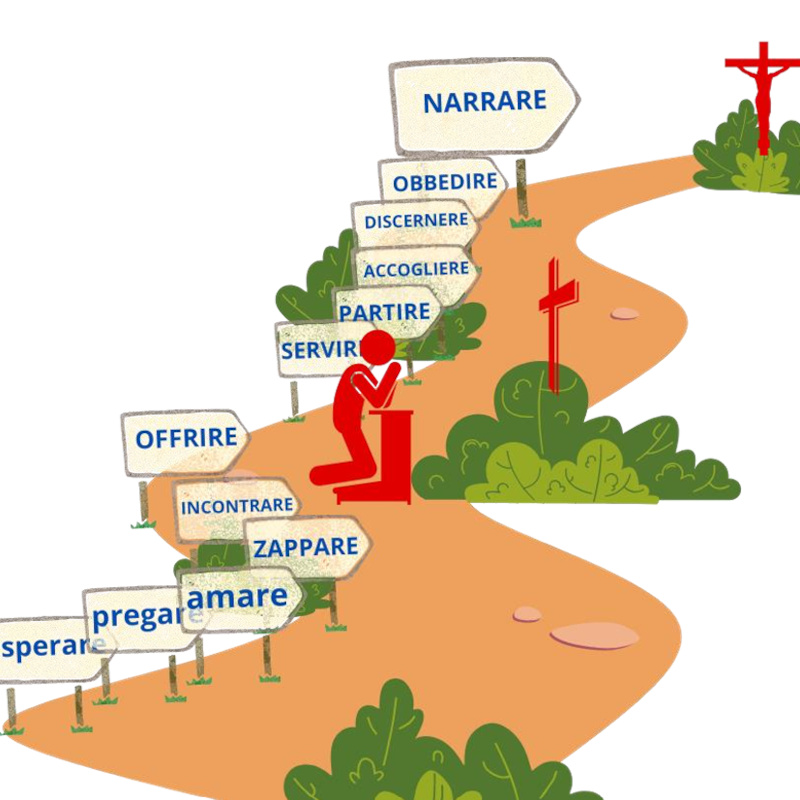

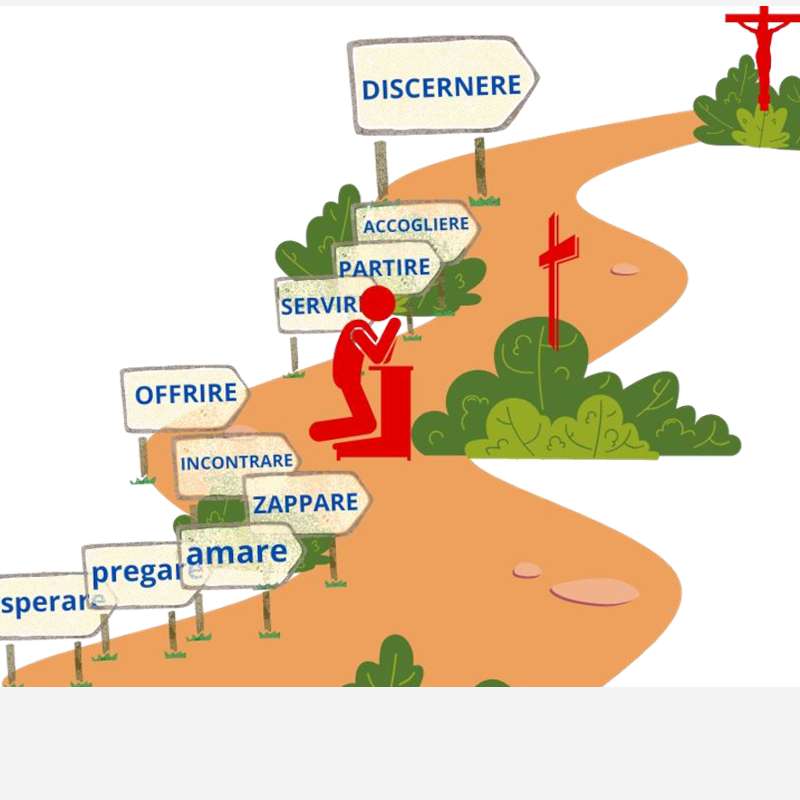
Being Witnesses of Mercy – ILLUMINATE
2 February 2026