


 Italy

From the website of the National Office for Pastoral Healthcare of the CEI, the commentary on the seventh spiritual Work of Mercy
(by Father Filippo Urso, former director of the diocesan and regional office for pastoral healthcare in Puglia).
Praying to God
Prayer is the outpouring of our heart into the heart of God. It is blessing, adoration, praise, thanksgiving, petition, and intercession, but above all, it is communion with God. Indeed, whatever the nature of the prayer, its object, and its eventual fulfillment, the first effect it brings about is union with God: believers place themselves before Him in a filial relationship and invoke Him as Father (cf. the Lord’s Prayer); in a familiar atmosphere of trust and at the same time of reverence, with an aspiration toward universal communion, they open up to the needs of others (cf. “our”), looking beyond their own interests (cf. Phil 2:4) and even praying for their enemies, docile to the promptings of the Holy Spirit who «intercedes for God’s people in accordance with the will of God» (Rom 8:27).
Praying to God for the living and the dead
It is the last—or rather the summit—of the spiritual Works of Mercy. It is a “work” that engages the believer’s life in an act of intercession for others, which is petition, invocation, cry, plea, and even struggle: «I urge you, brothers and sisters – wrote the Apostle Paul to the Colossians –, by our Lord Jesus Christ and by the love of the Spirit, to join me in my struggle by praying to God for me» (cf. 4:12).
The pilgrim Church and the heavenly Church in prayer
Prayer for the living
Intercessory prayer «always falls under the common denominator of mutual communion and fraternal love» and is characterized by the relationship with God and one’s brothers and sisters, because through prayer «man manifests the inseparable connection between the relationship with God and responsibility for mankind, the profession of faith and historical commitment, love for the Lord and solidarity with brothers and sisters».
The believer who intercedes with God on behalf of someone else stands between God, holy and merciful, and man, sinful, destitute, and suffering, in need of salvation. In this way, praying means standing up for a sinful people and taking responsibility for their actions, like Jesus who was «numbered with the transgressors, while he bore the sin of many and made intercession for the transgressors» (Is 53:12).
In intercessory prayer, believers conform themselves to the prayer of Jesus, «the sole intercessor with the Father on behalf of all men, especially sinners (cf. Rom 8:34; 1 Tim 2:5-8; 1 Jn 2:1)» (Catechism of the Catholic Church, 2634). For he «is able to save completely those who come to God through him, because he always lives to intercede for them» (Heb 7:25).
In prayer for the living reside all their joys and sorrows, their needs, and human expectations: the Apostle Paul wrote to the Ephesians: «And pray in the Spirit on all occasions with all kinds of prayers and requests. With this in mind, be alert and always keep on praying for all the Lord’s people» (Eph 6:18). In this prayer, we remember the people we love, pray for persecutors, and love our enemies (Mt 5:44).
Prayer for the dead
Through Baptism, every believer forms one body in one Spirit (cf. 1 Cor 12:13), the Mystical Body of Christ, composed of the heavenly Church and the pilgrim Church. Incorporated into Christ, all the baptized are joined together (cf. Eph 4:16) in love toward God and neighbor, bound by a communion of charity that not even death can sever. In this regard, the Dogmatic Constitution Lumen Gentium, 49, states: «The union therefore of the wayfarers with the brethren who have gone to sleep in the peace of Christ is not in the least weakened; on the contrary, according to the perennial faith of the Church, it is strengthened by the exchange of spiritual goods».
One of these spiritual goods is precisely the prayer of the living for the departed: «This sacred council accepts with great devotion this venerable faith of our ancestors regarding this vital fellowship with our brethren who are in heavenly glory or who having died are still being purified; and from the very first ages of the Christian religion, with great piety cultivated the memory of the dead and, ‘because it is a holy and wholesome thought to pray for the dead, that they may be loosed from sins’ (2 Macc 12:45), offered suffrages for them» (Ibid., 50).
The passage cited from 2 Maccabees belongs to 12:38-45, which is the earliest testimony of such faith (2nd century BC) regarding the efficacy of prayers and expiatory sacrifice for the remission of sins on behalf of the deceased. In this passage, it is recounted that after the battle of Jamnia, Judas Maccabeus and his men went to collect the bodies of the fallen to bury them.
While performing this Work of Mercy, they discovered that the fallen—prompted by greed—had kept sacred tokens of the idols of Jamnia, which the law forbade. Therefore, Judas Maccabeus and his companions «turned to supplication and prayed that the sin that had been committed might be wholly blotted out» (12:42), and a collection was taken «so that a sin offering might be presented, acting very well and honorably, taking into account the resurrection. For if he were not expecting that those who had fallen would rise again, it would have been superfluous and foolish to pray for the dead… Therefore he made atonement for the dead, so that they might be delivered from their sin» (12:43-45). In this prayer of suffrage for the souls of the departed, the love and solidarity of the living toward those who have died, yet live in God, find profound expression.
From the earliest days, the pilgrim Church, through the Eucharistic sacrifice, has honored the memory of the dead and offered suffrages for them, so that, being purified, they may attain the beatific vision of God (cf. Catechism of the Catholic Church, 1032). In addition to other forms of prayer, «the Church also commends almsgiving, indulgences, and works of penance undertaken on behalf of the dead» (Ibid.). Furthermore, «our prayer for them is capable not only of helping them, but also of making their intercession for us effective» (Ibid., 958).
The prayer of the dead for the living
Sacred Scripture also testifies to the prayer of the dead for the living in 2 Macc 15:12-16; Judas recounts a vision during which two righteous figures, Onias and Jeremiah, appeared to him. Onias, the high priest, a virtuous man, “noble and good,” was seen «with outstretched hands praying for the whole body of the Jews. Then likewise there appeared another man, distinguished in age and majesty, surrounded by a marvelous and most majestic authority. Onias spoke and said: ‘This is the friend of the brothers, who prays much for the people and the holy city, Jeremiah the prophet of God’» (15:12-14). Thanks to the prayers of Onias and Jeremiah, Judas Maccabeus won the battle against Nicanor the following day and restored legitimate worship in the Temple of Jerusalem.
Concerning the intercession and fraternal care of the heavenly Church for the living, Lumen Gentium, 49, states: «For by reason of the fact that those in heaven are more closely united with Christ, they establish the whole Church more firmly in holiness, lend nobility to the worship which the Church offers to God here on earth, and in manifold ways contribute to its greater building up (cf. 1 Cor 12:12-27). For after they have been received into their heavenly home and are present to the Lord (cf. 2 Cor 5:8), through Him, with Him and in Him they do not cease to make intercession with the Father for us, offering the merits which they acquired on earth through Jesus Christ, the one Mediator between God and man (cf. 1 Tim 2:5)… Thus by their fraternal interest our weakness is greatly strengthened».
(Text of November 2016)
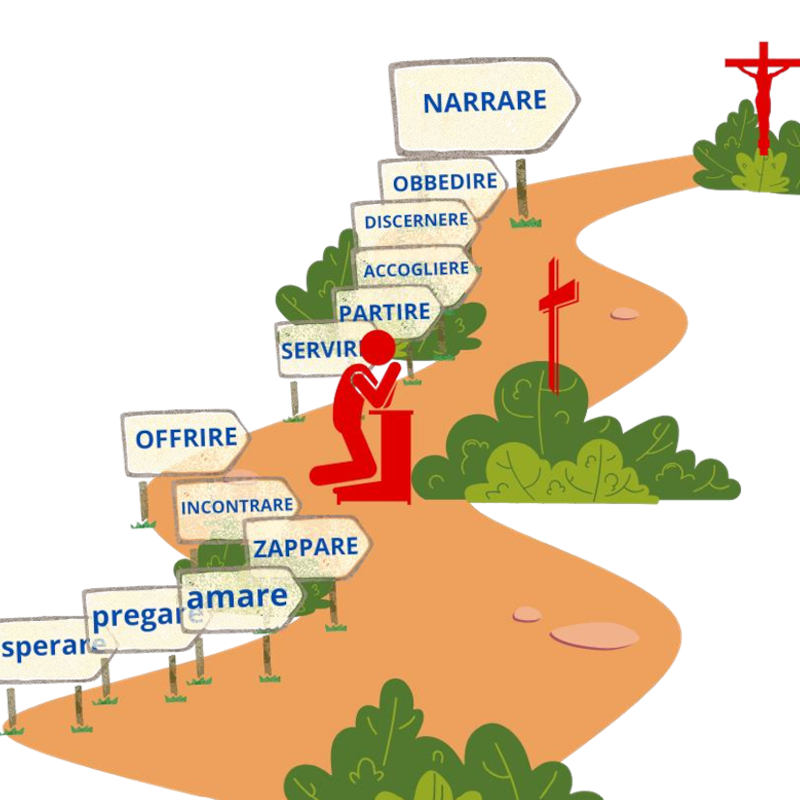
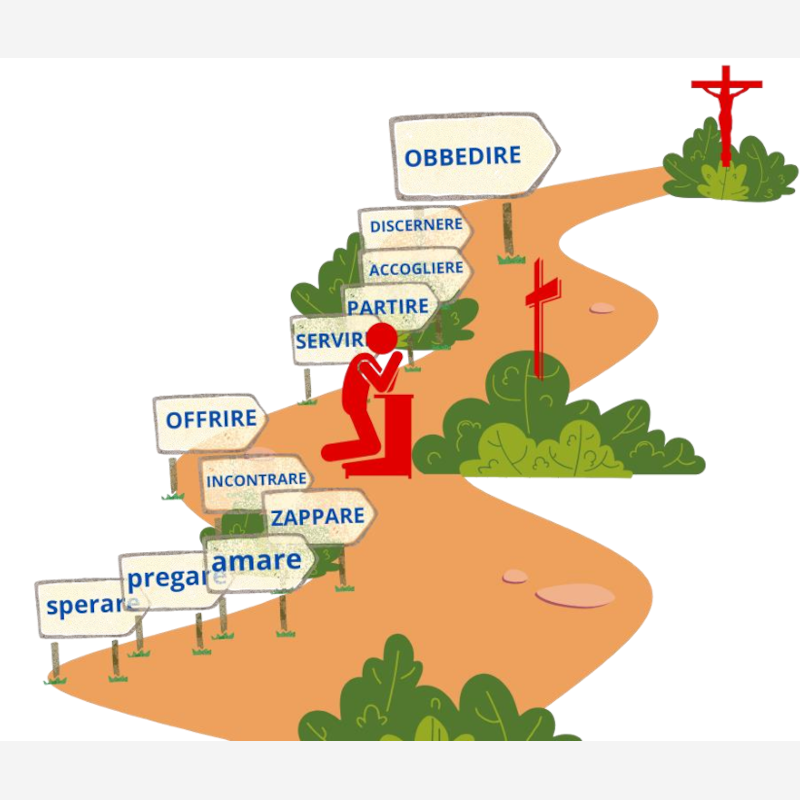
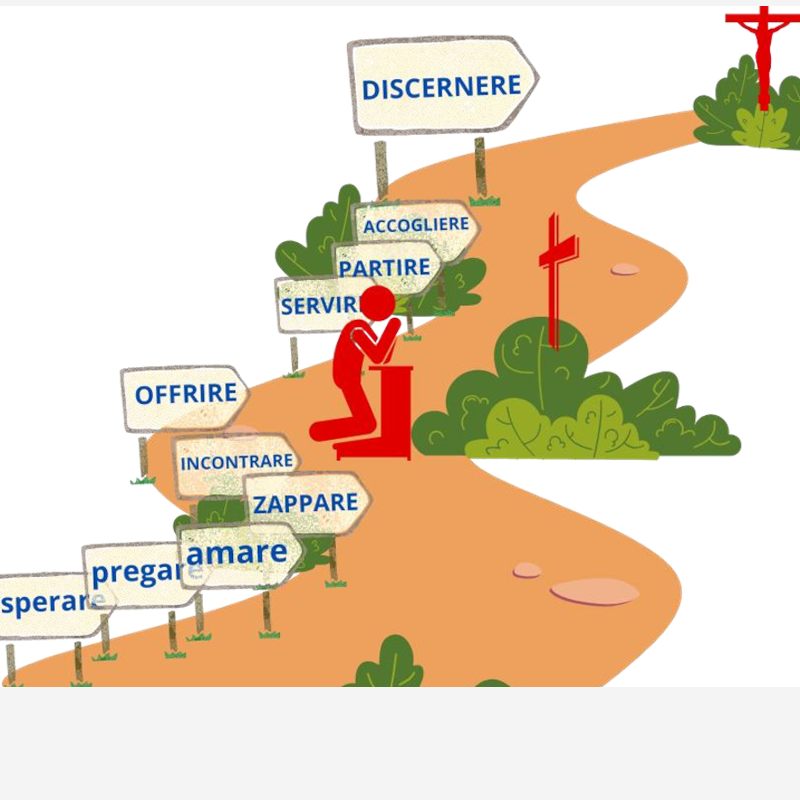
Image created digitally by spazio + spadoni
Source: National Office for Pastoral Healthcare of the CEI
Being Witnesses of Mercy – ILLUMINATE
2 February 2026