



 Italy
Italy
Conversion
At any moment, human beings can return to saying yes to God, accepting the plan of liberation that God has for them. It is God’s mercy that makes conversion possible at every moment: “Though I have fallen, I will arise; though I sit in darkness, the Lord will be my light” (Mic 7:9).
In Hebrew, the word teshuvah, “conversion,” comes from the verb shub, which means “to turn back on one’s steps”: it indicates a radical change, a U-turn in one’s life. Jewish tradition teaches that teshuvah was created by God even before the creation of the world, rises to the throne of God, and extends human life to continually offer an additional chance of salvation until the redemption of the Messiah: this indicates that conversion is always achievable, and that no one should feel excluded from the possibility of returning to God. Indeed, the Lord says: “I take no pleasure in the death of the wicked, but rather that they turn from their ways and live” (Ezek 33:11). Therefore, “let the wicked forsake their ways and the unrighteous their thoughts; let them turn to the Lord, who will have compassion on them, and to our God, for he will freely pardon” (Isa 55:7).
In Greek, “conversion” is metanoia, derived from meta, “change,” and nous, thought or mindset: it therefore means changing one’s mind, brain, and way of thinking. Sometimes Scripture uses metamelomai, which expresses a “change of feeling,” remorse for one’s sin; or epistrephein, which means not only “change” or “overturning,” but “movement” toward something or someone: these terms also express a 180-degree turn in the journey of one’s life. To convert means to change one’s lifestyle completely and concretely.
According to Scripture, the first characteristic of conversion is that the initiative belongs to God: it is he who calls Abraham, Moses, the people out of Egypt, and later out of exile: “I will put my law within them, and I will write it on their hearts; and I will be their God, and they shall be my people” (Jer 31:33). In the New Testament, it is reiterated that “it is not that we loved God, but that he loved us” (1 Jn 4:10): conversion is not a human decision, but an act of obedience!
The second characteristic of conversion is that it is not a turning toward a new ethic, but toward a Person. Jesus preaches: “Repent, and believe in the Gospel” (Mk 1:15). Converting and believing are two inseparable realities: conversion is clinging to God, re-establishing a relationship with him, and binding ourselves to him in love. The word “faith,” in Hebrew emunah (the root of our acclamation: “Amen!”), implies adherence, clinging, holding fast, remaining firm and steady in someone or something. Faith is precisely a loving adherence to God, embracing him, making him the foundation of our life. This is not an act done once and for all, but a journey of growth and maturation that must be confirmed in daily choices.
In the Old Testament, faith means “seeking the Lord” (Amos 5:4), “setting one’s heart on him” (1 Sam 7:3)—that is, clinging to God, making God the foundation of one’s life, and living according to his plan. In the New Testament, we are instead told to repent and believe in “the Gospel” (Mk 1:15): conversion is adherence to the joyful news, the Gospel. But the good news is the very person of Jesus Christ (Mk 1:1). Therefore, in the New Testament, converting means adhering to Jesus, becoming his disciples, his friends, his intimates: “Now this is eternal life: that they know you, the only true God, and Jesus Christ, whom you have sent” (Jn 17:3); “Believe in the Lord Jesus, and you will be saved” (Acts 16:31). For Scripture, the true value is not conversion itself, but its end: life in Christ.
The third characteristic of converting is inner change, the “circumcision of the heart” (Jer 4:4): woe to those who “honor me with their lips, while their hearts are far from me,” says God (Isa 29:13); woe to anyone who is a hypokrites, a “hypocrite,” a word meaning “mask-bearer” or “actor” (Mt 6:2, 5, 16)! Therefore, converting means changing one’s lifestyle concretely: worship alone is worth nothing; what counts are works, “doing the will of the Father” (Mt 7:21); and “this is the commandment we have from him: whoever loves God must also love his brother” (1 Jn 4:21). To convert to God means converting to our brothers and sisters!
Admonishing sinners
The call to conversion is the task of the prophets (2 Sam 12:1-15; Isa 21:12; Ezek 14:6), up to John the Baptist (Mt 3:8, 11; 14:3-4).
Jesus preaches incessantly: “Repent, for the Kingdom of Heaven is at hand!” (Mt 3:2; cf. Mk 1:15). And this is Paul’s mission: “First to those in Damascus, then to those in Jerusalem and in all Judea, and then to the Gentiles, I preached that they should repent and turn to God, demonstrating their repentance by their deeds” (Acts 26:20).
Inviting sinners to conversion is the duty of every disciple. Already in the Old Testament, there were rules on how to act toward those who err: “You shall reason frankly with your neighbor, lest you incur sin because of him” (Lev 19:17-18). It is therefore necessary to “correct” one’s brother: the same verb “to correct,” elencho, is used in the Greek version of Leviticus and in Matthew: and this fraternal correction is a concrete way to “love your neighbor as yourself” (Lev 19:18; Mt 19:19).
An entire Gospel passage suggests its methodology (Mt 18:15-20): “If your brother sins against you, go and tell him his fault, between you and him alone. If he listens to you, you have gained your brother. But if he does not listen, take one or two others along with you, that every charge may be established by the evidence of two or three witnesses. If he refuses to listen to them, tell it to the church. And if he refuses to listen even to the church, let him be to you as a Gentile and a tax collector.” The verb “to gain” (kerdaino: “If he listens to you, you have gained your brother”: Mt 18:15) is a specific term indicating conversion. The passage has just been prefaced by the parable of the lost sheep, which the Shepherd seeks at the cost of leaving the other ninety-nine, and concludes with the statement: “So it is not the will of my Father who is in heaven that one of these little ones should perish” (Mt 18:11-14).
Verses 15-18 of chapter 18 outline a three-step canonical discipline, mirroring the practice in use at Qumran. First, personal admonition must be practiced “between you and him alone.” Then correction must take place before two or three witnesses: probably following the witness procedure set out in the Book of Deuteronomy (Deut 19:15).
If the sinner refuses the correction of an individual or a few brothers, bring him before the ekklesia, in this case the “local Church.” If the sinner refuses even the admonition of the assembly, “let him be to you as a Gentile and a tax collector”—that is, as a non-Jew or a corrupt Jew: tax collectors, who collected taxes for the Romans, were seen as traitors to Judaism because they collaborated with the occupying enemy. In other words, the community issues an “excommunication,” proclaiming the individual outside communion with the brethren. Yet Paul clearly explains that even “excommunication” is not for the sinner’s damnation, but for salvation: “Deliver this man to Satan for the destruction of the flesh, so that his spirit may be saved in the day of the Lord” (1 Cor 5:5); “Each one’s work will become manifest, for the Day will disclose it, because it will be revealed by fire, and the fire will test what sort of work each one has done… If anyone’s work is burned up, he will suffer loss, though he himself will be saved, but only as through fire” (1 Cor 3:13-15).
Da Spinetoli notes, however, that this behavior “does not reflect the behavior of Jesus, friend of tax collectors and sinners, but is influenced by Pharisaic and Qumranic separatism and puritanism. Nor is it entirely in tune with the parable of universal forgiveness that follows shortly after (Mt 18:21-35).”
In any case, the local Church is “charged with connotations of transcendent and eschatological meaning” (M. Nobile), bearing the power to “bind and loose,” which two chapters earlier had been conferred upon Peter (Mt 16:13-19) and is here extended to the entire community. In the Gospel of John, Jesus confers this power again upon all disciples immediately after his resurrection: “Receive the Holy Spirit. If you forgive the sins of any, they are forgiven them; if you withhold forgiveness from any, it is withheld” (Jn 20:20-23). Here there is a reversal of order: no longer “bind and loose,” but “loose and bind.” The primary task of the Church is not to excommunicate or cast out, but to proclaim God’s mercy and his forgiveness.
The Church as a whole received from the Lord the same power that Peter had received individually. The power to forgive sins, which during his earthly life belonged only to Jesus, is now transmitted to the whole community of disciples. All believers are thus called to become instruments of divine mercy, and to announce God’s forgiveness and reconciliation to all sinners.
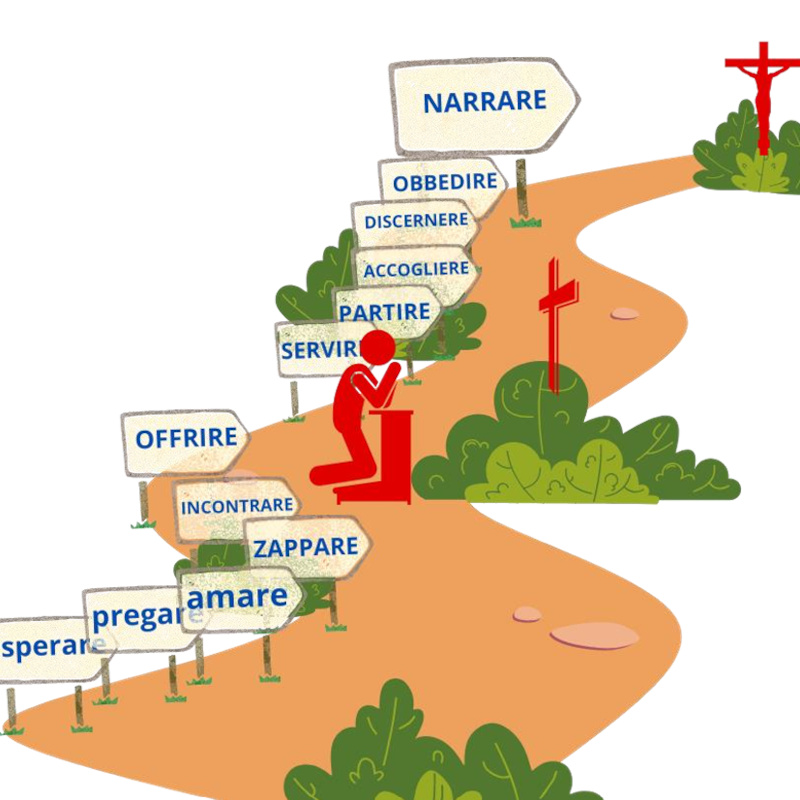
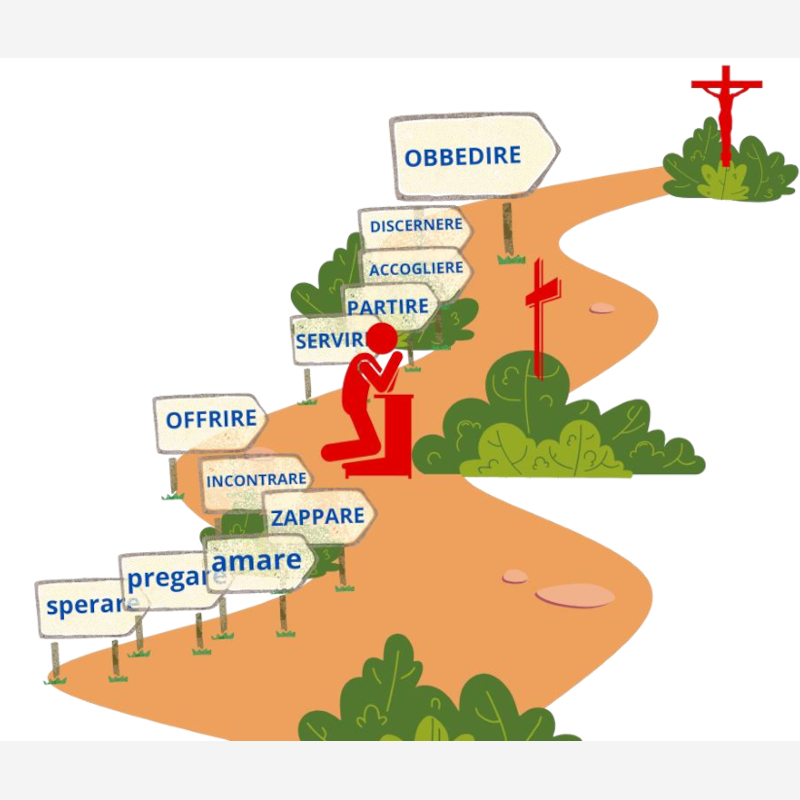
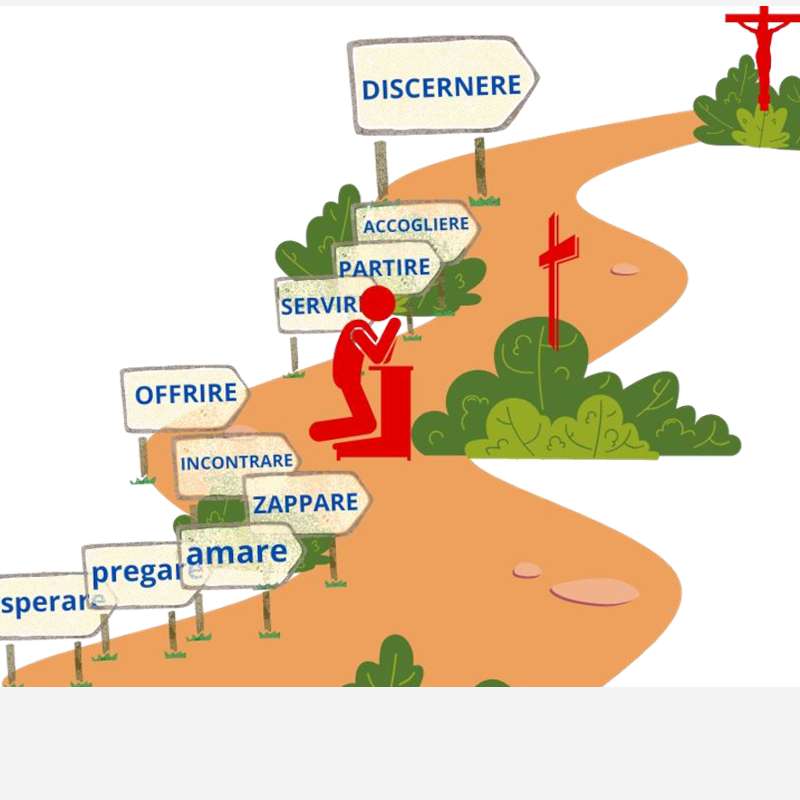
Image created digitally by spazio + spadoni
Being Witnesses of Mercy – ILLUMINATE
2 February 2026