



 Italy
Italy
The situation
“The adjective troublesome normally refers to someone who causes annoyance and harm, who is unwelcome and unpleasant, difficult to endure. It comes from the Latin and shares the same root as moles, whose meaning is «bulk», «mass», «weight», but also «danger». Troublesome people are therefore those who «weigh down on us» and whom we perceive as irritating or even threatening” (C. Albini).
Throughout history there have always been particularly “troublesome” people: quarrelsome, petulant, insistent, intrusive, pushy… But it seems that contemporary society, with its blatant individualism, has multiplied these occurrences. If you hesitate for a second when the traffic light turns green, a chorus of honking is immediately aimed at you. The phenomenon of bullying is steadily rising, starting as early as primary school, with its devastating consequences. It reaches the point of stalking, a crime consisting of repeated harassing behaviors, such as following, phone calls, messages, threats, or surveillance, which produce a state of fear and anxiety in the victim, forcing them to alter their life routines. Or even femicides, driven by the inability to understand and accept the freedom of another… Social networks have brought about such a level of verbal violence, often shielded behind absolute anonymity, that the internet has become a place of severe harassment from which it seems impossible to shield oneself.
“Aggressiveness is in the air; we sense it within families and at work, on the street and on screens. We breathe it in entertainment and experience a sublimated pleasure from it. And we even have to deal with its passive variation, which leaves no physical wounds but sinks deep into our psyche, generates negative emotions, and causes suffering.
A door slammed in anger, the refusal to engage in dialogue, an annoyed gesture, a cutting remark—these leave their mark and abruptly shut down communication… Physical violence, verbal violence, passive violence. We are surrounded by violence because it is part of human evolution, written into the DNA of the living being, who had to use it to defend oneself, overcome the other, and ensure survival…
However, when social bonds loosen and anomie takes hold, as Émile Durkheim warned, there is a risk of regression and community breakdown. Without rules, the worst sides of being take over—the instinctive, uninhibited, or uneducated part. Aggression resurfaces, where community members, who previously shared existence peacefully, become potential enemies or dangerous competitors” (C. Bordoni).
God is patient
God says: “Have I not held my peace and closed my eyes?” (Is 57:11); “Is the patience of the Lord exhausted?” (Mic 2:7); “Or do you show contempt for the riches of his kindness, tolerance, and patience, not realizing that God’s kindness is intended to lead you to repentance?” (Rom 2:4); “The Lord is not slow in keeping his promise, as some understand slowness; instead he is patient with you, not wanting anyone to perish, but everyone to come to repentance” (2 Pet 3:9); “God… bore with great patience the objects of his wrath—prepared for destruction” (Rom 9:22); “He did this to demonstrate his righteousness, because in his forbearance he had left the sins committed beforehand unpunished” (Rom 3:25-26); God “restrains anger and punishment because he is benevolent, patient, and desires to lead us to repentance” (Rom 2:4).
Pope Francis stated: “In the Bible we see that God himself must use mercy to endure the complaints of his people. For example, in the Book of Exodus the people are truly unbearable: first they weep because they are slaves in Egypt, and God frees them; then, in the desert, they complain because there is nothing to eat (cf. 16:3), and God sends quails and manna (cf. 16:13-16), yet despite this the grumbling does not cease. Moses acted as mediator between God and the people, and he too must have seemed troublesome to the Lord at times. But God was patient, thereby teaching Moses and the people this essential dimension of faith…
Let us look above all at Jesus: how much patience he had to show during the three years of his public life! Once, while journeying with the disciples, he was approached by the mother of James and John, who said to him: «Declare that these two sons of mine may sit, one at your right hand and one at your left, in your kingdom» (Mt 20:21). The mother was lobbying for her sons, but she was a mother… Even from that situation Jesus took the opportunity to offer a fundamental teaching: his kingdom is not one of power or earthly glory, but of service and self-giving to others. Jesus teaches us to always focus on the essentials and look further ahead to embrace our mission responsibly.”
Jesus frequently speaks of patience in parables, such as the Prodigal Son, illustrating divine patience and mercy toward those who may seem troublesome. The persistent widow who receives justice from the unjust judge (Lk 18:1-8) and the insistent friend who receives three loaves for pilgrims (Lk 11:5-9) demonstrate that even troublesome individuals can receive the benefit of prayer and mercy.
Bearing patiently
The root of patience traces back to the Latin patior, which shares origins with passio and compassion—suffering with another. In the biblical text, endurance (anoché) stands alongside steadfast perseverance (hypomoné) and long-suffering nobility of heart (makrothymía) (Eph 4:1-3; Col 3:12-14; 2 Thess 1:4).
Scripture urges believers never to counter annoyance with contempt: «Better a patient person than a warrior, one with self-control than one who takes a city» (Prov 16:32); «A quick-tempered person does foolish things, but the prudent person shows endurance» (Prov 14:17). The Apostle James advises: «Everyone should be quick to listen, slow to speak and slow to become angry» (Jas 1:19), holding up Job and the prophets as touchstones of steadfast trust. Paul likewise exhorts communities to clothe themselves in gentleness and compassion, forgiving one another just as Christ forgave us, for charity «bears all things, believes all things, hopes all things, endures all things» (1 Cor 13:7).
Gospel wisdom first demands self-examination: seeing the plank in one’s own eye before noticing the speck in a neighbor’s (Lk 6:41). Each of us can be wearisome to others. In chapter 72 of his Rule, Saint Benedict urges monks to bear one another’s physical and moral frailties with supreme patience, seeking the good of others before their own. Bearing patiently with difficult people stands as an essential, everyday spiritual work, calling us to envelop daily frictions in the gratuitous love of God.
Image created digitally by spazio + spadoni
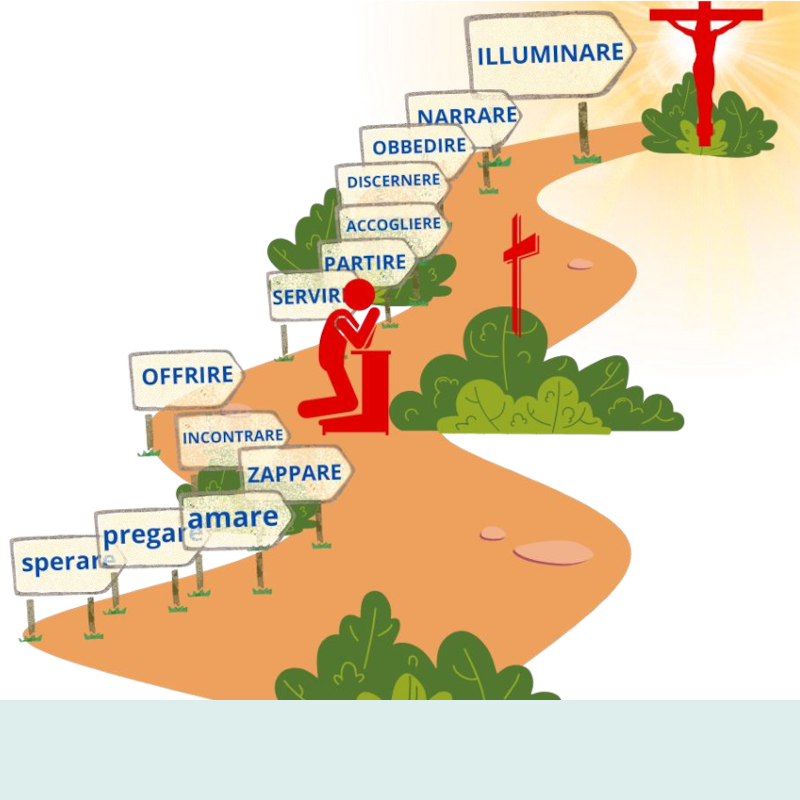
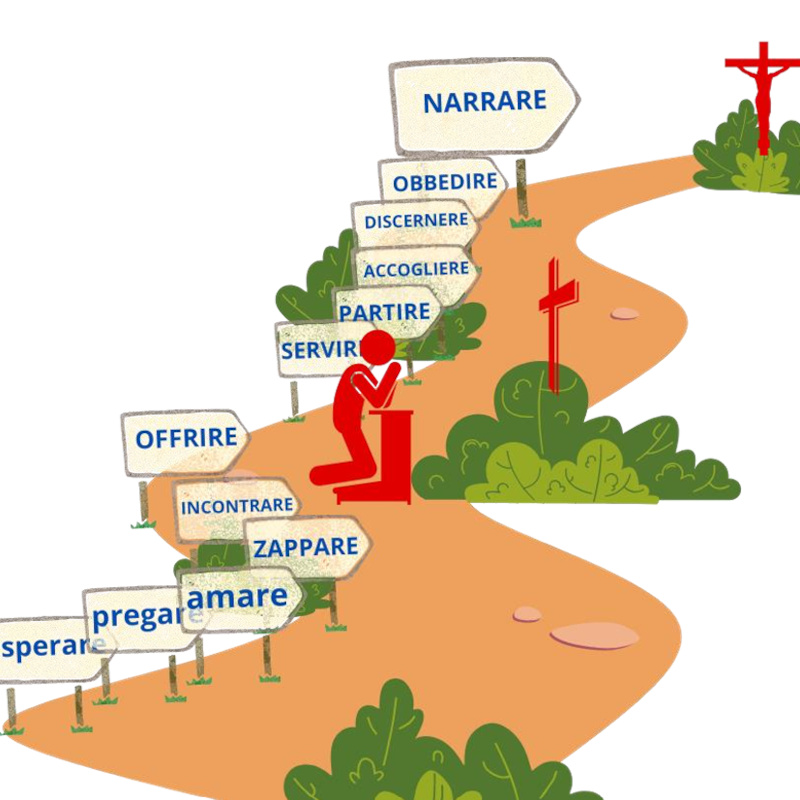
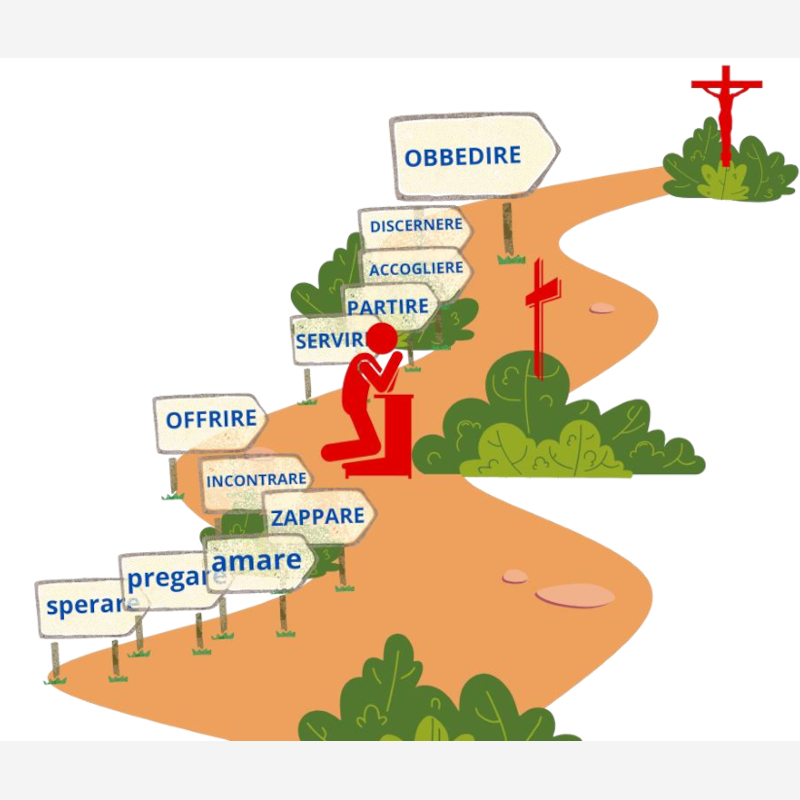
Being sensitive to the pain of others to transform suffering into hope
27 July 2026