



 Italy
Italy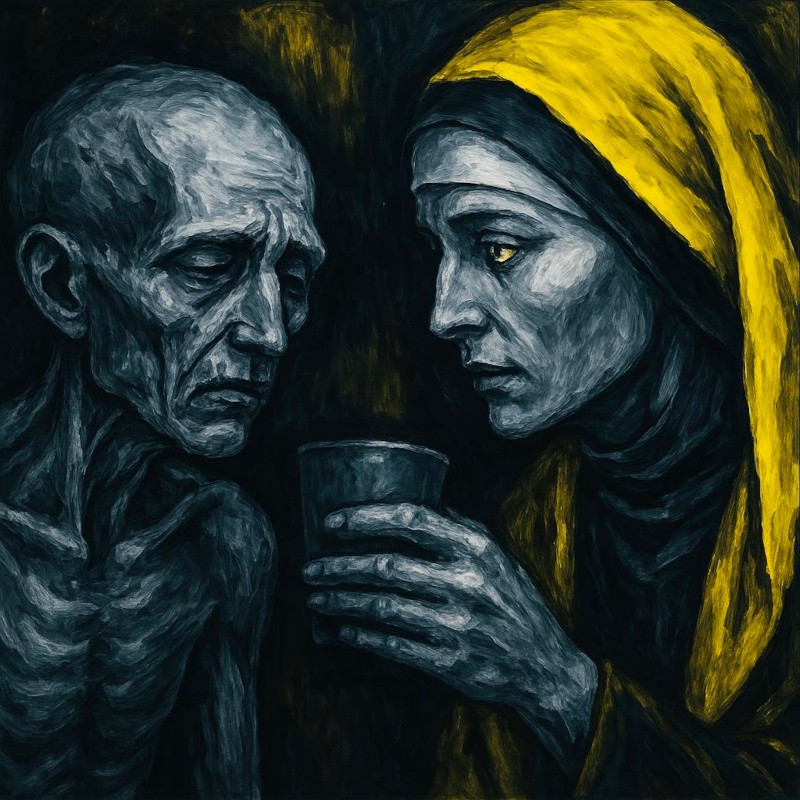
The situation
The charitable practice of giving drink to the thirsty has often been considered in Church tradition to be of lesser importance than feeding the hungry. Eating is certainly a primary need, but drinking is even more vital: a person can survive more than forty days without food, but no more than seven without water. Moreover, death by dehydration is particularly agonizing.
It is difficult for those of us living in the northern hemisphere, crossed by great rivers and abundant in springs, to imagine communities enduring thirst or facing death from water shortages. Yet, over one billion people lack access to safe drinking water, and five million of them (including 1.6 million children) die every year from contaminated water.
Water in the Bible
The theme of water is vast, encompassing human existence and recurring across biblical history. Looking broadly, an extensive part of biblical and extra-biblical tradition views water as a foundational element and a constitutive prerequisite of the world’s structure (Gen 1:6: “and let it divide the waters from the waters”).
Along with its remarkable presence (more than 1,500 biblical references), the concept of water carries profound symbolic significance tied to the origins of creation, human life, and the journey of faith across diverse meanings.
Water as a source of life for humanity and nature
The messages connected with water are woven into the history of salvation lived by the Jewish people within the concrete reality of Canaan, its hydrological conditions, and daily cultural interactions.
Central to this experience is the urgent search for water and the reality of thirst. One only needs to recall Israel in the desert crying out: “Give us water to drink!” (Ex 17:2), or drought understood as a divine curse declared through the prophet: “As the Lord, the God of Israel, lives, before whom I stand,” Elijah proclaims, “there shall be neither dew nor rain these years, except by my word” (1 Kgs 17:1).
Jeremiah offers a vivid portrait of this enduring regional trial: “The nobles send their servants for water; they come to the cisterns, they find no water; they return with their vessels empty. They are ashamed and confounded and cover their heads. Because of the ground that is cracked, since there is no rain on the land, the farmers are ashamed; they cover their heads. Even the doe in the field forsakes her newborn fawn because there is no grass. The wild donkeys stand on the bare heights; they pant for air like jackals; their eyes fail because there is no vegetation” (Jer 14:3-6).
Therefore, when clouds gather and rain falls, it is greeted as a heavenly blessing, as recorded in Deuteronomy: “The Lord will open to you his good treasury, the heavens, to give the rain to your land in its season and to bless all the work of your hands” (Deut 28:12). Yet the Creator, Father of all, cares for every creature without partiality, as Jesus teaches: “Your Father in heaven makes his sun rise on the evil and on the good, and sends rain on the just and on the unjust” (Mt 5:45). When spring returns with its rains, the Psalmist poetically envisions the Lord passing with his chariot of waters, watering the earth, enriching it, softening ridges, and blessing growth: abundance drips upon the pastures of the wilderness, and everything shouts and sings for joy (Ps 65:10-14).
Scripture frequently highlights water’s essential role in human sustenance: alongside bread, it is a vital necessity blessed by the Lord (Ex 23:25). This pairing of bread and water reappears in the narratives of David (1 Sam 30:11-12), Elijah (1 Kgs 18:4,13; 22:27), Elisha (2 Kgs 6:21), and Ezekiel (Ezek 4:11-16). Water also appears in constant references to wells and cisterns (Gen 26:18; 37:20), crop irrigation (Deut 11:10; 2 Kgs 18:17), watering livestock (Gen 30:38), and water supplies during desert travels.
To the thirsty people complaining in weak faith (Num 20:24; 27:14; Ps 81:8; 106:32), God answers with the miracle of water flowing from the rock (Ex 17:2-7; Num 20:7-11).
Water as a means of purification
Water also holds deep ritual and purifying significance. In acts of hospitality, water is offered to travelers for washing feet (Gen 18:4; 19:2; 2 Sam 11:8; Jn 13:1-17). Alongside oil, blood, and fire, water became indispensable to the Jewish community for ritual cleansings prescribed in Levitical law (Lev 11-15).
Within this framework rests the symbolism of cleansing from sin through water (Ps 51:9) and the eschatological sprinkling of the people (Ezek 36:25) as a sign of divine forgiveness (Is 1:16; 4:4; Jer 33:8), pointing ultimately toward New Testament baptism (Mt 3:1-17; 28:19-20).
Spiritual significance
Water also carries an eschatological dimension connected to the restoration of God’s people returning from Babylonian exile. Just as the Lord once brought forth water from the rock to quench his people’s thirst (Num 20:1-13; Ps 78:16,20; 114:8; Is 48:21), the faithful God would renew this wonder (Is 43:20): the desert would become an orchard (Is 41:17-20), and springs would burst forth across the land (Is 35:6-7). Water heralds the messianic era and renewal: “Waters shall break forth in the wilderness, and streams in the desert; the burning sand shall become a pool, and the thirsty ground springs of water” (Is 35:6-7).
Central to this vision is Jerusalem, from whose rebuilt temple a perennial river flows (Ezek 47:1-12), nurturing lush life along its banks.
A final dimension is hope and expectation, highlighted in the Johannine writings: the proclamation on the last day of the Feast of Booths (Jn 7:39) and the pierced side of the Crucified (Jn 19:34). Both reveal the promised Holy Spirit poured out upon believers and the fullness of love unveiled in the Paschal mystery. Faith in Jesus leads one to drink deeply from Christ, giving birth to enduring hope like rivers of living water.
Water also symbolizes the divine Word, without which humanity withers (Am 8:11; Is 55:10-11), as well as divine Wisdom (Sir 24:23-25, 28-29).
Above all, water is an image of God, the source of life: “My soul (literally ‘my throat’) thirsts for God, for the living God” (Ps 42:2-3); “O God, my soul thirsts for you; my flesh faints for you, as in a dry and weary land where there is no water” (Ps 63:1).
In John’s Gospel, water provides an insightful lens for meeting Christ. Jesus enters the Jordan (Jn 1), turns water for purification into wine (Jn 2), explains to Nicodemus that one must be born of water and the Spirit (Jn 3), and reveals himself to the Samaritan woman as the spring of water welling up to eternal life (Jn 4).
The right to water
Water is increasingly recognized as a precious resource, often termed “blue gold.” Its cost continues to rise amid pressures to privatize water management for corporate profit.
The Church’s teaching emphasizes the right to water as an integral part of the right to a safe environment. In 2003, Saint John Paul II warned against the growing divide between new rights claimed in wealthy consumerist societies and basic human rights left unmet in developing regions, foremost among them the right to drinking water.
The “Compendium of the Social Doctrine of the Church” (2004) states that “the right to water, as all human rights, is based on human dignity and not on purely quantitative assessments,” affirming it as a “universal and inalienable right.” In 2009, Benedict XVI underlined its direct link to other entitlements, noting that access to water is indispensable for exercising the fundamental right to life.
Water belongs to all humanity; it cannot be treated as a mere commodity or privatized. Pope Francis dedicated an extensive part of his 2015 encyclical “Laudato si’” to the water issue, writing: “Access to safe drinkable water is a basic and universal human right, since it is essential to human survival and, as such, is a condition for the exercise of other human rights” (no. 30).
Working to ensure water access for all is a core duty for believers, recalling Jesus’ promise: “Whoever gives you a cup of water to drink because you bear the name of Christ will by no means lose his reward” (Mk 9:41).
Image created digitally by spazio + spadoni
Being Witnesses of Mercy – ILLUMINATE
2 February 2026