



 Italy

Every year, nearly 11 million children die before reaching age 5; malnutrition is a contributing cause in 53 percent of these deaths. In Europe, 79 million people still live below the poverty line. Every year in Italy, an average of 8.7 billion euros is thrown away due to food waste. Nowadays, when we talk about food, we only think about our culinary cravings… and advertisements certainly do not help… Buy, eat, buy again.
Nearly 850 million inhabitants of planet Earth (out of the more than 7 billion living on it) still suffer from chronic hunger (defined as an intake of less than 1,800 kcal per day), while 1.3 billion are in a completely different situation, facing obesity and overweight (FAO Report “The State of Food Insecurity in the World-SOFI 2013”).
In poor countries of the Global South, the problem is often simply having something to eat, because the scarcity of food or its hoarding by a few who withhold it from many is a real and manifest reality.
People die of hunger, suffer from malnutrition, and are weakened to the point of easily contracting diseases without physical strength to fight them: all this is an evident sign of the world’s injustice, a place where some “feasted sumptuously every day” (cf. Lk 16:19), living in luxury, flaunting riches, and exhibiting arrogant power.
For us who believe in the God who “gives food to every creature” (Ps 136:25), that is, to every living being, this situation of hunger appears unjust and absurd, a true contradiction of the goodness of God, who wills life in abundance for all His creatures.
We are thus led to discover that the earth was given to all; that the banquet spread with the goods of the world is for everyone; that no one can claim that something belongs exclusively to “them,” depriving others; that wealth is distributed unjustly, such that humanity paradoxically suffers because one part is obese while another dies of hunger (Enzo Bianchi).
Father Oreste Benzi wrote:
“There is a difference between service and sharing. Service asks for performance; sharing asks for belonging. The poor person you meet is a heart to understand, not a stomach to fill. If you treat them merely as a hungry stomach into which you dump pasta and roasted meat, one day they will throw it back at you. The poor person is an individual carrying wonderful gifts, with a mission to fulfill. The poor person awaits your hand before you throw used clothes at them. If you treat them like a mannequin onto which you cast worn garments, one day they will throw them back at you with violence, rejecting your person. They want you to ask for forgiveness because you have everything: they were robbed of everything by the very society that gave you enough to allow you to offer crumbs, wounding their dignity and humiliating them. Stop with the homeless person on the street: talk to them before opening your wallet. Enter into dialogue with the window washer, do not see them as a nuisance; speak to them in their humiliation and they will understand.”
The Catechism of the Catholic Church states (no. 2463): In the multitude of human beings without bread, without shelter, without a permanent home, how can we fail to recognize Lazarus, the hungry beggar of the parable? How can we fail to hear Jesus: «You did it to me; you did not do it to me» (Mt 25).
The Apostle James says: «If a brother or sister is poorly clothed and lacking in daily food, and one of you says to them, “Go in peace, be warmed and filled,” without giving them the things needed for the body, what good is that? So also faith by itself, if it does not have works, is dead» (Jas 2:15-16).
We remember Jesus when He says: “Man shall not live by bread alone, but by every word that comes from the mouth of God…” (Mt 4:4). When a Christian feeds the hungry, they do not act in their own name, but in the Name of Him who is infinite Mercy, who feeds the hungry with daily bread and who made Himself Food in the Eucharist, the Bread of eternal life, the nourishment par excellence. We say it in the Lord’s Prayer: “Give us this day our daily bread…”.
An infinitely more important and necessary food: Jesus Christ Himself! «I am the Bread of life. I am the living Bread that came down from heaven. If anyone eats of this bread, he will live forever. And the bread that I will give for the life of the world is my flesh» (Jn 6:48-51).
Send me someone to love, by Mother Teresa of Calcutta
Lord,
when I am hungry, give me someone in need of food;
when I am thirsty, send me someone who needs a drink;
when my cross grows heavy, let me share the cross of another;
when I am humiliated, grant that I may have someone to praise;
when I am discouraged, send me someone to encourage;
when I need the understanding of others, give me someone who needs mine;
when I need someone to take care of me, send me someone to care for;
when I think only of myself, draw my attention to another person.
Make us worthy, Lord, to serve our brothers and sisters throughout the world who live and die poor and hungry.
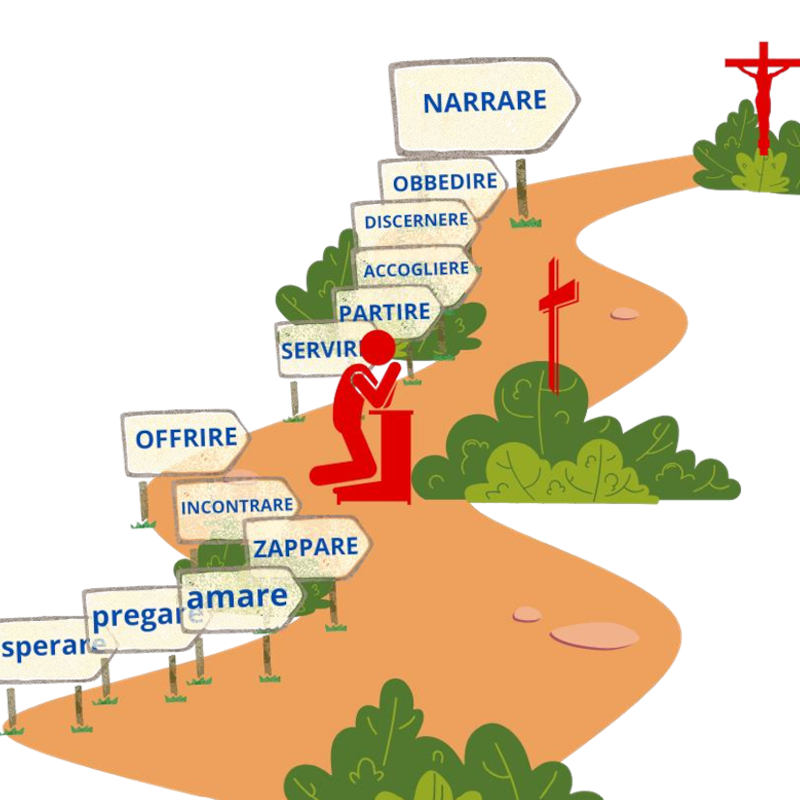
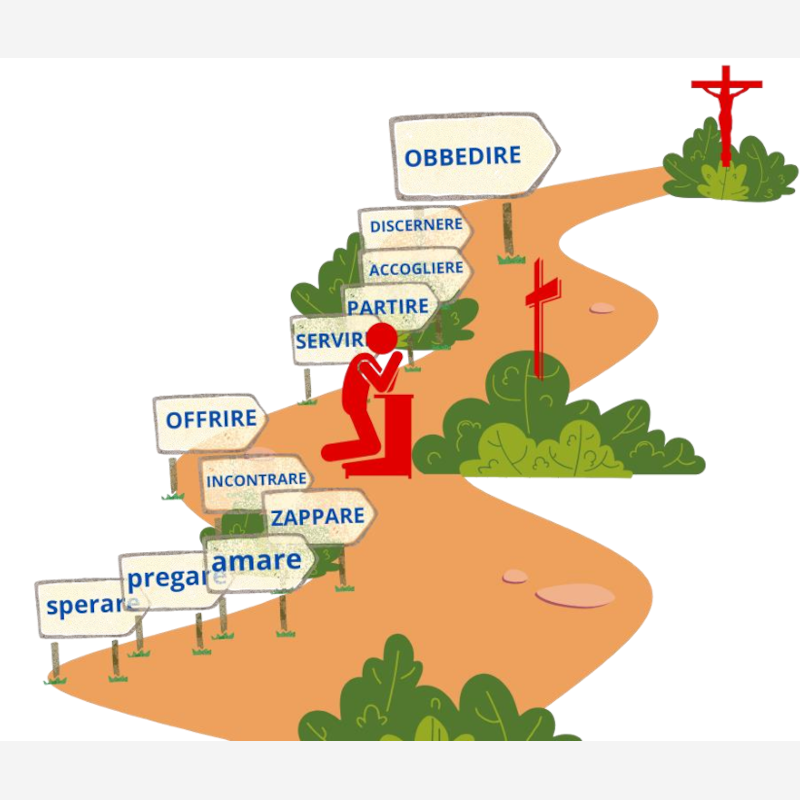
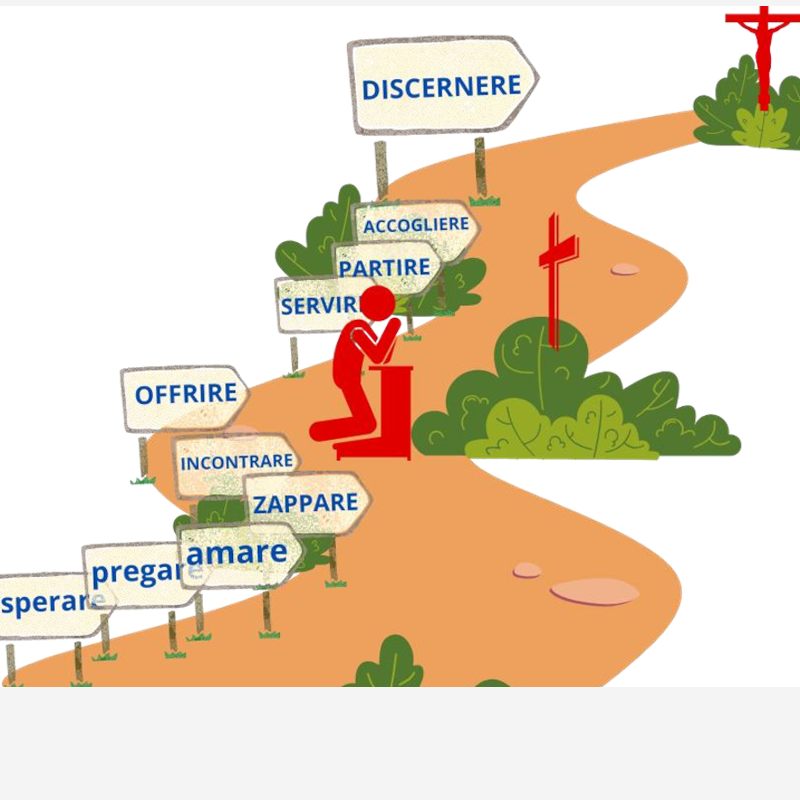
Illustration by Sister Marie-Anastasia Carré (Communauté des Béatitudes)
Being Witnesses of Mercy – ILLUMINATE
2 February 2026