



 Italy
Italy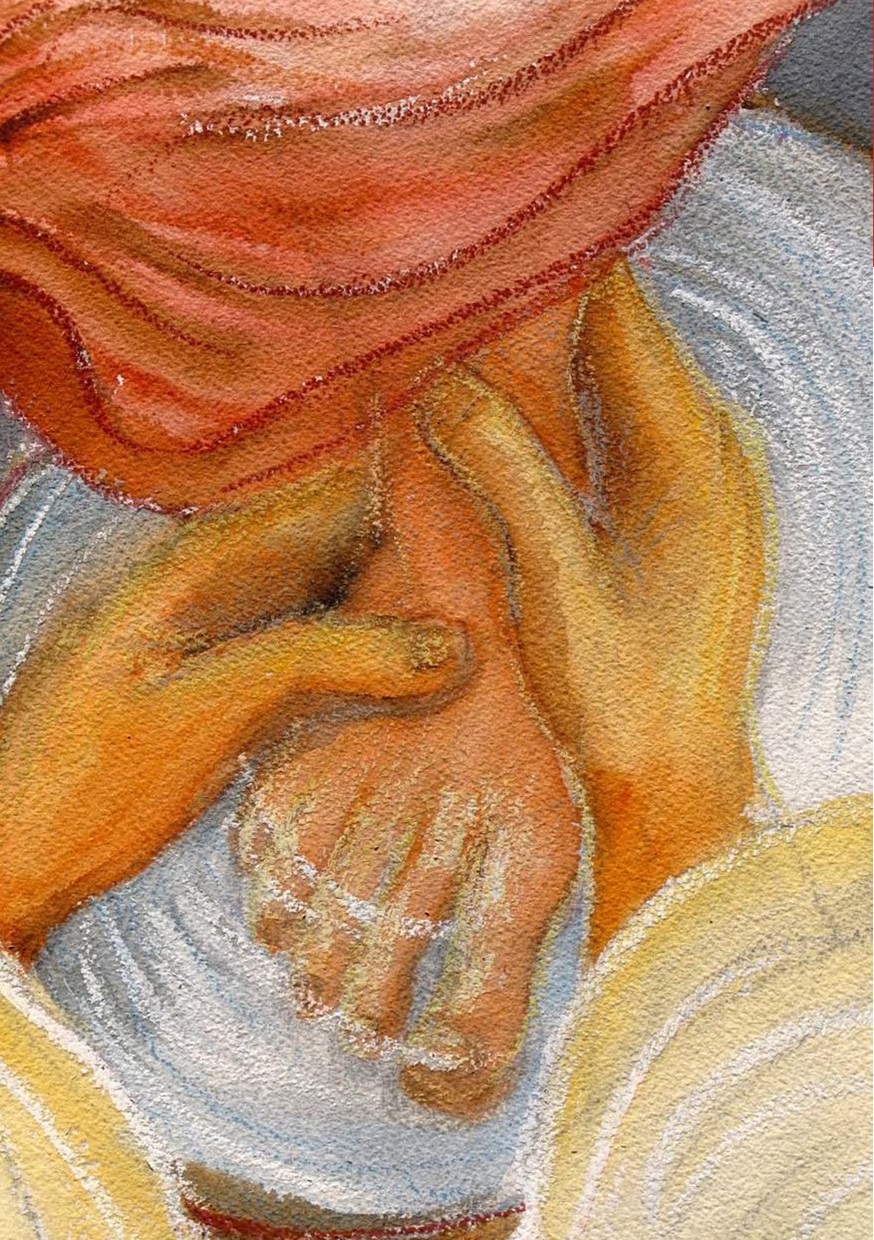
Migrants, refugees, economic migrants, displaced persons
The phenomenon we are witnessing is like a rogue wave, uncontrollable, rising from the south and east of the Mediterranean and crashing onto European shores. Some argue for the necessity of raising walls and barbed wire, hiding behind economic alarmism and unfounded fears. Others, instead, strive to welcome fellow human beings. The ruling classes, it goes without saying, seem far from united on the issue. Citizens, broadly speaking, are divided into two opposing factions.
This drama will occupy the rest of our lives. It must therefore be addressed with special urgency and care. Yet without delusions of solving it through force. If we attempted to do so, we would make it unmanageable. We would only multiply the victims, not reduce them. There are no military shortcuts – naval, aerial, or land blockades (Lucio Caracciolo).
The drama of refugees
«The dramatic situation of refugees, marked by fear, hardship, and uncertainty, is a sad reality. Every day, refugees flee from hunger and war in search of a dignified life for themselves and their families. They go to distant lands, and when they find work, they do not always encounter true welcoming, respect, and appreciation of the values they bring. Their legitimate expectations clash with complex situations and difficulties that sometimes seem insurmountable; therefore, let us think of the drama of refugees who are victims of rejection and exploitation, victims of human trafficking and slave labor» (Pope Francis).
The poor, the homeless, the wanderer, the foreigner, the outcast, the one whose humanity is humbled beneath the weight of lack and deprivation, of rejection and abandonment, of neglect and estrangement, begins to be welcomed only when I begin to feel their humiliation as my own, their shame as my own, when I begin to feel that the degradation of their humanity is my very own mortification.
Then, free from futile guilt and hypocritical sentimentality, the relationship of hospitality can begin—leading me to do everything within my power for the other.
Yet it must be clear that hospitality first humanizes the one who exercises it, for as Pierangelo Sequeri states: “he has not yet begun to be a true man who has not experienced compassion for wounded and debased humanity in another” (Trento Lungaretti).
One does not need to be a believer or a Catholic to feel admiration for a man who kneels before other human beings and washes their feet.
Pope Francis decided, once again this year, to counter the grim “spirit of the times” and visit the reception center for asylum seekers in Castelnuovo di Porto, Rome. Here, over 900 people who fled war, terrorism, and torture are “accommodated.”
Many have a different skin color, pray to another God, and the majority belong to the Muslim community. Those feet to be washed represent the geography of despair, social exclusion, and the eradication of rights and hope for the future. The “radicalness” of Francis lies precisely in having chosen this place and these feet, doing so while the winds of war, terror, and racism howl all around (Beppe Giulietti).
In Jesus, God came to ask hospitality of humanity
For this reason, he establishes the disposition to welcome others in love as the defining virtue of the believer. He chose to be born into a family that found no room in Bethlehem (cf. Lk 2:7) and experienced exile in Egypt (cf. Mt 2:14).
Jesus, who “had nowhere to lay his head” (Mt 8:20), asked hospitality from those he encountered. Sending his disciples on mission, he made the hospitality they would receive a matter concerning him personally: “Whoever welcomes you welcomes me, and whoever welcomes me welcomes the one who sent me” (Mt 10:40).
The Church reiterates that supportive hospitality toward those in difficulty is a distinctive hallmark of faith. (John Paul II 1999)
We have long since become a multicultural society. Naturally, there are challenges in mutual understanding and the integration of foreigners. And societies face inherent limitations in welcoming newcomers.
Yet, as Christians, we must ask ourselves to what extent we respond today to the exhortation of Jesus regarding hospitality, and what Christ would say to us today. The Word of Jesus remains a constant challenge that we must not casually brush aside with mere pragmatic reasoning. It is a spur that must permeate all our conversations concerning integration and the reception of foreigners in our society.
We cannot simply wait for politics and outsource the entire burden of integration to it. (Fr. Adolfo Antonelli)
The parable par excellence offering the quintessential model of reception and hospitality is that of the Good Samaritan (Lk 10:29-37): a foreigner, socially marginalized, comes to the aid of a man—potentially an enemy—fallen victim to violence, tends to him, and brings him to safety in an inn, where he receives hospitality and restoration.
To welcome means giving the other a place in one’s own land, one’s own life, one’s own mind, and one’s own heart; it means granting them the «right of asylum», caring for them, and answering their deep yearning to feel alive, loved, and protected. Ultimately, a person without a home is a person seeking «family».
Jesus not only makes himself neighbor to those considered strangers and outcasts, but he is the Guest of our history—that is, of our life. His entire earthly path is a journey: he comes from the bosom of the Father (Lk 1:34-38) and, through the milestones of his earthly pilgrimage, points out to all of us the homeland for which we are destined.
For this reason, he calls us to follow him. And when he affirms that his followers are in the world but not of the world (Jn 17), he calls humanity back to its ultimate essence: to be a pilgrim on this earth.
The human being is a pilgrim on a journey through life and death, directed toward the Other and toward oneself, rediscovering authentic humanity. (+ Bruno Forte)
Prayer
(by Most Rev. Bruno Forte, Archbishop of Chieti-Vasto)
God, merciful Father, who revealed your infinite love in your Son Jesus Christ, made man for us,
grant that we may experience your mercy so deeply that we become witnesses and workers of mercy for all those to whom you send us and whom you entrust to our care.
And may Mary, mother of mercy, intercede for us, helping us to live the works of mercy with faith and a generous heart, docile to the action of the Holy Spirit, breath of eternal Love.
Amen.
Illustration by Sister Marie-Anastasia Carré (Communauté des Béatitudes)
Being Witnesses of Mercy – ILLUMINATE
2 February 2026