 Mozambique
REPORT OF THE FIRST DIOCESAN FORUM ON THE PASTORAL CARE OF WORKS OF MERCY
(Diocesan Committee for the Pastoral Care of the Works of Mercy – Diocese of Lichinga)
Date: October 21, 2026
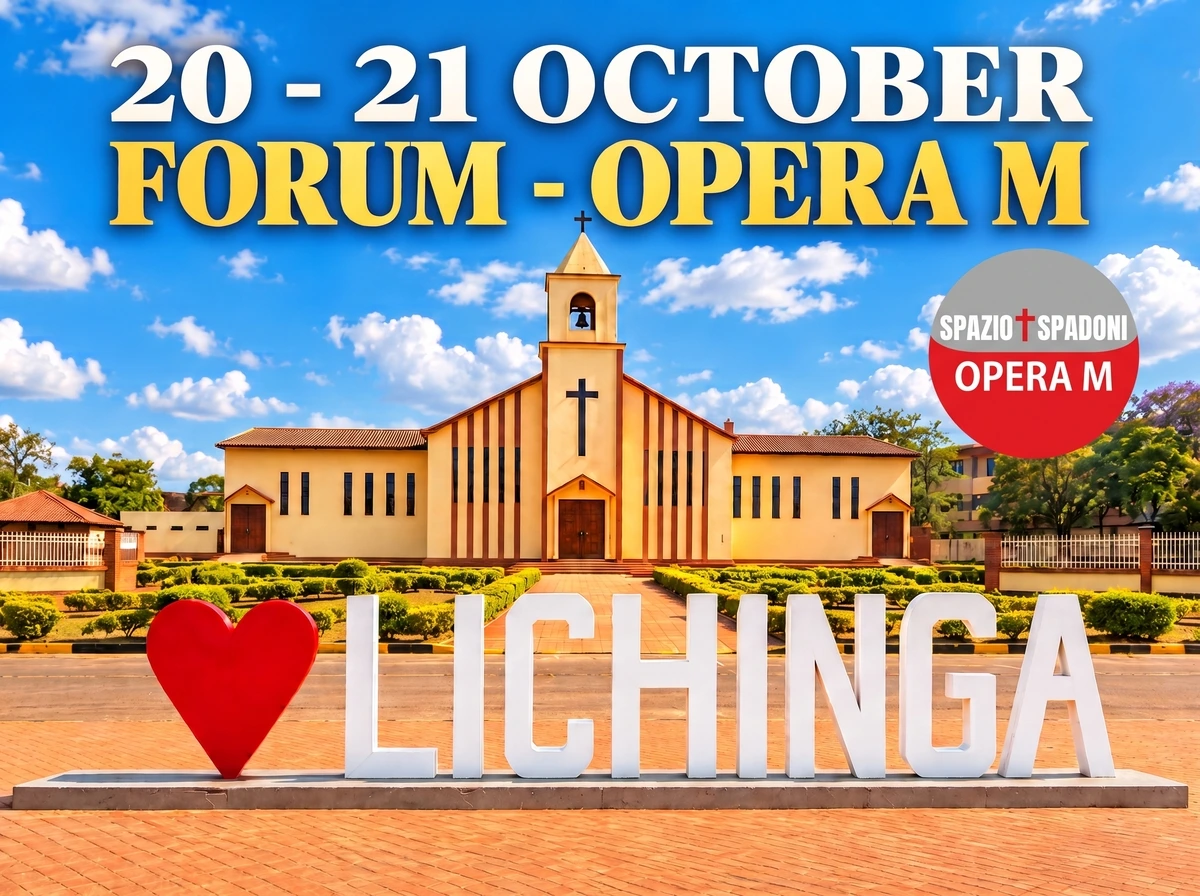
Location: Aula Magna of the Catholic University of Mozambique, city of Cuamba.
1. Introduction
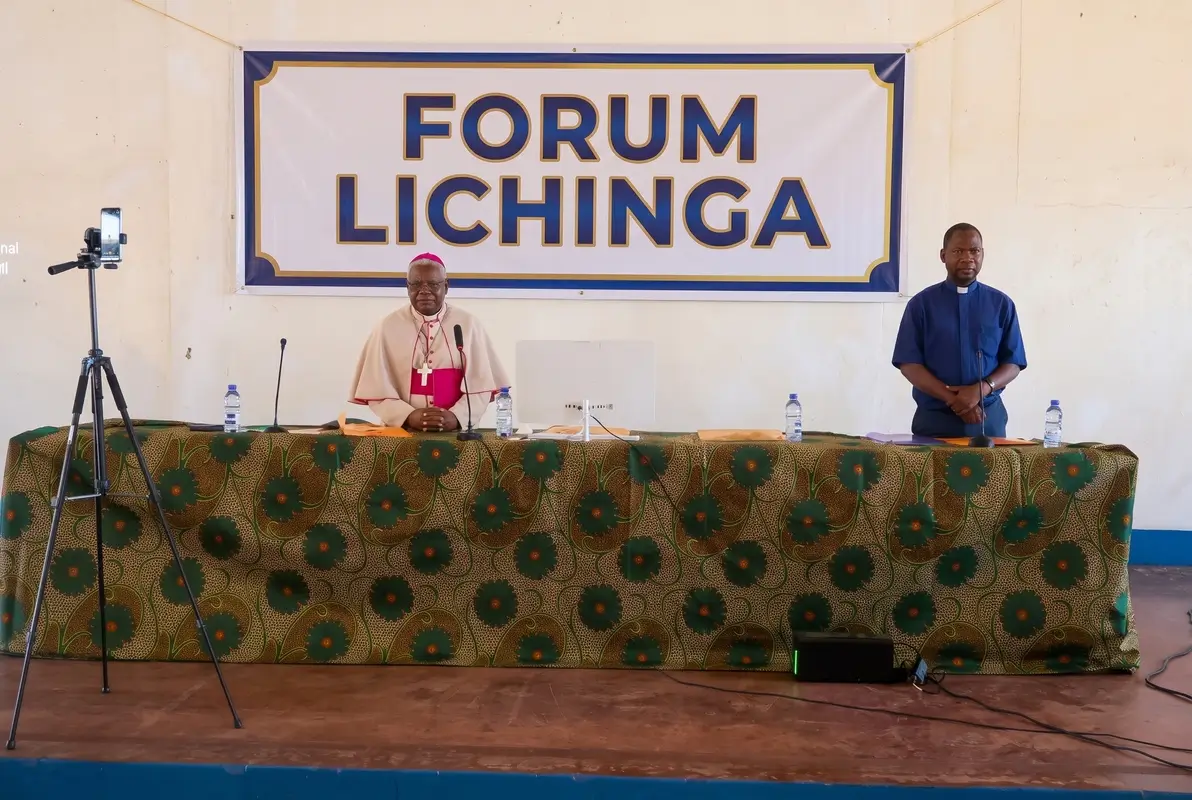
On October 21, 2026, in the Aula Magna of the Catholic University of Mozambique, in the city of Cuamba, the First Diocesan Forum of the Pastoral Care of Works of Mercy of the Diocese of Lichinga was held, on the theme of the concrete witness of mercy in the evangelizing mission of the Church.
The meeting represented a privileged moment of ecclesial communion, reflection, sharing of experiences, and pastoral discernment, with the goal of strengthening the understanding and practice of the Works of Mercy in the Christian communities of the diocese.
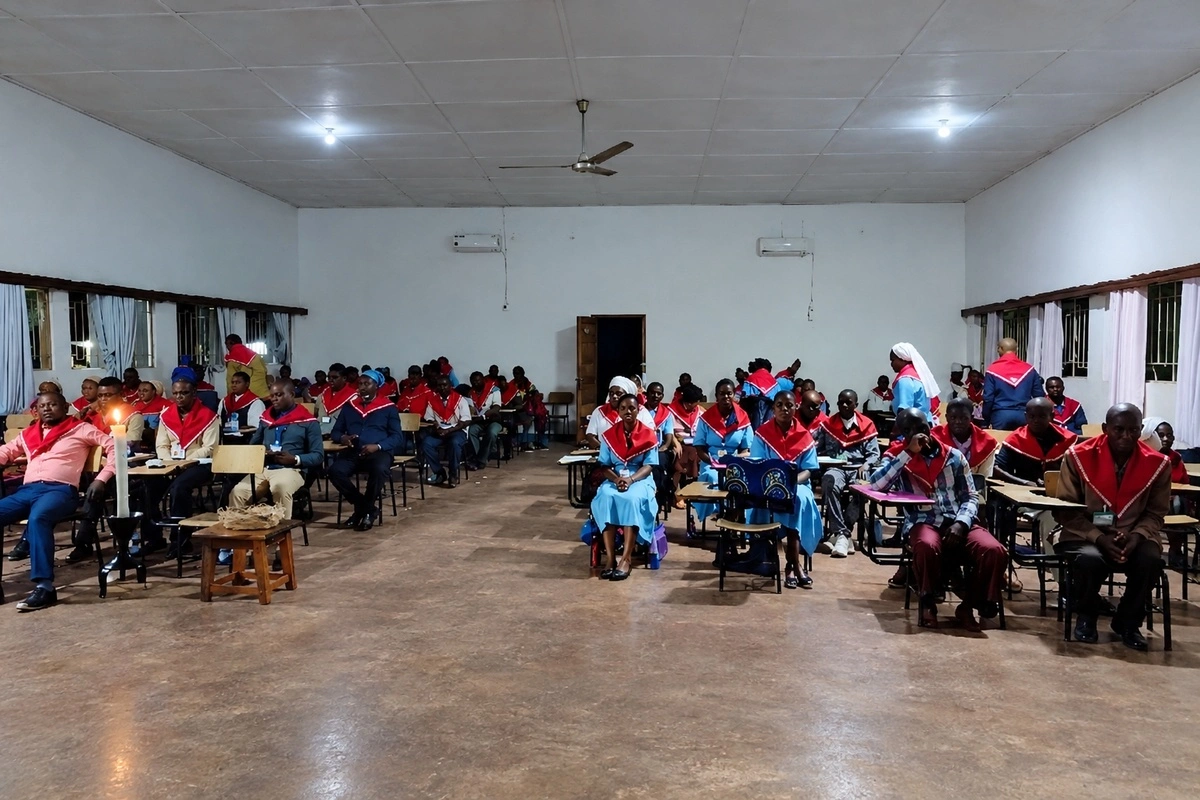
The Forum brought together delegations from 17 parishes, for a total of 84 participants, as well as representatives of the various diocesan ecclesial movements. The diversity of participants made it possible to share experiences, identify challenges and opportunities, and propose concrete paths to promote a pastoral care of mercy that is more organized, participatory, and attentive to the needs of the most vulnerable.
Holding this meeting represented a significant step toward giving new impetus to the Pastoral Ministry of the Works of Mercy in the Diocese of Lichinga, with the intention of ensuring that mercy does not remain merely a proclaimed principle, but becomes a permanent practice in the life of Christian communities.
2. Participation of parish delegations
Delegations from the following 17 parishes participated in the Forum:
- St. Joseph’s Parish – Lichinga Cathedral;
- Parish of Our Lady of the Immaculate Conception, Lichinga;
- Parish of the Immaculate Heart of Mary, Lichinga;
- Parish of Saint Michael the Archangel, Cuamba;
- St. Francis Xavier Parish, Mandimba;
- Parish of Our Lady of the Assumption, Lago (Metangula region);
- Parish of Saint Francis Xavier, Maíaca;
- Immaculate Heart of Mary Parish, Cerâmica;
- Parish of Our Lady of Loreto, Etatara;
- Parish of Our Lady of Fatima, Mecanhelas;
- Parish of Mitúcue;
- Parish of Marrupa;
- Saint Anthony’s Parish, Mbemba;
- Parish of Nipepe;
- Parish of Saint Teresa of the Child Jesus;
- Parish of Metarica;
- Parish of Our Lady of Bethlehem, Mitande.
The presence of the delegations demonstrated the interest of Christian communities in deepening the spirituality of mercy and taking on, in a more organized manner, the mission of caring for brothers and sisters living in situations of suffering, poverty, exclusion, and vulnerability.
3. Official Opening of the Forum
The proceedings began with the entrance of His Most Reverend Excellency, Monsignor Atanásio Amisse Canira, Bishop of the Diocese of Lichinga, who led the opening prayer and offered words of encouragement to the participants.
In his address, the bishop urged those present to experience the Forum in a spirit of communion, openness, responsibility, and readiness to serve. He emphasized the importance of seizing this opportunity for reflection to strengthen the pastoral commitment of the diocese and to promote a concrete witness to the Works of Mercy in parishes and Christian communities.
The presence of the diocesan shepherd gave the meeting a particular ecclesial significance, reaffirming that the Pastoral Ministry of the Works of Mercy is an integral part of the Church’s evangelizing mission.
4. Framing the witness of the Works of Mercy
During the session dedicated to exploring the witness of the Works of Mercy, the importance of understanding mercy was highlighted not merely as a feeling of compassion, but as a Christian attitude that translates into concrete acts of love, solidarity, welcoming, and the promotion of human dignity.
In this context, the spirituality of the Jubilee of Mercy was recalled, emphasizing that the Christian, after experiencing God’s mercy in their own life, is called to become an instrument of that same mercy toward others.
This reflection has been summarized in the phrase: “From forgiven to merciful.”
The message invited participants to recognize that those who receive God’s mercy are also called to share it with their brothers and sisters, especially with the poor, the sick, the elderly, orphans, widows, migrants, and all people who need attention, comfort, and accompaniment.
The witness of the Works of Mercy was thus presented as a journey of personal and communal conversion, capable of bringing the Church closer to human realities and making it more faithful to the Gospel.
5. Presentation of objectives and introduction to the work
Subsequently, catechist Simão Naueha introduced the work of the Forum, presenting the objectives of the meeting and the schedule of planned activities.
His address helped participants understand the goals of the Forum, the importance of active participation by each delegation, and the need to develop pastoral proposals capable of responding to the concrete situations of the diocese.
The importance of sharing experiences among parishes was also emphasized as a tool for identifying best practices, recognizing common challenges, and finding shared solutions for a more effective implementation of the Pastoral Ministry of the Works of Mercy.
6. Presentation of the central theme: “The Works of Mercy in the Evangelizing Mission of the Church”
The central theme of the Forum, “The Works of Mercy in the Evangelizing Mission of the Church,” was presented by the layman Armindo das Neves Jiuaia, who developed a biblical, spiritual, and pastoral reflection on the importance of the Works of Mercy in the life of the Church and in its mission to proclaim the Gospel through concrete acts of love, solidarity, welcome, and service to others.
The main objective of the presentation was to deepen the understanding of the Works of Mercy as an essential expression of the Christian faith and a privileged instrument of evangelization, helping participants recognize that the proclamation of Jesus Christ must always be accompanied by concrete attitudes of care, compassion, and the promotion of human dignity.
6.1. Presentation objectives
The reflection on the central theme set out to achieve the following objectives:
- Understand the biblical foundation of the Works of Mercy;
- Recognizing mercy as an essential dimension of evangelization;
- Identify the concrete needs of the communities of the Diocese of Lichinga;
- Reevaluating one’s pastoral action in light of the Gospel;
- Identify the Works of Mercy that, on a personal level, have been neglected;
- Make concrete commitments of service to our brothers and sisters, especially the most vulnerable;
- Strengthening collaboration among priests, men and women religious, and the laity in promoting and bearing witness to the Works of Mercy.
6.2. The Biblical Foundation of the Works of Mercy
During the presentation, it was emphasized that the Works of Mercy are concrete actions of charity and love toward one’s neighbor, traditionally organized by the Church into two categories: seven Corporal Works of Mercy and seven Spiritual Works of Mercy, for a total of fourteen practices that guide Christians to live out charity in the various situations of human life.
The speaker highlighted that the origin and foundation of every work of mercy are found in Jesus Christ, whose life was characterized by closeness to the poor, the sick, the marginalized, and the excluded. Jesus drew near to those who suffered, welcomed sinners, fed crowds, healed the sick, comforted those who wept, and restored dignity to those who were rejected by society.
In this sense, the main point of reference for reflection was the Gospel according to Matthew, in particular Mt 25:35-36, in which Jesus states:
“I was hungry and you gave me food, I was thirsty and you gave me drink, I was a stranger and you welcomed me, naked and you clothed me, sick and you visited me, I was in prison and you came to visit me.”
This biblical passage has been presented as one of the central foundations of the witness of the Works of Mercy, because it reveals that love for Christ is concretely manifested in the service rendered to brothers and sisters in need.
The reflection was deepened through the words of Jesus in Mt 25:40:
“Whatever you did for one of the least of these brothers of mine, you did for me.”
The participants were thus invited to understand that every act of charity, every visit to a sick person, every act of help to a family in need, and every act of welcome represent concrete opportunities to meet and serve Christ Himself.
The testimony of Jesus in Mt 9:36 was also recalled: “Seeing the crowds, he felt compassion for them.”
Jesus’ compassion teaches that a Christian should not look at people merely as numbers, problems, or recipients of assistance, but as brothers and sisters endowed with dignity and deserving of attention, respect, and love.
6.3. The Works of Mercy as an Essential Dimension of Evangelization
In his presentation, the speaker highlighted that the Church does not only evangelize when it proclaims the Word of God, celebrates the sacraments, teaches doctrine, or organizes pastoral meetings and forums. The Church also evangelizes when it draws near to human suffering and touches people’s wounds with the merciful heart of Christ.
The Works of Mercy were therefore presented not as secondary activities of ecclesial life, nor as mere social assistance interventions, but as concrete manifestations of the Gospel and expressions of Christian faith lived out in daily life.
The reflection sought to demonstrate that evangelization becomes more credible when words are accompanied by concrete attitudes of solidarity, listening, welcoming, accompaniment, and service. Proclaiming Christ also means recognizing the dignity of every person, defending the most vulnerable, comforting those who suffer, and promoting relationships of fraternity in families and communities.
In this way, participants were invited to recognize that the witness of the Works of Mercy constitutes a path of personal and communal conversion, which allows the Church to be ever closer to people and more faithful to the mission received from Jesus Christ.
6.4. The reality of the Diocese of Lichinga and the challenges of mercy
In connecting the theme to the pastoral reality of the Diocese of Lichinga, the presentation recognized the human and spiritual riches present in the communities, while at the same time drawing attention to the various situations of suffering and vulnerability that require an organized Christian response of solidarity.
Among the challenges confronting pastoral action, poverty, unemployment, hunger, disease, abandonment, population displacement, violence, the vulnerability of children, the loneliness of the elderly, the difficulties faced by families, and other situations that compromise the dignity and well-being of people were highlighted.
Faced with this reality, reflection has proposed a shift in perspective in how the evangelizing mission is understood and carried out. The fundamental question should not be limited to asking how many people are reached by evangelization, but should also include a concern: how many people find, within Christian communities, the merciful face of Christ?
In this context, participants were invited to identify the concrete needs of their respective parishes and communities, recognizing that the witness of the Works of Mercy requires attention to reality, the ability to listen, pastoral discernment, and a willingness to act.
The presentation therefore emphasized the need to move from a pastoral ministry focused solely on carrying out activities to a pastoral ministry capable of recognizing people who suffer, drawing near to them, and responding to their needs in a concrete and organized way.
6.5. Examination of conscience and pastoral conversion
Another important aspect of the presentation was the invitation to review one’s pastoral work and to embark on a path of personal conversion. The speaker encouraged participants to examine how they live out mercy in their own families, parishes, religious communities, movements, and ecclesial services.
The reflection sought to awaken the awareness that, although Christians proclaim the importance of charity, situations and needs can exist that go unnoticed, as well as Works of Mercy that are rarely practiced or neglected.
In this sense, a question was proposed for the examination of conscience, addressed directly to every pastoral worker:
“When I look at the reality of my parish, do I see people or only problems?”
This question invited participants to move beyond a purely administrative or assistance-based view of pastoral care, recognizing in every person a brother or sister who deserves to be listened to, welcomed, and accompanied.
The reflection exercise sought to help each participant identify the Works of Mercy they have neglected, recognize the limits of their own action, and discover new possibilities for service. Pastoral conversion was presented as a process that begins in the heart of every Christian and takes shape in the transformation of attitudes, priorities, and community practices.
6.6. Concrete commitments and pastoral collaboration
The presentation concluded with a call to move from reflection to action, encouraging participants to make concrete and realistic commitments to live out the Works of Mercy in their own communities.
The importance of strengthening collaboration among priests, men and women religious, and the laity was emphasized, recognizing that promoting mercy is a responsibility shared by the entire People of God.
In this context, the witness of the Works of Mercy requires organized initiatives, community participation, pastoral accompaniment, and coordination among the various ecclesial structures, so that acts of charity do not depend solely on the goodwill of individuals, but become an integral part of parish life.
Participants were thus invited to transform reflection on the central theme into concrete attitudes of service, prioritizing the accompaniment of the sick, support for vulnerable families, attention to the elderly, welcoming those who suffer, and other initiatives suited to the needs of each community.
6.7. Debate and main pastoral implications
The presentation sparked a lively discussion, during which those present had the opportunity to speak, sharing experiences, concerns, and proposals regarding the witness of the Works of Mercy in their respective parishes.
The debate was moderated by Father Rogério Muchir, pastor of St. Joseph Parish – Lichinga Cathedral, who coordinated the interventions and encouraged the participation of those present.
The moment represented an opportunity for deeper catechetical and pastoral reflection, strengthening the awareness that the Works of Mercy are an integral part of the Church’s evangelizing mission and require a constant commitment to the concrete needs of people.
The reflection strengthened the conviction that proclaiming Christ means caring for one’s brothers and sisters, listening to those who suffer, defending human dignity, and promoting fraternity. It also highlighted the need to strengthen pastoral organization, collaboration among ecclesial workers, and the definition of concrete commitments that allow for the continuity of the mission within communities.
In summary, the central theme left as its main invitation the need for every Christian and every community to evaluate their way of living out mercy, recognizing that faith becomes visible when it translates into concrete acts of love toward one’s neighbor.
The main message of the reflection can be summarized in this statement: mercy is not a secondary activity of the Church, but a concrete way to make the Gospel visible and reveal the merciful face of Jesus Christ to the world.
7. Group work: challenges, opportunities, priorities, and diocesan action plan
In the next phase, participants were divided into working groups, each composed of eight members from different parishes, with the goal of fostering the sharing of experiences and ensuring a broader perspective on the pastoral reality of the diocese.
The groups reflected on the existing challenges and opportunities in bearing witness to the Works of Mercy, seeking to identify the primary needs of the communities and to propose concrete measures to strengthen this dimension of diocesan pastoral care.
The heterogeneous composition of the groups allowed each participant to contribute their own experience, giving voice to the concerns and hopes of Christians from the different parishes.
The discussions produced contributions considered important for defining pastoral priorities and for developing a diocesan action plan oriented toward the promotion, animation, and coordination of the witness of the Works of Mercy.
This exercise of shared reflection has demonstrated the importance of building a participatory pastoral ministry, in which decisions and initiatives are grounded in the reality of communities and the shared commitment of their members.
Group work therefore represented a key milestone in moving from reflection to action, laying the groundwork for a more organized and lasting pastoral intervention.
8. Recommendations and commitments made
At the conclusion of the proceedings, several recommendations were presented to strengthen the organization and witness of the Works of Mercy in the parishes of the Diocese of Lichinga.
Key recommendations include:
8.1. Creation of parish teams
Each parish must establish its own parish team for the Pastoral Care of the Works of Mercy, with the accompaniment of its respective pastor and the participation of pastoral workers and the lay faithful.
These teams will be responsible for promoting, animating, coordinating, and accompanying concrete initiatives related to the Works of Mercy, in collaboration with the Diocesan Committee.
8.2. Dedicate an annual day to the Works of Mercy
It has been recommended that each parish dedicate one day a year to the concrete witness of the Works of Mercy, through prayer activities, visits to the sick, accompanying the elderly, support for vulnerable families, assistance to those in need, and other initiatives appropriate to the local reality.
This practice should help communities transform mercy into a regular commitment, preventing charitable actions from being limited to occasional moments.
8.3. Celebration of the Via Misericordiae
The celebration of the Via Misericordiae was also recommended as a moment of prayer, meditation, and contemplation of God’s mercy, accompanied by the commitment to translate it into concrete acts of love toward one’s neighbor.
The celebration should contribute to deepening the spirituality of mercy and strengthening the bond between prayer and pastoral action.
8.4. Compliance with the established deadline
Parishes have been invited to implement the recommendations, particularly the creation of parish teams, by the first Sunday of November 2026, in order to ensure the effective launch of the pastoral organization in every community.
These recommendations represent a collective commitment to strengthen the Pastoral Care of the Works of Mercy in the diocese and to promote a Church that is ever closer to those most in need.
9. Closing remarks by the diocesan bishop
In his closing remarks, His Most Reverend Excellency, Monsignor Atanásio, Bishop of the Diocese of Lichinga, began by thanking all those present for their availability and participation, acknowledging the commitment of the parish delegations and organizers in making the meeting possible.
The bishop praised the Forum’s initiative, considering it an important opportunity to strengthen the organization and witness of the Works of Mercy in the diocese.
In his message, he encouraged participants to build on the work already begun, turning the reflections and recommendations of the meeting into concrete actions in their respective parishes.
The address reiterated the need for the Pastoral Care of the Works of Mercy to be taken on as a responsibility of the entire Christian community, in communion with the diocesan pastor, priests, men and women religious, and the lay faithful.
The meeting was also enriched in the context of experiences gained in other dioceses, including those across borders, emphasizing the importance of learning from other initiatives and adapting best practices to the pastoral reality of the Diocese of Lichinga.
10. Holy Mass and commissioning of the ambassadors of the Works of Mercy
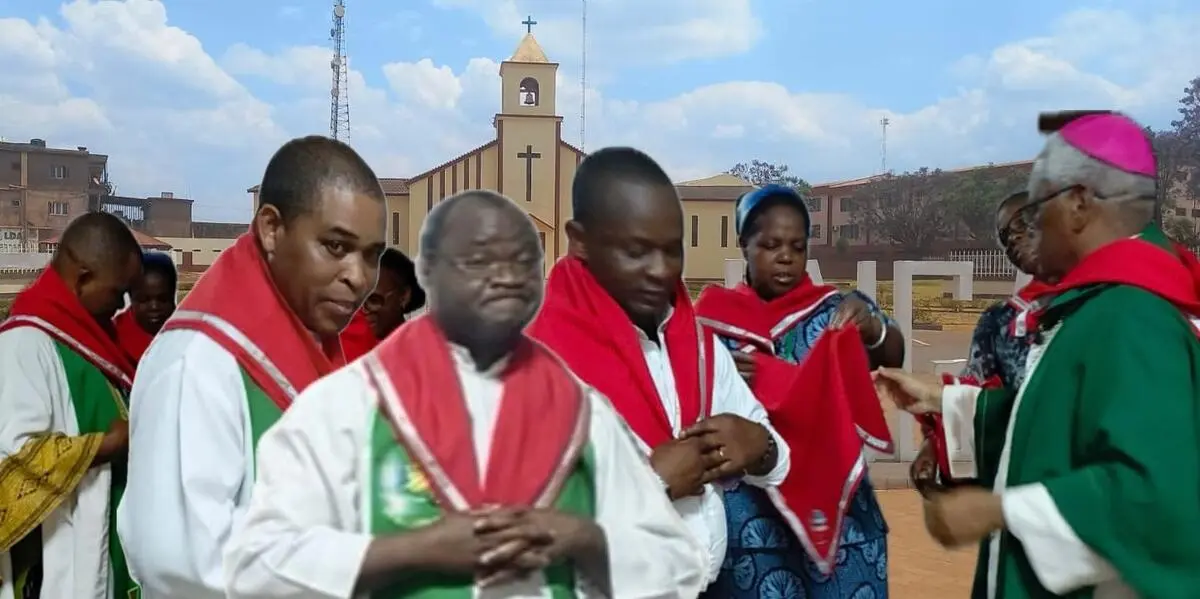
The Forum concluded with the celebration of Holy Mass and the commissioning of the ambassadors of the Works of Mercy, a moment of particular spiritual and pastoral significance.
During the celebration, participants received the mandate to be witnesses and promoters of mercy in their communities, taking on the mission of bringing God’s love to their brothers and sisters through concrete acts of service, solidarity, and Christian charity.
As a visible sign of this commitment, the ambassadors were presented with the red scarf, a symbol of the mission they are undertaking and of their bond with the initiative that brings them together. This gesture was presented as a way to pay tribute to the promoters of this mission, spazio + spadoni and Opera M, and to strengthen the identity of the participants as workers committed to promoting the Works of Mercy.
The missionary mandate reminded everyone that participation in the Forum does not represent the end of an activity, but the beginning of a renewed pastoral responsibility. Each ambassador is called to bring to their own communities the spirit of communion, the message of the Gospel, and the commitment to make mercy visible in human relationships and in the life of the Church.
11. Conclusion
The 1st Diocesan Forum for the Pastoral Ministry of the Works of Mercy represented an important milestone in the pastoral journey of the Diocese of Lichinga, offering a space for communion, formation, reflection, sharing, and discernment.
The participation of the 17 parish delegations, the reflection on the central theme, the group work, and the formulation of recommendations demonstrated the need to strengthen an organized pastoral ministry committed to a concrete witness of mercy.
The Forum made it possible to reaffirm that the Works of Mercy are an essential part of the Church’s evangelizing mission, because they make God’s love visible through welcome, closeness, solidarity, and service to the most vulnerable.
The creation of parish teams, the dedication of a monthly day to the Works of Mercy, and the celebration of the Via Misericordiae constitute concrete steps to ensure continuity in the commitments made.
The true fruit of this meeting will, therefore, be the ability of every parish to transform the decisions made into permanent pastoral practices, involving the faithful and responding to the real needs of the communities.
The hope is that this Forum marks the beginning of a new phase for the Diocese of Lichinga, in which every Christian, aware of having received God’s mercy, becomes in turn an instrument of His mercy toward others.
“From those who have received mercy to those who show mercy”: may this be the commitment that guides the pastoral journey of the Diocese of Lichinga.
Cuamba, October 21, 2026
Source and images: Diocese of Lichinga