

 Italy
Italy
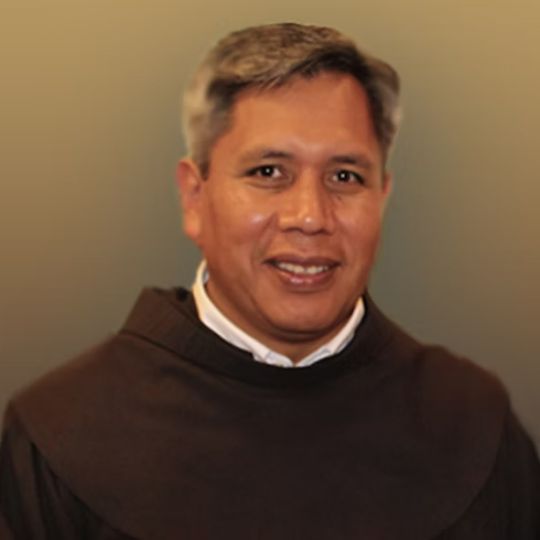
(Msgr. Corrado Lorefice, Archbishop of Palermo and President of the CEI Commission on Migration)
What happened in the Spanish enclave in Morocco, in Ceuta, is certainly a trap set by merchants of death and a knowingly organized and manipulated event.
However, its symbolic value can hardly be underestimated. It is clear proof of a desire for freedom and life that reaches us from the Global South, and which cannot be treated merely as a public security issue.
Leaving one’s land, one’s country, is not something any woman or man does lightly.
Leaving means heading into the unknown, leaving safety behind, abandoning customs, traditions, and habits that have shaped one’s life, risking one’s own safety and that of loved ones.
How many people have died trying to cross the sea? We count them coldly, without realizing that they are human lives, faces, dreams, and desires drowned in the hope of a new homeland.
Beyond necessary political evaluations and legislative measures, events like those in Ceuta remain a litmus test of the world’s enormous imbalance, the inequitable distribution of wealth, the shrinking of democracies across the planet (and their corresponding social, civil, and economic rights), and the climate crisis. Everything condensed into that desperate hope of Europe held by migrants.
Tragic events repeat endlessly, in which the hopes, smiles, and bodies of so many are, in an instant, destroyed by the decisions of other human beings who claim the right to take the lives of others, erasing as useless the many loves that brought them into the world. The risk is precisely the anesthesia of conscience, which makes evil banal.
Creating torpor, creating sleepwalking consciences is the covert project of the West. Proof of this is the way Ceuta is framed by the governments and media of the Old Continent (along with the usual, indefinable American offshoot). A manner that, in my eyes and ours, is absolutely terrible.
No respect, no empathy, no grief, no sense of humanity, no explanation of the deep underlying reasons.
Only alarmism, entirely unfounded from a legal perspective, about an invasion that is in fact impossible (there is the sea, there is Gibraltar between Ceuta and Europe); only the absurd and counterintuitive disqualification of any policy of welcome and inclusion.
Here lies the original sin of today’s Europe regarding migrants: refusing to admit that this is a global, irreversible phenomenon that must be confronted and managed through politics, not armies; that we are facing an exodus that cannot be answered with ignoble agreements with third countries, such as Almasri’s Libya.
Before falling into the sleep that – as History has taught us – prevents us from perceiving violence and its outrage, until it is accepted as normal or even necessary.
In Ceuta, Europe clearly demonstrates the profound crisis of its civilization and values. It denies itself as a homeland of law and of the recognition of every woman and man as belonging to a common humanity, to a universal fraternity that transcends us.
It fails to realize that “temporary quick-fix” solutions remove today’s nuisance but pave the way for tomorrow’s tragedy.
And above all, by refusing to think and act according to its own principles and capabilities, Europe risks condemning itself to death.
History teaches us that the so-called barbarians, having entered Roman territory, founded a new civilization alongside the citizens of the Empire. Let us not plunge into the night of reason, heart, and conscience.
Photo by Leonardo Delsabio (Pexels)
Source: Press Release of the Social Communications Office of the Archdiocese of Palermo