


 Democratic Republic of the Congo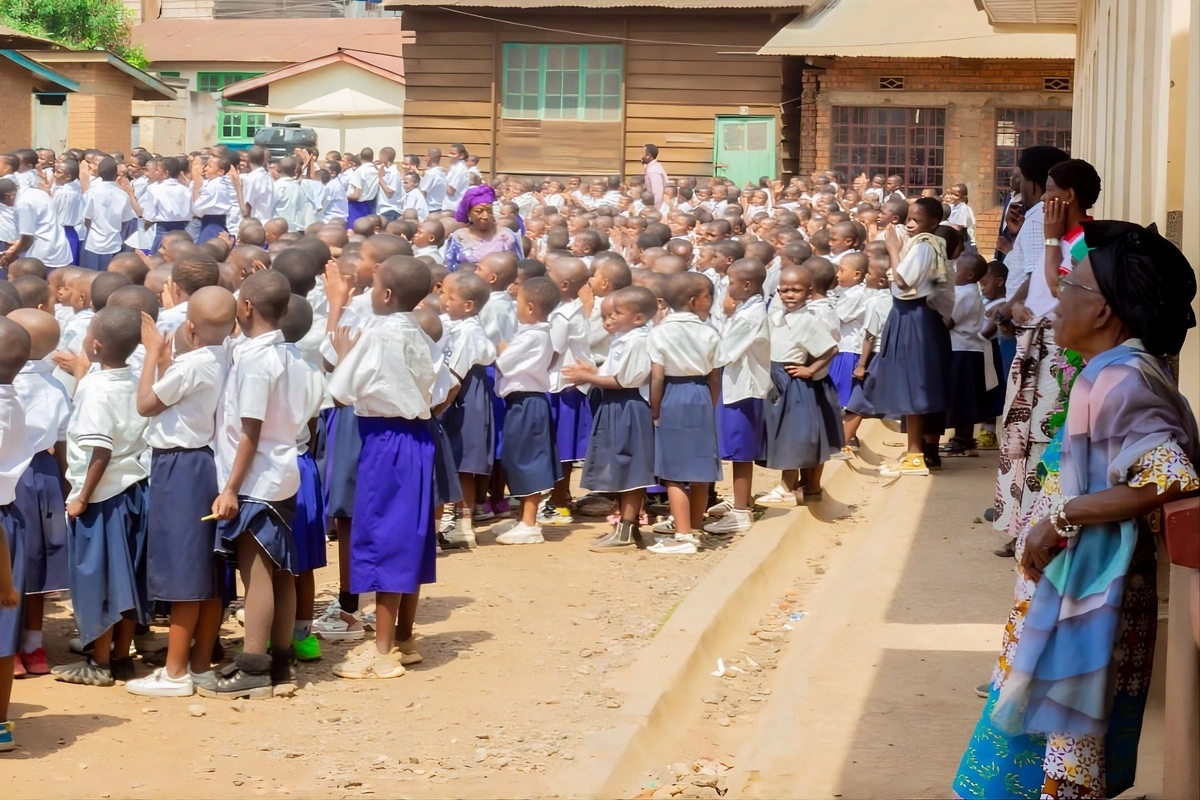
In North and South Kivu, millions of children returned to school benches on September 1, 2026. A new school year unfolding between Ebola, war, and hope.
Bukavu, Goma, Butembo. Monday, September 1, 2026, 7:30 AM. Under the rain or amidst fear, the children of Kivu have returned to school. The Congolese government confirmed the launch of the 2026-2027 school year across the entire national territory, including the provinces threatened by conflict.
In North Kivu 2, in Butembo, provincial director Alexis Kahindo Kighombwe reaffirmed to local media: «Ebola must not deprive children of their right to education».
A school year start under health protocols
This year in Kivu, returning to school carries a distinct weight. The resurgence of the Ebola virus disease raises deep concern. In state-approved Catholic schools, such as those in Bunia and Butembo, preventive measures are clearly visible: mandatory handwashing, temperature checks at the entrance, and awareness activities supported by UNPC and SDC-Switzerland. Yet the other virus is war.
In South Kivu, provincial director Léon Tosweswe confirmed the resumption of classes in Bukavu this Tuesday, despite reported clashes in Fizi and Kalehe between the FARDC and the M23, as he stated in an interview.
«All teachers will be present», he assured. On the ground, however, the North Kivu 2 teachers’ union coalition threatens to withhold services, denouncing insecurity and the absence of health insurance for teachers in Beni and Lubero.
The excluded from the restart: the displaced
This is the most poignant image of this back-to-school season in Kivu. Three weeks before classes began, as La Prunelle RDC had already highlighted, displaced families fleeing Walungu, Kalehe, and the Bukavu hills shared that they lacked even the funds to purchase a single notebook.
«Many parents have lost their jobs or their fields due to the crisis. They are planning to reuse old uniforms», reports Innocent Majaliwa, coordinator of a youth organization in Bukavu. In the Mambasa territory, several schools remain occupied by displaced people who have nowhere else to seek shelter. How can lessons take place inside a classroom turned into a dormitory? This is where the State seeks to intervene. The Minister of Education, Raïssa Malu, announced the launch of 78 pilot school canteens—three per province—and the establishment of civic vigilance committees. A special priority, the President of the Republic underlined, must be granted to the children of North and South Kivu impacted by the conflict.
School as an act of resistance
In Kivu, attending school is never a trivial gesture. It is an act of resistance. It means declaring that life endures, despite weapons, despite Ebola. This resumption of classes reminds us of a fundamental truth: education remains the primary shield against poverty and violence. When a child in Kivu opens a notebook, a doorway to the future opens once again. It is now up to the international community, humanitarian organizations, and the local Church not to leave that child standing alone before a blank page.
Photo by Destin Byandike