


 Italy

From the website of the National Office for the Pastoral Care of Health of the CEI, commentary on the sixth spiritual Work of Mercy
(by Dr. Michele Loiudice, Head of Accreditation, Control and Management – ARES 118)
The sixth spiritual Work of Mercy urges us to pay attention to the quality of the relationships (Scaraffia, 2014) that we establish with the people around us, with the sick, with colleagues, or even with those we encounter by chance. It is constructed upon the contrast between the meaning of mercy and annoyance (molestation): the former is «A feeling of compassion for the misfortune of others, which impels one to act to alleviate it (Treccani, Treccani vocabulary, 2015)», while the latter is defined as «An unpleasant sensation of sorrow, torment, discomfort, unease, or irritation caused by people or things and generally by whatever disturbs physical well-being or spiritual peace (Treccani, Treccani vocabulary, 2015)». The subject of these pages, therefore, is not sexual harassment, which pertains to criminal law, nor acts of greater or lesser malice that require heroic forgiveness, but rather those people who, knowingly or unintentionally, increase the burden of our existence; those whose simple presence feels inconvenient, annoying, or even unbearable to us, seeming almost to weigh upon us like a crushing mass, «troubling us» (Pasquale, 2014).
In the Gospels, we have several episodes describing situations of disturbance related to illness. We recall (Mk 10:46-48) the son of Timaeus, Bartimaeus, blind, who, upon hearing that Jesus of Nazareth was there, began to cry out and say: «Son of David, Jesus, have mercy on me!», and was rebuked to silence him. This disruptive behavior is the expression of a need for salvation and healing that the disciples try to hide. The blind Bartimaeus still highlights today our individual and communal blindness in understanding healthcare needs, wanting to deny them, and seeking to fit them into categories that make them more manageable and less dangerous from a social perspective.
Another “troublesome” figure in the Gospels is the woman with the flow of blood described in the Gospel of Mark (Mk 5:25-34). The annoyance lies not so much in diverting Jesus on His way to the house of Jairus, but in her socially unacceptable behavior. According to the mentality of the era, blood rendered a person impure, and whoever touched her also became impure. Her decision to challenge this law represents the woman’s will to live: by touching the cloak, she seeks not only healing but also to regain her dignity. How often does the sick person become the sickness; how often does stigma hide the face; how often does distance deny the benefit of human touch.
Another significant episode is the healing of an epileptic boy (Mk 9:14-29), in which a parent laments the disciples’ inability to cast out the mute spirit that has seized his son. The disciples argue because they are questioned in one of the central aspects of their mission. Annoyance is often tied to roles being questioned. Today, so-called medical malpractice has undermined the very foundation of trust between healthcare worker and patient, between healthcare facility and family—a relationship that is sometimes established carrying within itself from the beginning the seed of conflictual development.
Death, finally, causes a situation of deep distress among people and within a community. Before the tomb of Lazarus, Jesus wept. Jesus weeps: out of shared sorrow, out of affection for Lazarus, Mary, and Martha, out of deep compassion for the human condition; because He was the incarnation of God’s tenderness (Pollano, 2015). For us, however, the dying person often becomes troublesome because they shed light on our relationship with death, confronting us with our limits and our fears.
In these episodes, Jesus’ intervention brings about salvation and healing, or resurrection in the case of Lazarus. What, then, is the benefit of our bearing patiently with troublesome people at the bedside of the sick, in a clinic, in a parish listening center, and more generally in our life contexts—family, workplace, or community?
The idea of “spiritual works of mercy”, alongside those directed toward the human “body”, was born in the tradition of the Church from the allegorical interpretation of the text of Matthew 25, which associates spiritual needs with material needs: there are not only those who are materially poor, thirsty, or sick in body… but there are also those who are spiritually poor, lacking the food of justice, the drink of the knowledge of God, and the garment of Christ (Manicardi, 2010). Even turning to this allegory, understanding the benefit of patiently bearing with troublesome people is not immediately apparent.
Upon closer inspection, the term «“Mercy” does not define; it names not a reality, but a relationship: one gives or receives mercy, that is, one exists in a relationship of mercy. In other words, mercy is not a thing, but takes concrete shape in things, deeds, and actions—even in a simple cup of water (cf. Mk 9:41). It is not a res, but the name of a relationship and its quality… “Doing mercy” and “receiving mercy” are both performative utterances on the same level. The object of an act of mercy can become the subject of the mirror movement, and so on. It functions with equal strength in all directions without needing to alter the word: it makes no preference between active or passive use». (Morra, 2015)
In light of this premise, patient endurance is first of all beneficial, indeed essential, for social cohesion within a family, a community, or a hospital. While we are easily aware that anyone can turn from being troubled to being troublesome, it is far more difficult to put ourselves in the shoes of the one who troubles us, to understand their reasons, to share their unease, and to recognize them as a brother or sister in humanity (Tiberi & Leoni, 2014). The Christian (Pasquale, 2014) is called, as an imitator of God (Eph 5:1), to carry the burden of his brothers and sisters; «I urge you […] to bear with one another in love, making every effort to keep the unity of the Spirit through the bond of peace» (Eph 4:1-3), «bearing with one another and forgiving one another, if anyone has a grievance against someone» (Col 3:13). The measure of this forbearance for the Christian is once again love: the charity that «bears all things, believes all things, hopes all things, endures all things» (1 Cor 13:7).
A second reflection on the effects of the sixth Work of Mercy refers back to the experience of Saint Francis. In Jesus’ parables on the necessity of prayer, troublesome individuals are identified who receive a benefit from their actions: the persistent widow who receives justice from the unjust judge (Lk 18:1-8) and the insistent friend who receives three loaves of bread for travelers (Lk 11:5-9). In this relationship, the judge and the friend also “received” something: they were prompted to reflect and modify their behavior. These parables are not presented to highlight a path of conversion, but rather the characteristics of prayer. The human experience of Francis, however, tells us, as he himself recounts in his Testament, that the relationship with the “bitter” presence of lepers was the beginning of his conversion:
«The Lord gave me, Brother Francis, thus to begin doing penance in this way: for when I was in sin, it seemed too bitter for me to see lepers, and the Lord Himself led me among them and I showed mercy to them. And when I left them, what had seemed bitter to me was turned into sweetness of soul and body. And afterwards I delayed a little and left the world.» (Text of November 2016)
Image created digitally by spazio + spadoni
Source: National Office for the Pastoral Care of Health of the CEI
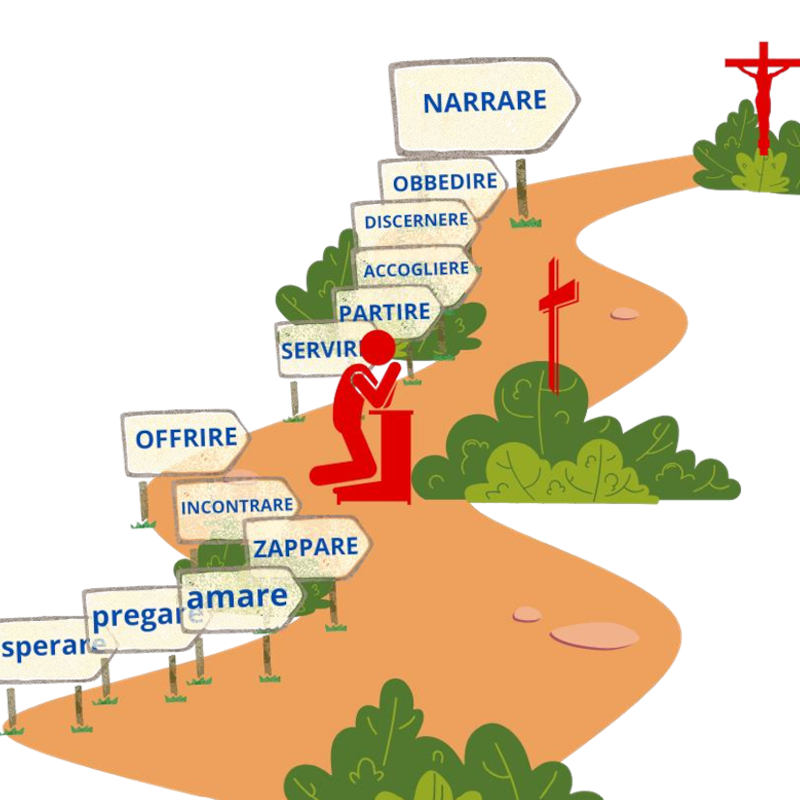
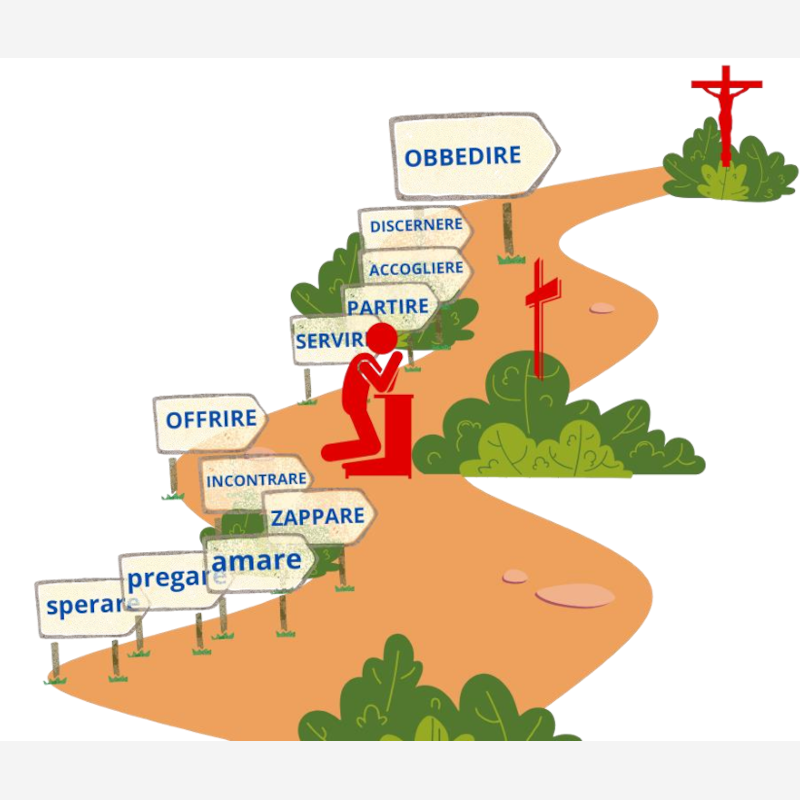
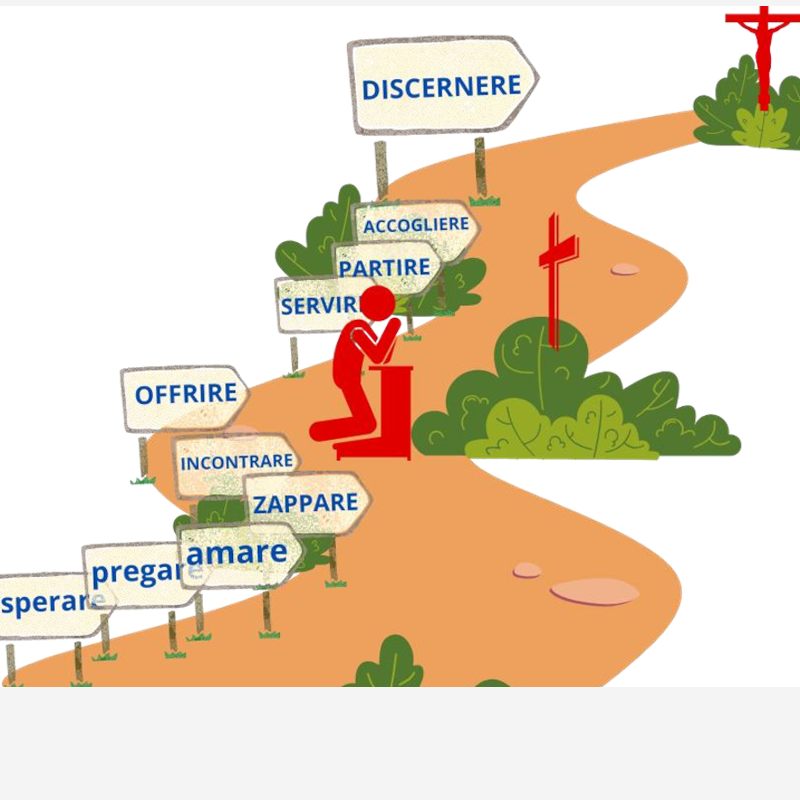

Being Witnesses of Mercy – ILLUMINATE
2 February 2026